LIVE
OCD← Home
The Handmaid's Tale cover
1985
The Handmaid's Tale
Margaret Atwood · Awakening in the Commander's House
Chapter 1
Reading
Ch. 1
Ch. 2
Loading audio...
0:000:00

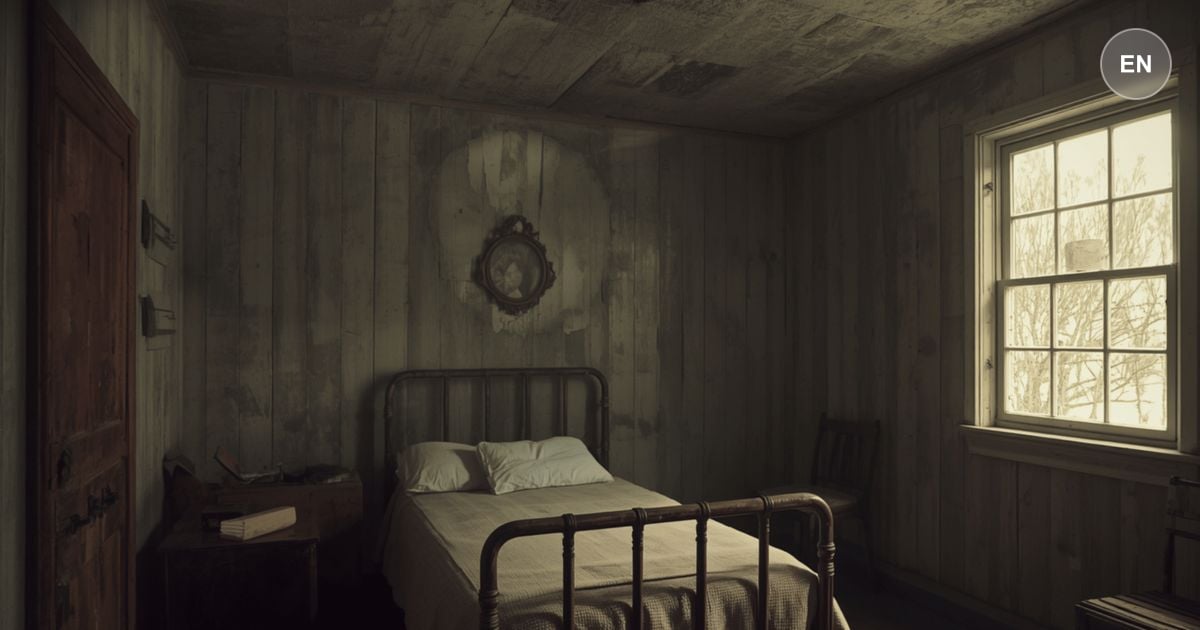
Offred wakes up in a room that has been carefully emptied of anything she could use to feel like herself. No books, no mirrors she can angle toward her own face, no door she can fully close. The window glass will not break. The ceiling holds a secret she will learn later. She is called Offred because she belongs to a man named Fred, and that is the whole story Gilead wants her to have.

This opening chapter does two things at once. It places us inside a present that feels airless and precise, and then it pulls us backward into memory. Offred remembers the Red Center, a former gymnasium where women like her were held and re-educated before being assigned to households. Army cots, barbed wire, Aunts with whistles and lectures. The women were taught that the old world had failed them, that Gilead was protection. They were shown films of violence and told the victims had asked for it. They learned to report on each other. They learned to stop saying their own names out loud.

But they breathed names in the dark anyway, like contraband. That detail matters. Even in a place built to erase them, the women found a crack.

Back in the present, Offred thinks about Luke, her husband from before, and about her daughter. She does not know if either of them is alive. She holds that not-knowing every day. Her inner life, her grief and her dark humor and her refusal to fully believe Gilead's version of herself, is the one territory the state has not been able to occupy.

Then she finds something scratched into the floor of her closet: Nolite te bastardes carborundorum. She does not know Latin. She does not know yet who left it. But she recognizes it immediately as a message, proof that someone before her lived in this room and decided, in some small way, not to disappear.

Atwood opens the novel the way a good survival manual opens: by showing you exactly how bad things are, and then showing you the one tool that still works. In Offred's case, that tool is her own mind. She performs compliance on the outside. Inside, she is still herself. That gap between the performed self and the real one is where this entire story lives.

Amplified Discussion
What Can a System Actually Take From You?

Atwood opens The Handmaid's Tale with a precise inventory of what Gilead has managed to remove from Offred's life. Her name. Her clothes. Her door. Her books. Her child. Her husband. The list is long and the losses are real. But the novel's first chapter is also, quietly, an inventory of what Gilead has not been able to take. Offred's memory. Her dark humor. Her ability to notice the gap between what she is told and what she knows. Her decision, made privately and without ceremony, to keep being herself on the inside even while performing the role on the outside.

This distinction matters far beyond Gilead. Historians who study cults, prisons, abusive households, and authoritarian workplaces all find the same pattern. Total environments, places that control your time, your language, your relationships, and your self-image, cannot actually access your thoughts. So they work on everything surrounding your thoughts instead. They give you a new name or a number. They decide who you can talk to. They fill your days with ritual so there is no space for your own mind to wander back to who you were before. And then, most crucially, they tell you a story about yourself that explains why all of this is for your own good. The goal is to get you to believe that story so completely that you stop maintaining your own.

Offred survives chapter one because she never fully makes that trade. She performs compliance. She does not become it.

This is not a historical curiosity. Anyone who has worked a job where speaking up was genuinely dangerous, anyone who has sat at a family table where certain truths were forbidden, anyone who has been in a relationship where their version of events was constantly rewritten by someone with more power, knows this dynamic from the inside. The question Atwood's first chapter leaves hanging in the air is one worth sitting with: in the controlled environments of your own life, what have you kept? And what have you, slowly and without quite noticing, given away?

Explore this chapter with AI to uncover deeper meaning and practical takeaways.

AI Discussion
Why it matters

Detecting Total Environments

A room can feel like a cage long before anyone calls it protection. The window glass will not break. Use detecting total environments as a lens: name who holds power in the scene, then ask what small choice would preserve agency without pretending the system is fair.

Lessons

PracticeThis week, notice any setting where you are given a role, a script, or a version of yourself that does not quite fit, and ask yourself what you still believe privately that you are not saying out loud.

Psych reading

The Underground Self Strategy

When a system or environment cannot be directly challenged, people preserve their identity by performing compliance outwardly while maintaining a private inner life that the system cannot reach.

In the mind

There is a pattern as old as oppression itself: when a system cannot reach your inner life, it settles for your outer behavior. It takes your name, your clothes, your choices, your door. It fills your days with ritual and your ears with its version of history. And then it calls that control. Atwood's first chapter names this pattern with devastating clarity. The body can be owned. The mind is harder. The self that survives by going underground, performing compliance while preserving something true inside, is one of the oldest human strategies for enduring conditions that cannot yet be changed.

The mechanism works like this: total environments, whether a prison, a cult, a deeply controlling relationship, or a suffocating workplace, cannot actually access your thoughts. So they work on everything around your thoughts instead. They control what you see, what you're called, who you're allowed to talk to, and what stories you're told about yourself. The goal is to make you do the work of erasing yourself, to get you to believe their version of you so thoroughly that you stop maintaining your own. Offred survives chapter one because she never fully makes that trade. She performs the role. She does not become it. That gap, narrow as a crack in a closet floor, is everything.

This pattern shows up constantly in ordinary life. A nurse who smiles and says 'of course' to a charge nurse who dismisses her concern, then goes home and knows she was right. A warehouse worker who wears the company shirt and hits the metrics and privately counts the days until he can leave. A daughter-in-law who learns which topics to avoid at Sunday dinner to keep the peace, while holding her own values quietly intact. A patient in a hospital who nods along with a doctor's plan and then calls a different number when she gets home. These are not failures of courage. They are often the only sane response to a power imbalance that cannot be directly confronted yet.

What Atwood teaches, and what Offred models, is that the performed self and the real self must not be confused with each other. When you are in a situation where full honesty is dangerous, where the cost of authentic resistance is too high, you are allowed to comply on the outside while staying clear on the inside. The practice is this: name what you actually think, even if only to yourself. Write it down. Say it to one trusted person. Find the scratch on the closet floor, the proof that someone before you kept their own name in the dark. Resistance does not always look like a raised fist. Sometimes it looks like remembering who you are.

When you can name the pattern, predict where it leads, and navigate it successfully, that is usable knowledge. Gilead could not take Offred's mind. Knowing that distinction, between what a system can control and what it cannot, is one of the most protective pieces of knowledge a person can carry.

Find the right chapter

Each mood maps to a life skill. Each skill connects to the patterns in classic literature.

😔How do you feel😊

Personalize your match

Optional—life stage, what you need today, and what you're navigating help us pick chapters that fit—not generic lists. You may also freeform using the feeling search below.

Sign in to save your profile

Choices stay on this device until you sign in.

Browse the Full Library
4,582Chapters
118+Books
86Authors