
Nick opens by admitting his father's advice made him reserve judgment, which draws confessions he sometimes fakes sleep to avoid. He also admits that tolerance has a limit. When he came back from the East last autumn he wanted moral order restored, except Gatsby alone was exempt: a man with an extraordinary gift for hope before the foul dust closed Nick out. Nick is a Yale man from a Midwest hardware family who moves East in the spring of 1922 to sell bonds. His office mate drops out at the last minute, so Nick rents a small shack alone in West Egg, with a Finnish woman cooking breakfast and a dog that soon runs away. On the road a newcomer asks directions, and Nick feels suddenly less lonely, as if he has been granted the freedom of the neighbourhood. Gatsby's Norman mansion looms beside his cottage; across the courtesy bay, East Egg glitters with old money.
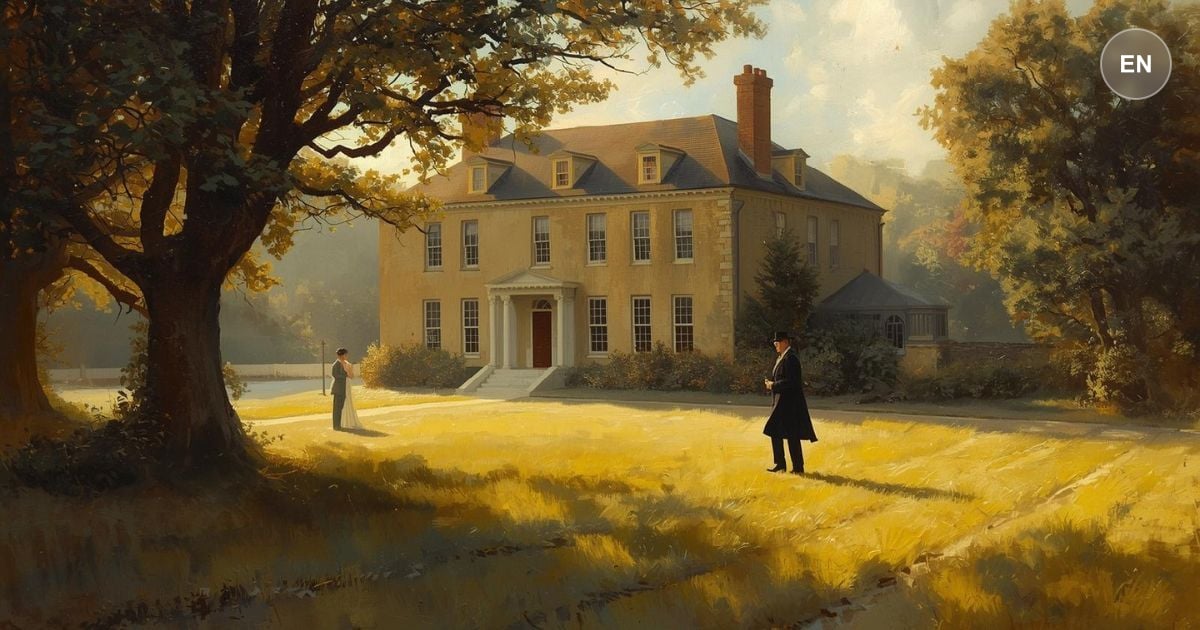
The chapter's real action happens at Tom and Daisy Buchanan's Georgian house. Tom is a former football star with a cruel body and a polo-pony fortune; Daisy floats through the room in white, performing happiness that does not hold. Jordan Baker, a golfer Nick half recognizes from the society pages, balances on the sofa like a trophy on display. At dinner Daisy shows a bruised knuckle and mocks Tom as a brute. Tom launches into a racist screed from The Rise of the Coloured Empires while Daisy winks and whispers about beating other races down. Jordan mentions Gatsby by name before they go in to eat, though Daisy barely reacts. The butler pulls Tom inside for a phone call from New York. Jordan hushes Nick so she can eavesdrop, then tells him the open secret: Tom has a woman in the city who rings at dinner time. Nick's instinct is to call the police, but he stays seated and learns the story instead.
Tom and Daisy return performing calm while the phone keeps ringing. On the porch Daisy confesses she hopes her daughter will be a beautiful little fool, because that is the best thing a girl can be in this world; Nick feels the insincerity and catches her smirk. Inside Jordan reads the Saturday Evening Post aloud while Tom listens. At the door they tease Nick about a false rumour that he is engaged out West, which touches him and makes the Buchanans seem briefly less remote. Nick leaves confused and disgusted, thinking Daisy should flee with her child but knowing she will not. Tom's affair surprises him less than Tom's depression over a book.
Back in West Egg, summer is already deep on roadhouse roofs and petrol-pumps glowing beside garages. Nick finds Gatsby alone on the lawn, arms reaching toward a green light on Daisy's dock. Gatsby trembles. Nick almost introduces himself after Jordan's mention at dinner, then deliberately stays quiet. When he looks again, Gatsby has already vanished into the unquiet darkness.
Chapter 1 establishes Nick as witness rather than hero. His father's advice to reserve judgment makes him useful to people who need a safe audience, but it also keeps him seated at Tom and Daisy's table while the affair phone rings. Daisy's wish for a beautiful little fool names the bargain of her class, and Gatsby's green light ends the chapter as desire made visible across the bay.
Explore this chapter with AI to uncover deeper meaning and practical takeaways.
AI Discussion