
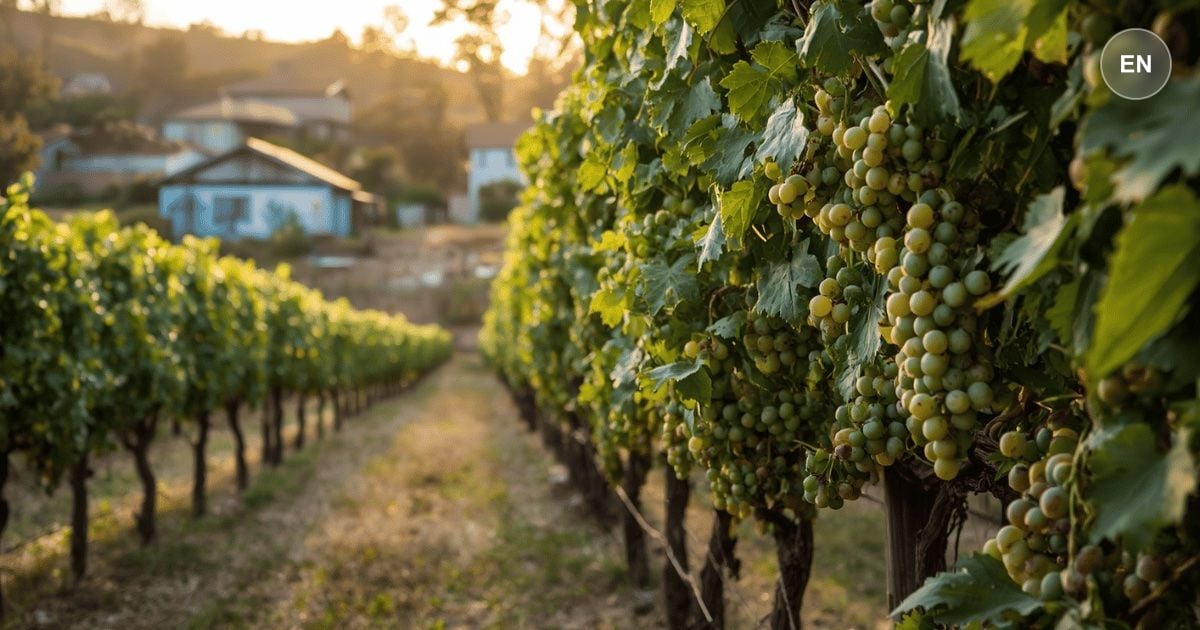
California is drowning in fruit. The orchards are heavy with oranges. The vineyards are full. The land has done everything asked of it, and the harvest is real and enormous. But the people who need it most will never taste it. This chapter steps away from the Joad family entirely to show us the machinery behind their suffering, and what it reveals is almost unbearable to look at directly. Oranges are dumped in fields and soaked with kerosene so no one can eat them. Potatoes are poisoned. Pigs are slaughtered and buried in the ground. Armed guards stand watch over the destruction to make sure hungry families cannot take what is being ruined. Children stand at the edge of camps and watch food rot. A mother asks why. Nobody answers her.
Steinbeck is making an argument here, and he makes it without flinching. The hunger in the valleys is not a natural disaster. It is a decision. If migrants could eat the surplus fruit, they would need less money from wages. If they needed less money, growers would lose leverage. So the food is destroyed to keep workers desperate and wages low. The math is simple and the cruelty is total. Abundance and starvation exist side by side not because the system broke down, but because the system is working exactly as designed.
Local newspapers do not report the waste honestly, because growers have influence over what gets printed. People in cities have no idea. They believe hunger in the valleys is an unfortunate accident of drought or poor planning. This chapter names the truth plainly: it is manufactured. Someone chose this.
This is the moral centre of the entire novel. Everything the Joads have suffered, every humiliation and dead end and closed door, connects back to this scene of guarded, poisoned abundance. Steinbeck uses language that sounds almost biblical here, because he wants readers to feel the weight of what is being described as a sin, not just a policy mistake. The wrath building in the book's title is gathering in these fields. Tom Joad has been watching and thinking. The question he is about to ask, about who profits when food rots beside the hungry, is the question this chapter has already answered.
Steinbeck wrote Chapter 25 during the Great Depression, but he was not describing a historical accident. He was describing a logic. The logic goes like this: a worker with options is a worker with power. A worker with power costs more. So the most efficient way to keep labour costs down is not to find cheaper workers. It is to make sure workers stay desperate. Destroy the surplus food. Keep the shelter underfunded. Make sure there are always three applicants for every opening. None of this requires anyone to be cartoonishly evil. It just requires people in positions of power to keep making decisions that serve their interests, and to call those decisions policy.
What makes this chapter so hard to sit with is the specificity. Steinbeck does not let you look away into abstraction. He shows you the kerosene going into the oranges. He shows you the guards standing watch over the rot. He shows you the children watching from the edge of the field. The destruction is not happening because no one thought of a better option. The better option, giving the food to hungry families, was considered and rejected because it would have reduced leverage over wages.
This same logic runs through a lot of modern working-class life, and it is worth naming out loud. Hospitals that keep nursing units chronically short-staffed are not always doing it because they cannot afford more nurses. Sometimes they are doing it because fully staffed units produce nurses who feel confident enough to push back. Landlords who let units sit empty rather than lower rent are not waiting for the market to correct. They are protecting a price signal. Companies that eliminate pension plans and replace them with nothing are not always broke. Sometimes they are simply removing the reason a worker might feel secure enough to leave.
The question Steinbeck wants every reader to carry out of this chapter is not who is to blame in a legal sense. It is simpler and more useful than that. When you are told that scarcity is just the way things are, ask who is standing guard over the surplus.
Explore this chapter with AI to uncover deeper meaning and practical takeaways.
AI Discussion