
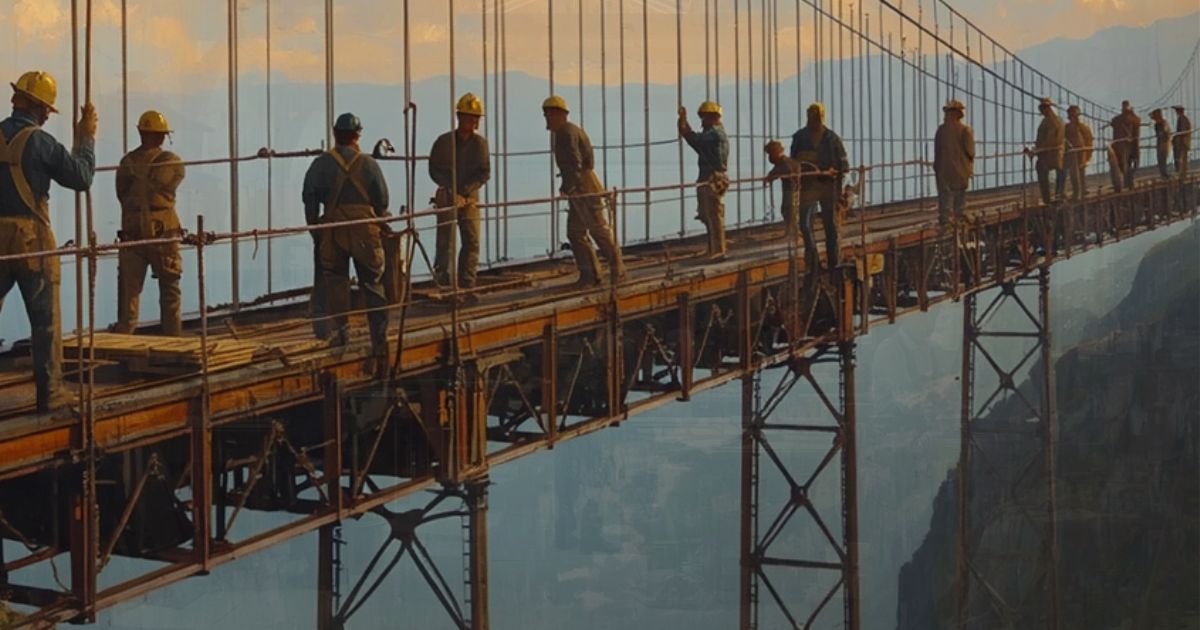
The Devil and the Deep Sea follows the Haliotis, a tramp steamer with a ledger of aliases and a crew that has lived by evasion. Kipling sketches her career in a paragraph of collisions, munition runs, and salvage cases that never quite attach to one name for long. She keeps the same skilled crew, spends lavishly below decks, and treats affidavits as another trade good. Under the name Martin Hunt she has been poaching pearl banks in a strictly preserved sea, smoking the trying-out fires that betray her trade to patrol craft. A faster gunboat overtakes her after a near escape from Pygang-Watai and fires a five-inch practice shell that fractures the forward engine's connecting-rod bolts. The damage cascades: a cracked supporting column, a jammed cross-head, and an engine room that Mr. Wardrop pronounces ruined from end to end while the hull still slides forward shrieking like a wounded animal.
The lieutenant who boards demands pearls and finds seventy thousand pounds of evidence no affidavit can dissolve. The officers arrest the crew, tow the crippled hull to a miserable port with one crazy tug and a Malay boat-builder, and press the men into a colonial back-country regiment while diplomats argue over the firing on a British-flagged ship. Five men die in the jungle; the rest return singing, natural men freed from civilization's embarrassment.
Pearl poaching required patience and careful noise management. The Haliotis kept her trying-out fires low enough to avoid the smoke column that betrayed ships working over pearl banks in restricted waters, but low fires meant slow processing and longer time in a sea where every patrol craft knew which vessels had no business there. Under the name Martin Hunt she had been careful for three seasons; the fourth she ran the banks too long after a profitable find and was still smoking when the faster gunboat came over the horizon at the bearing she had been watching since dawn.
The five-inch practice shell that ended the chase broke more than the connecting-rod bolts. The cracked supporting column transmitted the shock through the engine frame, jamming the cross-head against the guide and bringing the forward engine to a stop audible across the water. Wardrop arrived in the engine room to find a repair that no honest marine surveyor would have quoted on without first taking a very long drink. He declared the engine ruined from end to end, which was accurate, and repeated it to the naval lieutenant who boarded to inventory seventy thousand pounds of pearl, largely non-portable.
When the survivors return months later, lean, half naked, and singing on the Governor's verandah, they find the Haliotis gutted but her coal untouched and Wardrop's deliberate wreck still intact. The Governor traps them aboard under threat of rifle fire, intending to keep poachers as a floating prison until a man-of-war arrives. Wardrop, however, sees bare chance. He calls the engine-room crew by name, strips the shambolic damage he staged to deter thieves, and begins a repair that proper dockyards would call impossible.
What follows is Kipling's hymn to practical engineering. With hand tools, boiler plate, anchor davits cut for struts, and a donkey-engine nursed through leaking steam, the men straighten bent rods, patch cast-iron columns, and forge a collar to marry a cracked piston-rod to its cross-head. They work in tropical heat on bananas and bad water while the shore guard watches. Days blur into fever-dream labor until the engines turn, groaning like a madman, but turn nonetheless.
The colonial backwater where the gunboat deposited the Haliotis's crew was not designed for prisoners and made no pretense of caring. The men were pressed into a back-country regiment garrisoned at a station with one medical officer, intermittent supply lines, and a commanding officer who regarded the sailors as a work party rather than a legal problem. Five of them died over the following months: two from fever, one from a snake, and two in circumstances the official report filed under miscellaneous. The survivors learned to ignore the report's categories.
They returned to the port lean, singing, and in no apparent hurry, which the Governor interpreted as insolence until he realized they had nowhere else to go. The Haliotis sat at the dock with her silver lamps stripped and her brasswork gone, but the coal bunkers untouched because stealing coal required effort and the Governor's men had preferred portable valuables. Wardrop walked the engine room while the Governor ordered them back aboard at rifle point, intending to hold them as a floating prison until a proper man-of-war arrived to settle the diplomatic argument about the gunboat's right to fire on a British-flagged vessel.
The escape is equally improvised. The Haliotis slips out at night, steals a proa's mat sails, and limps toward Pygang-Watai, where the gunboat that crippled her once lay at anchor. The crew repaints identity, rigs stolen canvas, and leaves the warship to run at speed into the sunken wreck they become. Months later a newspaper line notes a foreign gunboat lost on a reef; the Haliotis vanishes into another name.
Kipling lingers on the middle weeks because they are the moral centre of the tale. Wardrop lectures the crew on compound engines as if in a classroom pitched inside a furnace, then crawls the double bottom to hide valves and collars from looters. Men straighten rods in heat that makes metal glow, swap loincloths for gaskets, and sleep sixteen hours after hammering anchor davits into vertical struts. The forward column wears boiler plate like bandages; the cross-head receives a forged collar that no surveyor would sketch in a fit of optimism. When steam finally returns, the engines gibber like maniacs, yet the propeller bites and the harbor guard wakes too late.
Wardrop's deliberate wreck had been designed to deter the Governor's men from understanding what they had. Valves were hidden in the double bottom, collars were pulled and dropped overboard, and the engine's apparent condition was considerably worse than its actual damage, which was itself considerable. When the Governor produced rifles and declared the crew under arrest aboard their own ship, Wardrop called his men by name in the engine-room order he had used for years and asked them to remember what they had taken apart and where they had put the pieces.
What followed took weeks. The tools available were hand files, a cold chisel, and a forge improvised from a bucket and bellows. Boiler plate cut from the ship's own shell served as column bandaging; anchor davits became vertical struts. The cross-head received a forged collar that married the cracked piston-rod in a way no engineering school would endorse but that produced measurable movement under steam pressure. Men worked in heat that made the tropical shore look cool, sleeping sixteen hours between shifts and eating bananas and whatever the shore guard occasionally failed to withhold. The engine gibbered when it finally turned, but it turned.
The political frame matters as well. Europe's improbable peace bankrupts shady shipping; the Haliotis survives by changing names while keeping the same crew and spending profits on engine-room stores. The gunboat captain who fired on a British-flagged hull must answer cables while the Governor strips the idle steamer for silver lamps and mirrors. Kipling enjoys the irony: diplomats demand the crew's release even as the men rebuild the very ship that provoked the incident. Law calls them pirates; the narrative calls them artisans who refuse to leave a machine dead.
Revenge is practical, not theatrical. Off Pygang-Watai the crew boards a proa with red-hot bars, steals mat sails and sago, and rigs the steamer into a grotesque hybrid that can still make three knots under steam and wind. Wardrop weeps because the engines sound insane yet hold; the skipper dreams of the gunboat hull that will meet the submerged wreck they leave behind. No courtroom pronounces justice; a single newspaper line records the consequence.
The story celebrates competence under humiliation: pirates who remain craftsmen, an engineer who treats catastrophe as a set of soluble problems, and a skipper who never confuses moral reputation with the will to survive. Kipling admires the hands that keep the world's machinery moving even when the paperwork calls them thieves.
The Haliotis left at night with no lights and a set of mat sails stolen from a proa that had been unattended long enough to make the question of ownership irrelevant. Wardrop kept steam at the minimum pressure that moved the propeller without announcing itself to the shore and navigated by the stars and a chart that had been in the chart room since before any of the current crew arrived. By dawn they were in open water with the port behind the horizon.
They repainted her name and adjusted her silhouette with salvaged timber before heading for the channel where Pygang-Watai's gunboat kept its usual anchorage. Kipling does not describe the collision directly; a newspaper paragraph three months later noted that a foreign gunboat had been lost on a reef in those waters under circumstances the government concerned preferred not to detail. The Haliotis took another name, added the incident to her unwritten ledger, and continued in the carrying trade. Wardrop never had cause to complain about his engine room again, having rebuilt it once from memory under conditions that made all future repairs feel straightforward.
Kipling wrote this story during the height of British imperial confidence, yet he chose to celebrate not admirals or governors, but working engineers solving problems with their hands. There's something deeply subversive about that choice. Wardrop and his crew succeed precisely because they ignore proper procedures and improvise solutions that would horrify any engineering manual. They succeed through what we might call 'rogue competence', the ability to deliver results when official channels have failed. This pattern appears everywhere in working-class life today. During Hurricane Katrina, it wasn't FEMA that saved people, it was local boat owners who knew the waterways. During the early COVID crisis, it wasn't hospital administrators who figured out ventilator shortages, it was respiratory therapists sharing jerry-rigged solutions on social media. When your kid's school fails them, it's not the superintendent who finds alternatives, it's other parents who've walked that road. The story forces us to ask: What happens when the people with the most practical knowledge have the least official power? And what happens when crisis strips away all the bureaucratic layers and reveals who can actually get things done? Sometimes the most important expertise lives in the hands of people whose voices are rarely heard in boardrooms.
Explore this chapter with AI to uncover deeper meaning and practical takeaways.
AI Discussion