
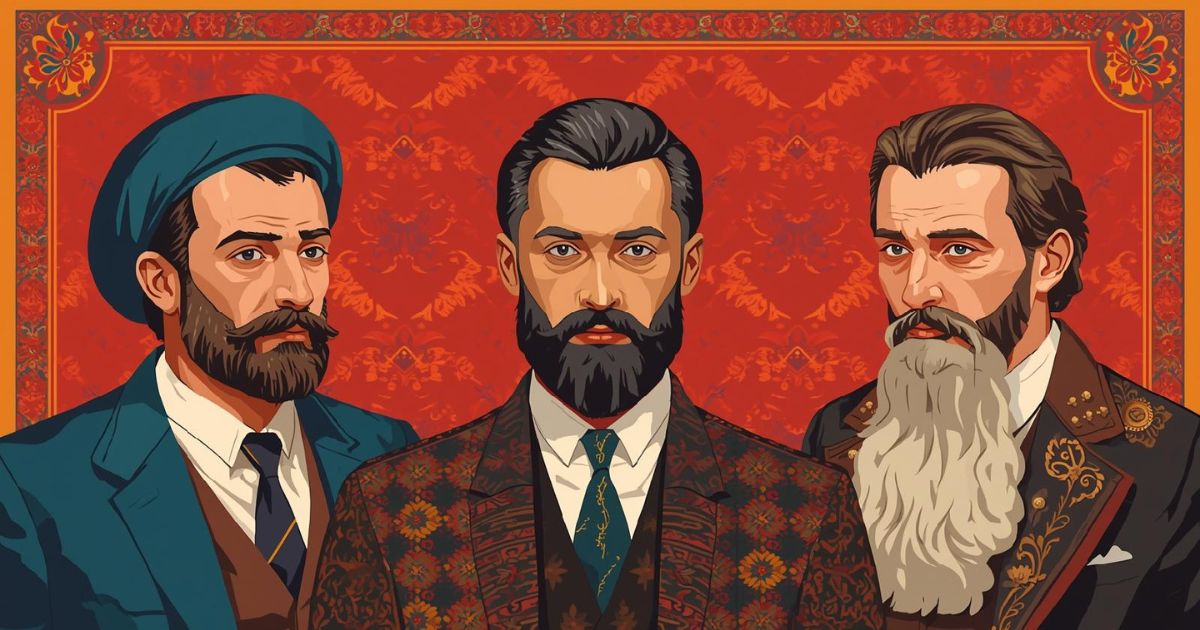
Dmitri is late, and the cell has almost forgotten why it met. Fyodor, who promised to sit still, watches Miüsov with an ironical little smile and tells him he will be the last to leave. When Zossima returns, pale after twenty-five minutes with the women, Ivan is already explaining his article. The Church, he says, must absorb the State, not sit in a corner of it. Father Païssy cries, So be it. Miüsov crosses his legs and calls it the purest ultramontanism.
Ivan does not raise his voice. A criminal now tells himself he may steal and still not be an enemy of Christ. If the Church took the place of the State, that comfort would fail, and exclusion from the Church would cut deeper than a prison. Zossima says the same thing from the other side. Without the Church of Christ there would be nothing to restrain the man, and a punishment that is only mechanical leaves him bitter. Païssy corrects Miüsov. Rome wants the Church turned into the State. This article says the opposite.
Miüsov smiles as if he has been reassured, then draws himself up for a Paris anecdote from just after the December coup. In a government house he met a man who ran a regiment of political detectives, and who feared Christian socialists more than atheist ones. Païssy asks whether the story is aimed at them. The door opens before Miüsov can answer. Dmitri Fyodorovitch stands in it. They had given up expecting him.
Dostoevsky captured something timeless about human nature: our tendency to weaponize intelligence for social survival. In 1880 Russia, intellectuals fought for respect in a rigid class system where ideas could elevate your status. Today, we see the same pattern everywhere—from workplace meetings where colleagues shoot down ideas to establish expertise, to social media where people share articles they haven't read to signal political alignment. The mechanism remains identical: when our sense of self depends on being seen as smart, we stop listening and start performing. We cherry-pick facts, dismiss opposing views, and turn conversations into competitions. The actual topic becomes secondary to winning the argument and protecting our intellectual image. This pattern is especially painful for working-class people who've been told they're 'not smart enough' their whole lives. Sometimes we overcompensate by using big words or complex theories as armor, proving we belong in intellectual spaces. But true intelligence isn't about proving superiority—it's about curiosity, genuine listening, and focusing on what works rather than who's winning. The most powerful question becomes: 'Am I trying to understand this, or am I trying to win?' When we can recognize intellectual posturing in ourselves and others, we can redirect conversations toward actual problem-solving rather than ego protection.
Explore this chapter with AI to uncover deeper meaning and practical takeaways.
AI Discussion