
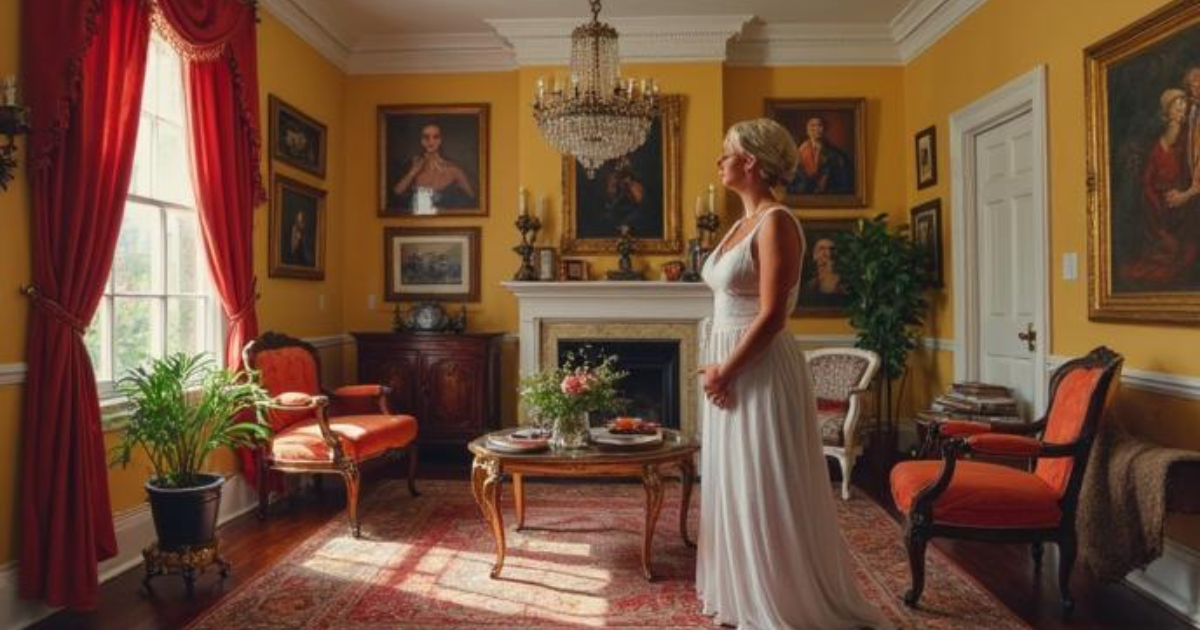
Edna seeks Mademoiselle Reisz for rest and talk of Robert, but finds the apartment empty. Earlier, Adèle Ratignolle visits the pigeon house, warns her about Arobin's reputation, and begs Edna to be careful living alone. Mrs. Merriman and Mrs. Highcamp pay a formal call and invite her to cards; Edna accepts without enthusiasm. Waiting at Reisz's window, Edna picks geranium leaves until Robert appears unexpectedly. Shock keeps her seated; he has been back since day before yesterday. Their conversation is polite and stilted: Mexico, business, her move, his mother's news. Jealousy flares when he finds Arobin's photograph among her sketches. They mirror each other's speeches about Grand Isle and lost souls; he calls her cruel. She invites him to dinner in the pigeon house, lights the lamp, and sends Celestine for delicacies. The chapter turns on accident instead of pursuit. Edna's imagined reunion gives way to distance, jealousy, and a dinner that almost recovers intimacy before formality returns. Robert's tenderness and evasion occupy the same room, and neither names the love both feel. Chopin keeps the focus on choices and consequences rather than moral commentary, so the reader must watch what each character does when pressure rises. Chopin keeps the focus on choices and consequences rather than moral commentary, so the reader must watch what each character does when pressure rises.
Chopin captures something universal about human nature: the way anticipation can poison the very thing we're anticipating. April and Robert have both built up their reunion into something mythical during his absence. When reality arrives, it can't compete with fantasy, so they both retreat into safe, polite distance. This isn't just about romantic relationships, it's about how we approach any high-stakes interaction. The job interview we've imagined perfectly becomes stilted because we're trying too hard. The family dinner we've looked forward to feels forced because everyone's performing their 'best self.' The friend we haven't seen in years becomes a stranger because we're both trying to live up to who we used to be. The mechanism is always the same: anticipation creates pressure, pressure creates performance, and performance kills the very authenticity we're seeking. In 1899, social expectations made this dance even more complex, April and Robert couldn't just say what they felt. Today, we have more freedom to be direct, but we often create our own emotional constraints. We're still afraid of vulnerability, still protecting ourselves from rejection in ways that guarantee disappointment. The intelligence lies in recognising this pattern before it takes over. When you notice yourself rehearsing conversations or building up encounters, that's your signal to lower the stakes and focus on what's actually there rather than what you've imagined.
Explore this chapter with AI to uncover deeper meaning and practical takeaways.
AI Discussion