
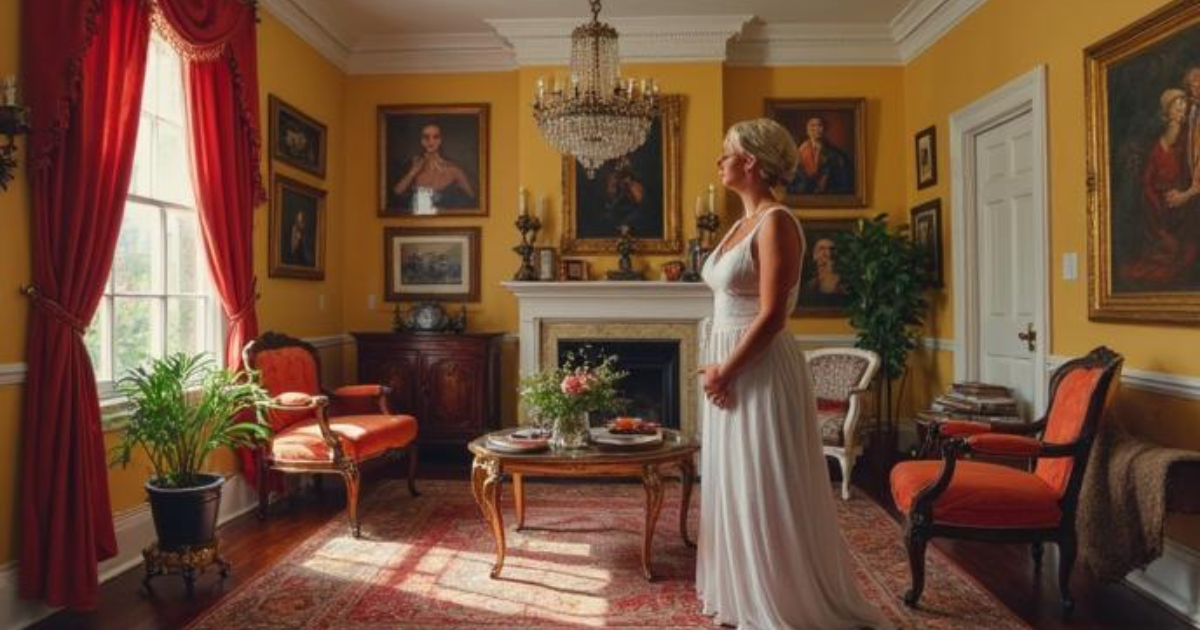
Edna hosts an intimate birthday dinner meant to dazzle: yellow satin, roses, crystal, champagne, and diamonds Léonce sent from New York. Ten guests arrive, including Arobin, Mademoiselle Reisz with violets in her hair, Victor Lebrun, and the Highcamps. Edna looks regal, yet ennui returns like weather she cannot control, summoning Robert's unattainable presence. Conversation sparkles: Arobin jokes, Ratignolle eats seriously, Mademoiselle insults musicians between bites. Mrs. Highcamp drapes Victor in roses and silk until he resembles an Oriental vision; Miss Mayblunt wishes she could paint him. Victor sings Ah si tu savais, Robert's song, and Edna shatters glass begging him to stop, then covers his mouth with her hand. Guests scatter politely afterward. Mademoiselle, wine-flushed, kisses Edna's shoulder and whispers bonne nuit, ma reine; soyez sage. The party ends as both coronation and omen: Edna rules the table she is leaving, yet Robert's absence still ruptures her mask. Independence will not cure longing in one evening. The chapter advances Edna's awakening through concrete choices, relationships, and sensations that cannot be undone by social performance. The chapter advances Edna's awakening through concrete choices, relationships, and sensations that cannot be undone by social performance. The chapter advances Edna's awakening through concrete choices, relationships, and sensations that cannot be undone by social performance.
April's birthday party reveals one of life's cruelest tricks: sometimes achieving our goals makes us feel worse, not better. She has everything she thought she wanted—independence, her own space, artistic pursuits, social connections—yet sits at her own celebration feeling emptier than before. This isn't about ingratitude or being impossible to please. It's about the difference between surface desires and core needs. When we feel restless or stuck, we often identify external changes as the solution. The promotion will give us respect. The new relationship will provide love. The move will bring fresh starts. We pour energy into these transformations, and when we achieve them, we expect satisfaction. But if the real hunger was for authentic connection, creative expression, or genuine purpose, no amount of external rearranging will fill that void. In fact, getting what we thought we wanted can trigger a crisis—if this isn't the answer, what is? Modern life amplifies this pattern. Curated feeds show us everyone else's highlight reels, making us think happiness comes from the right job, house, or lifestyle. We're constantly sold solutions to problems we haven't properly diagnosed. The key is learning to pause before major changes and ask: what am I really hungry for underneath this goal? Sometimes the answer is still external change, but with better targeting. Sometimes it's internal work first. When you can recognise this pattern in your own life, you stop wasting energy on hollow victories and start addressing what you actually need.
Explore this chapter with AI to uncover deeper meaning and practical takeaways.
AI Discussion