
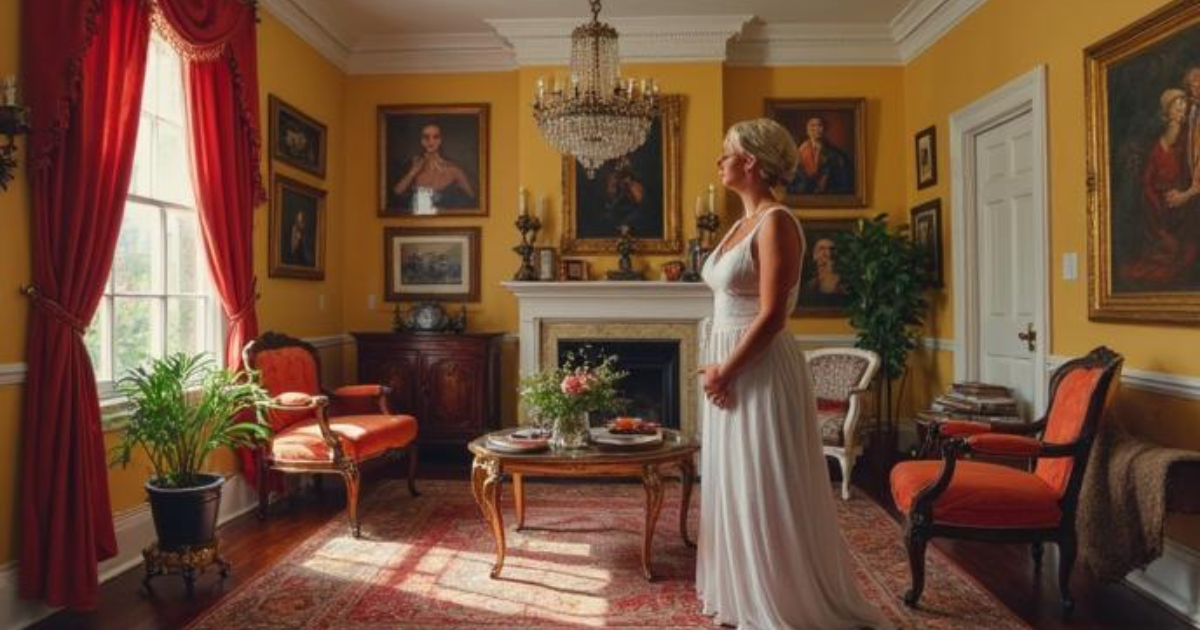
A caged parrot and a mockingbird shatter the Sunday quiet at Madame Lebrun's Grand Isle pension while Léonce Pontellier abandons his stale newspaper and retreats to his cottage rocker. The parrot repeats Allez vous-en; Léonce cannot read in peace and walks across the little bridges between cottages. He looks at Edna as one looks at damaged property, complains she is burnt beyond recognition, and yawns when their beach story falls flat in retelling.
He watches the resort bustle: twins at the piano, Madame Lebrun giving orders, children playing croquet under the oaks. When Edna returns from the beach with Robert Lebrun, sunburned and laughing over a private adventure, Léonce greets her with criticism, not curiosity. The contrast sharpens when Edna silently asks for her wedding rings and Robert understands without words; she slips them on and laughs with him while Léonce remains outside their ease.
Léonce proposes billiards at Klein's hotel, invites Robert along, and Robert chooses to stay with Edna on the porch. Léonce shrugs off dinner plans, checks his vest for a ten-dollar bill, kisses the boys, and leaves. Chopin opens with noise, property, and performance already dividing Edna's dutiful marriage from the spontaneous intimacy forming beside it.
Chopin's opening chapter exposes a mindset that treats people as valuable objects rather than autonomous individuals. When Léonce examines Edna as one looks at personal property which has suffered damage, he reveals how ownership thinking corrupts relationships. This was not only a Victorian marriage problem. The property mindset operates through a shift in perspective: instead of seeing someone's choices as expressions of identity, you see them as reflections of your management skills. Your partner's struggles become evidence of your poor selection rather than their temporary challenge. Your child's public behaviour becomes a referendum on your parenting. This mindset feels justified because it frames control as care. But notice what it protects: image, not wellbeing. Recognising this pattern in yourself and others creates space for genuine relationship, the kind where people can be imperfect and growing without constant assessment of market value.
Explore this chapter with AI to uncover deeper meaning and practical takeaways.
AI Discussion