
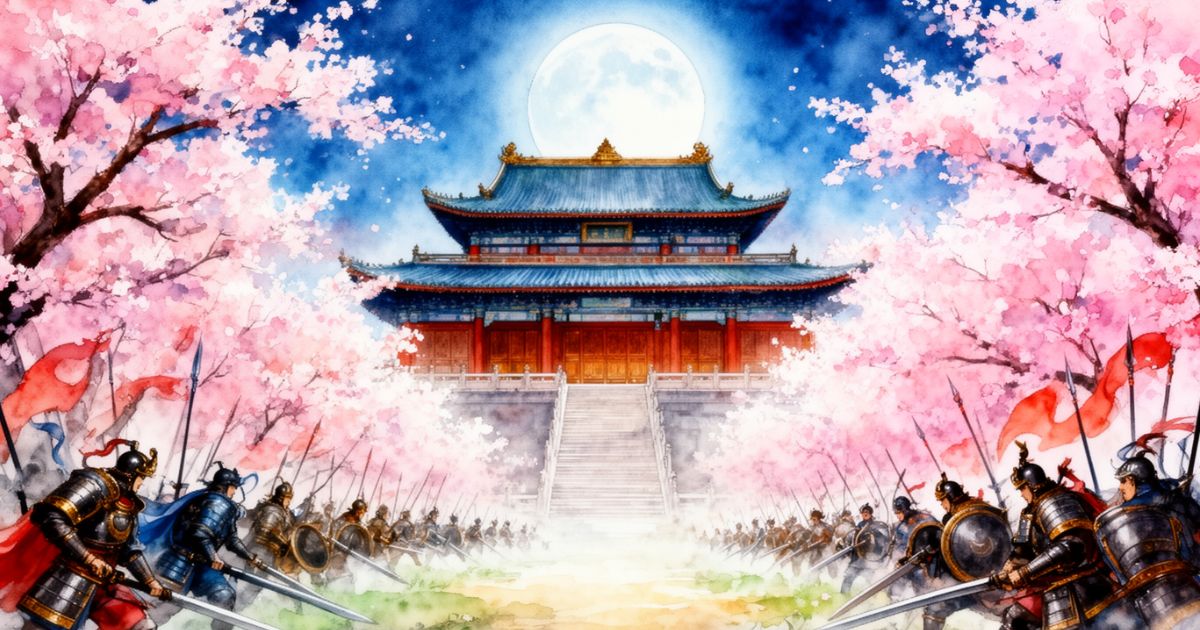
The art of war recognises nine varieties of ground, and each one changes what the general is allowed to do. Fighting in one's own territory is dispersive ground, because the soldiers are near their homes. A short penetration into hostile territory is facile ground, easy to leave. Ground whose possession imports great advantage to either side is contentious. Ground on which each side has liberty of movement is open. Ground that is the key to three contiguous states, so that whoever occupies it first has most of the Empire at his command, is ground of intersecting highways. An army that has penetrated into the heart of a hostile country, with fortified cities left in its rear, is on serious ground. Mountain forests, rugged steeps, marshes, and fens are difficult ground. Narrow gorges from which one can retire only by tortuous paths, where a few of the enemy could crush many, are hemmed-in ground. Ground on which one can be saved from destruction only by fighting without delay is desperate ground. On dispersive ground, therefore, fight not. On facile ground, halt not. On contentious ground, attack not. On open ground, do not try to block the enemy's way. On ground of intersecting highways, join hands with allies. On serious ground, gather in plunder. In difficult ground, keep steadily on the march. On hemmed-in ground, resort to stratagem. On desperate ground, fight.
Those who were called skilful leaders of old knew how to drive a wedge between the enemy's front and rear, to prevent co-operation between his large and small divisions, and to hinder the good troops from rescuing the bad. When his men were scattered they prevented them from concentrating. When his forces were united they managed to keep them in disorder. Asked how to cope with a great host in orderly array and on the point of marching to the attack, Sun Tzu answers: begin by seizing something which the opponent holds dear, and then he will be amenable to your will. Rapidity is the essence of war. Take advantage of the enemy's unreadiness, make your way by unexpected routes, and attack unguarded spots. The further an invading force penetrates into a country, the greater the solidarity of its troops, and thus the defenders will not prevail against it. Forage in fertile country. Study the well-being of the men and do not overtax them. Concentrate energy and hoard strength. Keep the army continually on the move, and devise unfathomable plans.
Throw soldiers into positions whence there is no escape, and they will prefer death to flight. If they will face death, there is nothing they may not achieve. In desperate straits they lose the sense of fear. If there is no place of refuge, they stand firm. If they are in the heart of a hostile country, they show a stubborn front. On the day they are ordered out to battle they may weep, those sitting up bedewing their garments and those lying down letting the tears run down their cheeks. Let them once be brought to bay, and they will display the courage of a Chu or a Kuei. The skilful tactician may be likened to the shuai-jan, a snake of the Ch'ang mountains. Strike at its head, and you will be attacked by its tail. Strike at its tail, and you will be attacked by its head. Strike at its middle, and you will be attacked by head and tail both. An army can be made to imitate that snake. The men of Wu and the men of Yueh are enemies, yet if they are crossing a river in the same boat and are caught by a storm, they will come to each other's assistance just as the left hand helps the right. It is not enough to tether horses and bury chariot wheels. The principle is to set up one standard of courage which all must reach, and to make the best of both strong and weak by the proper use of ground. The skilful general conducts his army as though he were leading a single man by the hand.
It is the business of a general to be quiet and thus ensure secrecy, upright and just and thus maintain order. He mystifies his own officers and men by false reports and appearances, and keeps them in total ignorance. By altering his arrangements and shifting his camp he keeps the enemy from anticipating his purpose. At the critical moment he acts like one who has climbed a height and then kicks away the ladder behind him. He carries his men deep into hostile territory before he shows his hand. He burns his boats and breaks his cooking-pots. Like a shepherd driving a flock of sheep, he drives his men this way and that, and none knows whither he is going. Penetrating deeply brings cohesion. Penetrating but a short way means dispersion. On desperate ground he proclaims to his soldiers the hopelessness of saving their lives. Place the army in deadly peril, and it will survive. Plunge it into desperate straits, and it will come off in safety. At first exhibit the coyness of a maiden, until the enemy gives an opening. Afterwards emulate the rapidity of a running hare, and it will be too late for the enemy to oppose you.
Nine grounds demand nine responses, from dispersive fights near home to desperate ground where survival requires unity. On desperate ground Sun Tzu says burn the boats: eliminate retreat to unlock full commitment. He also teaches psychological management of troops through hope, fear, and shared fate. Commitment design is powerful and dangerous; use it when stakes justify removing easy exit, not when panic needs an escape hatch.
Explore this chapter with AI to uncover deeper meaning and practical takeaways.
AI Discussion