
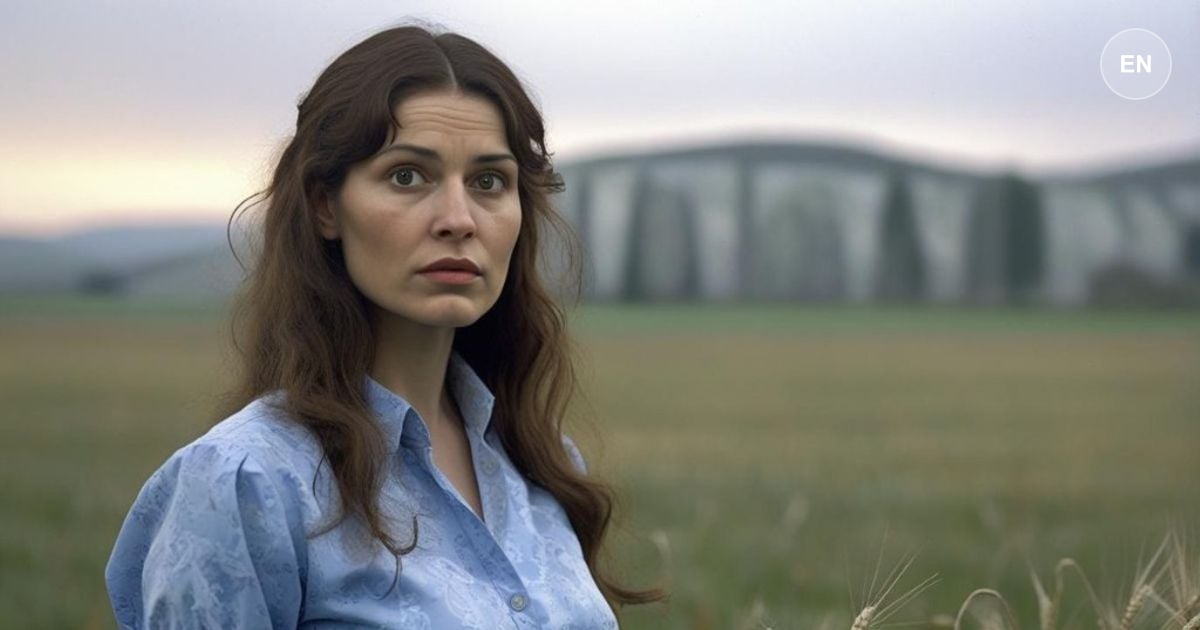
Joan would not let Tess start in her working clothes. There might be a pretence of work at first, and the best side ought to show. Tess let her mother do as she liked. The hair was washed until it doubled, a broader pink ribbon tied in, the white frock of the club-walking put on. Someone meeting her could have taken her for a woman. She was not much more than a child. A hole in the stocking did not matter, Joan said; holes did not speak. The glass showed too little, so a black cloak hung outside the casement and the panes stood in for a mirror. John was told to keep quiet about the young man's fancy. One word too many, and Tess might refuse to go even now.
The children had already been told too much. They walked to see Sissy off to marry the gentleman-cousin. Tess rounded on Joan, and in their hearing the journey became work and a new horse. John, sleepy from drink taken in honour of the day, sent a price for the title. Joan had cried out for a thousand pounds. He talked himself down to twenty, and would not take a penny less, family honour being family honour. Tess could not answer him. At the top of the hill her box sat on a barrow beside the expected spring-cart. A varnished gig came round it. Alec was driving, the man who had already come to Marlott for an answer. She wanted the plain cart. She looked down at her mother and the children. Perhaps it was the thought of Prince that moved her. She stepped up, he whipped the horse, and they passed the luggage and dropped behind the hill.
The children cried then that poor Tess had gone away to be a lady. Joan cried, trusted to accident on the way home, and lost the trust in bed. If it were to do again she would first learn whether the gentleman was good-hearted, and choice of Tess as his kinswoman. John asked why that had not been thought of before. She had her answer. The card was not the d'Urberville blood. It was the face, as the face had been hers.
Hardy shows us something uncomfortable: sometimes the people who love us most can make the most dangerous decisions for us. Joan genuinely believes she's helping Teresa by sending her to the d'Urbervilles. She's not calculating or cruel, she's desperate and sees her daughter's beauty as their family's only asset. This pattern repeats constantly in wage-earning families facing economic crisis. Parents push kids into risky jobs because they need the money. Families pressure daughters to stay with abusive partners who pay the bills. Workers get told they're 'essential' while being denied protective equipment or living wages. The exploitation gets packaged as love, loyalty, or necessity. What makes this so insidious is that the love is real. Joan does love Teresa. But poverty can twist love into something that looks like pimping. The economic system creates these impossible choices, then blames families for making them. Hardy understood that individual morality means little when the system is designed to exploit vulnerability. Today's gig economy, predatory lending, and healthcare costs create the same dynamics. Families still sacrifice their most vulnerable members, still dress it up as opportunity, still call it love. The question isn't whether Joan loves Teresa, it's whether a system that forces these choices can be called just.
Explore this chapter with AI to uncover deeper meaning and practical takeaways.
AI Discussion