
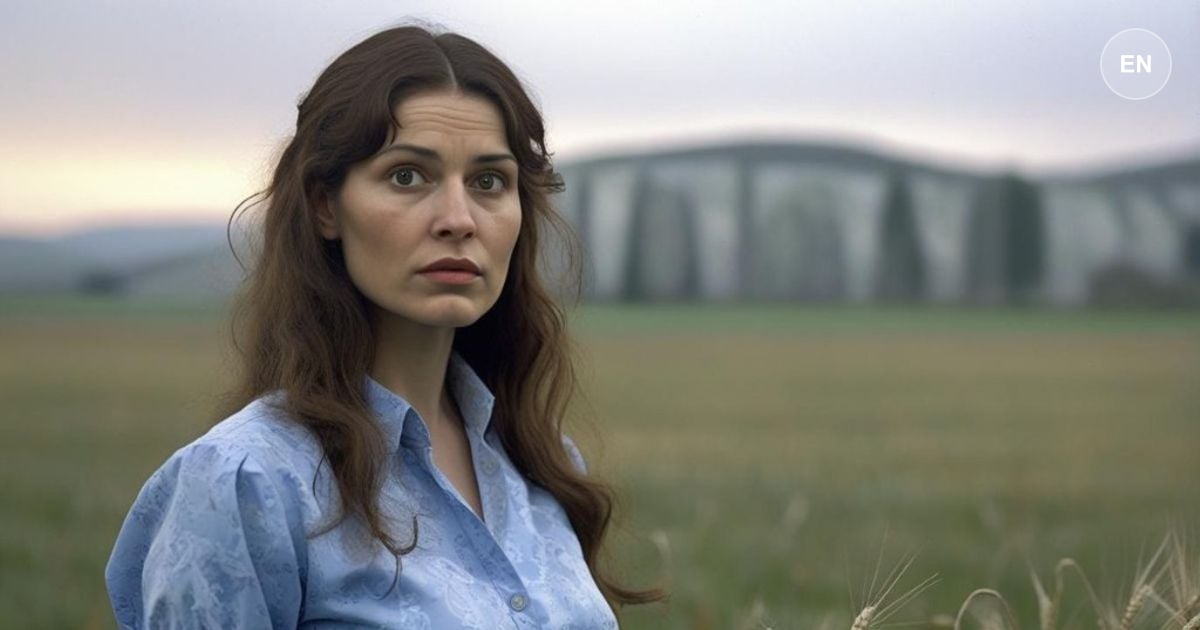
At four on a Sunday morning Tess stepped out of Flintcomb-Ash in what was left of her marriage clothes, a grey woollen gown and a black velvet jacket. Izz's story had broken a year of silence. Angel had told her to write through his parents, and to write to them if she was in want. She had sent nothing. She would not ask a strange family for favour only because his name stood by hers in a church book. Now she needed to know whether he was indifferent or ill. No railway crossed that chalk. Emminster was fifteen miles each way, and Sunday was the only day the farm would spare. Marian and Izz dressed her and let her go. She meant to win his mother, tell her the history, and so get him back. The frozen road rang under her boots.
She kept the Vale of Blackmoor on her right, passed the stone at Cross-in-Hand, and ate at a cottage in Evershead because she would not go into an inn. By noon her courage had shrunk to the look of the vicarage tower. She hid the thick boots in a hedge, put on the thin shoes Angel had bought her, and rang. Nobody came. She rang again, and shut the gate with a relief she did not trust. They were at church, servants and all, as he had said his father required. She walked up the hill to wait. His two brothers came behind her. Their voices carried his. Ahead was Mercy Chant, the woman both families had meant for him. Tess heard one brother pity Angel for throwing himself away upon a dairymaid. At the gate where the boots were hidden, they hooked the pair out with an umbrella. Mercy said someone had meant to enter the town barefoot and stir up pity, and she would carry the boots home for a poor person. They went down the hill with them. Tess passed under her veil, tears running. She had come all that way to ask for news of her husband. She could not make herself knock again.
The way back was only a drift. She leaned on gates. At Evershead the cottager, bringing milk, said the bells had not struck. The people were in a barn, hearing a ranter between the services. From the closed side Tess heard a man call himself the greatest of sinners, turned by a clergyman he had once insulted. The voice was Alec d'Urberville's. She came round to the open doors. Low sun lay across the floor to a figure standing on sacks of corn, facing the village. The whiskers were new. The mouth was the one she knew.
Hardy shows us something brutal about class and judgment: sometimes you're already convicted before you enter the courtroom. Teresa's worn boots become evidence against her character, proof she doesn't belong in that space. The supervisors see agricultural work clothes and immediately construct a story about who she is and what she wants. This isn't about individual prejudice, it's about systems that teach people to read class markers as moral indicators. In 1891, a dairymaid's boots meant she was 'putting on airs' by seeking help from her betters. Today, the same dynamic plays out when wage-earning people enter middle-class institutions, hospitals, schools, courtrooms, corporate offices. Your accent, your shoes, your car in the parking lot all become part of a story others write about your worthiness before you speak. The cruelest part is how this system makes victims doubt their own perceptions. When Teresa overhears the dismissive comments, she doesn't get angry, she gets ashamed. She internalizes their judgment and retreats. This is how class bias perpetuates itself: it convinces those with less power that they deserve less respect. The question isn't whether this dynamic exists, Hardy shows us it's been operating for over a century. The question is whether we can learn to see it clearly enough to navigate it strategically, and whether we can refuse to let other people's biases become our internal voice.
Explore this chapter with AI to uncover deeper meaning and practical takeaways.
AI Discussion