
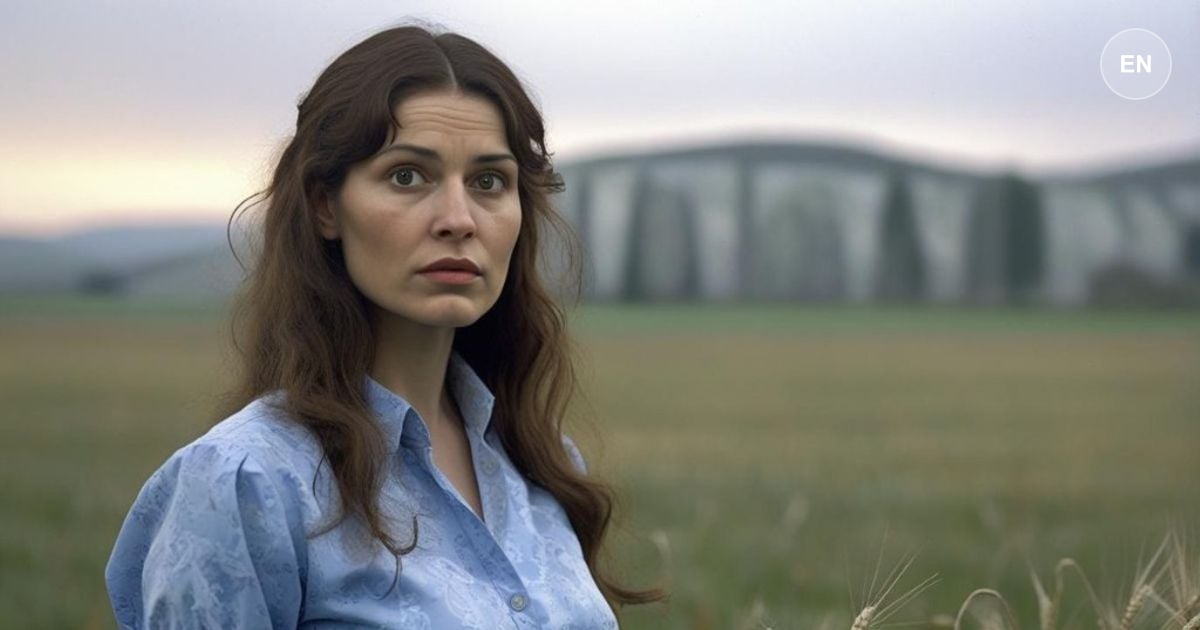
Alec d'Urberville rides from Chaseborough with Tess behind him on the quiet horse, and she asks him to walk it. She has been up at five all week, then three miles on foot and three hours waiting hungry, and it is nearly one on a September night. He asks why she dislikes his kisses. Because she does not love him. She is angry with him sometimes, and she cannot help herself here. Fog that hung in the hollows all evening closes round them. Once her head sinks against him. He puts an arm round her waist. She pushes him, nearly into the road, then begs his pardon. He will not pardon her unless the arm stays. She says she will leave tomorrow. He says she will not.
She cannot say yes or no. He clasps her, and she objects no further. Hard road has become a track in The Chase, the oldest wood in England, miles from Trantridge. He has taken whatever turning kept her beside him, for over an hour, and he is not sure which quarter of the wood this is. She calls him treacherous and begs to be set down. He says the fog disguises everything, and that she might wander for hours. If she will wait by the horse, he will find a road, and then she may walk or ride as she pleases. She agrees. He kisses her as she slides off, ties the horse, and makes a nest of dry leaves. Her father has a new cob today, and the children have toys, both from him. The gifts hamper her. She is grateful, and she does not love him, and she weeps. He buttons his overcoat round her muslin frock and walks off into the vapour.
The moon is down before he gets back. A highway has shown him the place, and then the dark takes the path. He calls her name only when the sleeve of his own coat catches his foot. She is asleep on the leaves, breathing quietly, tears still on her eyelashes. He kneels until his cheek rests on hers. She does not wake. The wrong man is the one beside her, and a coarse pattern is traced on a life still almost blank. No guardian of her simple faith is at hand. Her people say it was to be. She is maiden no more. The girl who stepped from her mother's door for the Trantridge poultry-farm already stands on the far side of the gap.
Hardy understood something crucial about power dynamics that remains relevant today: how artificial kindness becomes a weapon. Alec doesn't just want Teresa, he systematically creates reasons why she should feel she owes him compliance. The gifts to her family, the transportation, the protection from other men, each act builds a ledger of debt in his mind. This isn't generosity; it's investment in future control. The pattern appears everywhere in modern wage-earning life. The landlord who 'helps' with late rent, then expects sexual favors. The boss who covers shifts during family emergencies, then leverages that goodwill for inappropriate requests. The family member who provides financial assistance, then demands access that feels wrong. The healthcare provider who offers payment plans, then pressures for unnecessary procedures. What makes this manipulation so effective is how it weaponizes our natural reciprocity instinct. We're taught to be grateful, to 'pay back' kindness. But real kindness doesn't create debt beyond gratitude. When someone starts tallying their good deeds as justification for crossing your boundaries, you're seeing the trap spring. The key is recognizing that genuine help empowers you to make better choices, while manipulative 'help' narrows your options until compliance feels like the only choice. Hardy shows us that this dynamic transcends class and era, it's about power, not passion.
Explore this chapter with AI to uncover deeper meaning and practical takeaways.
AI Discussion