
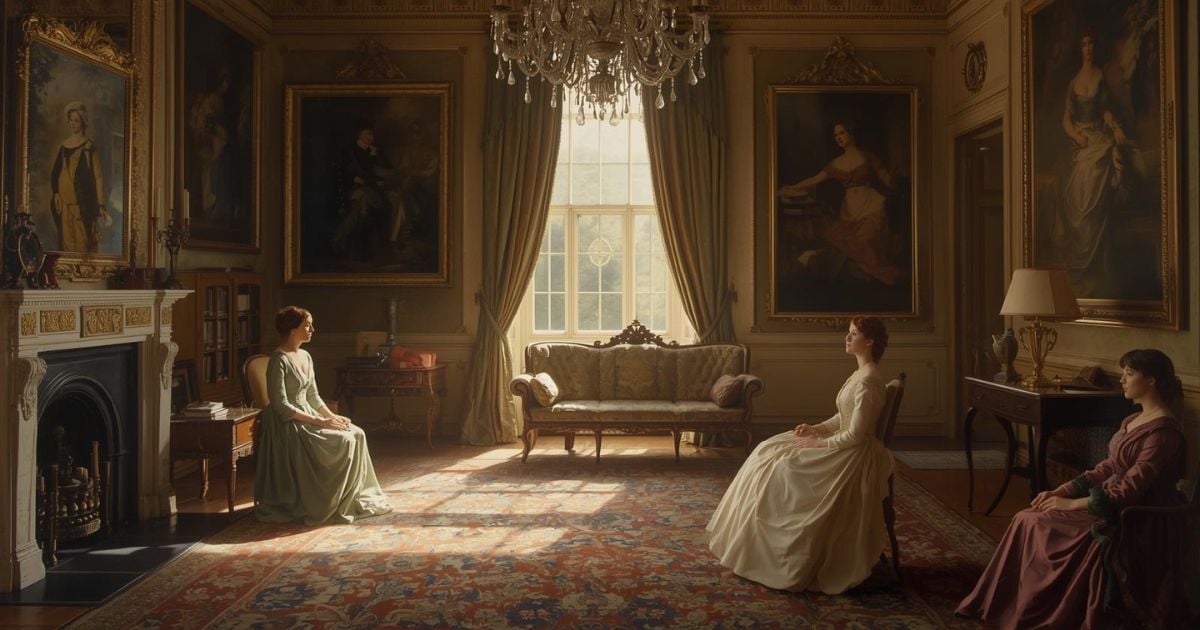
Elinor's hand is on the lock. Willoughby asks for half an hour, then for ten minutes, in a voice of command more than entreaty. His business cannot be with her, she says. Mr Palmer is not in the house. Had the servants told him the whole family were elsewhere, he answers, it would not have turned him from the door. His business is with her, and only her. She sits. Is Marianne out of danger? We hope she is. He asks whether she thinks him most a knave or a fool. A pint of porter with his cold beef at Marlborough was enough, he says, to overturn him. He left London at eight. He means, if he can, to make her hate him one degree less than she does now. Marianne has long forgiven him, Elinor says. Then she has forgiven him before she ought, he answers, and she shall forgive him again on more reasonable grounds.
He had meant, at first, only to pass the time pleasantly in Devonshire. He tried to make himself pleasing, with no design of returning her affection. He was expensive, his debts grew, and he had long intended to marry a woman of fortune. By degrees he was sincerely fond of Marianne. The happiest hours were those in which his intentions were, as he calls them, strictly honourable, and still he put off speaking, unwilling to engage himself while his circumstances were embarrassed. In the few hours before he meant to do it, Mrs Smith learned of Eliza. She would forgive the past if he married the girl. That could not be. He was dismissed from her favour and her house. He called at the cottage, rather than send a note, so the neighbourhood would not suspect the breach. He found Marianne alone, left her miserable, and left her hoping. The letter, Elinor says, was in his own hand. Yes, he answers, and he had only the credit of copying sentences he was ashamed to sign. His wife had opened Marianne's note at breakfast. Her wretchedness he could have borne. Her malice had to be appeased. Her money was necessary to him. The three notes were in the same pocket-book, so he could not deny them, and he could not kiss them. The lock of hair was searched out with them.
He has proved his heart less wicked than she had believed, and she hardly knows what could have made the misery worse. He asks her to tell Marianne, when she is recovered, that his heart was never inconstant, and that she is dearer to him than ever. Elinor will tell what is necessary to what may comparatively be called his justification. Sir John told him the danger, bluntly, in the lobby at Drury Lane, a letter from Mrs Jennings that morning, and almost shook his hand over an old promise of a pointer puppy. Willoughby dreads one event still. Her sister's marriage. Elinor stops him. Marianne can never be more lost to him than she is now. He almost runs from the room. Will the sentences he copied still be counted as his, once it has been said that his wife composed them?
Lucy Steele's sudden switch from Edward to Robert reveals something uncomfortable about human nature: sometimes we cling to relationships not from love, but from fear, obligation, or social pressure. Edward stayed engaged to Lucy for years out of duty, even though both were miserable. Lucy herself was never really attached to Edward, she was attached to financial security and social status. When a better option appeared, she jumped ship without hesitation. This pattern repeats constantly in modern life. People stay in jobs they hate because leaving feels disloyal. They remain in friendships that drain them because they've invested so much time. They continue dating someone because breaking up seems cruel, even when both people are clearly wrong for each other. The fear of being seen as selfish or unreliable keeps us trapped in situations that serve no one well. But Austen shows us something liberating: sometimes the kindest thing you can do is admit the truth. Edward's relief when Lucy leaves him is palpable, he's finally free to pursue genuine happiness. Lucy gets what she actually wanted all along. Even the families benefit when pretense ends. The real cruelty isn't in ending what doesn't work; it's in prolonging everyone's misery out of misplaced loyalty. What relationships in your life are being sustained by obligation rather than genuine connection?
Explore this chapter with AI to uncover deeper meaning and practical takeaways.
AI Discussion