
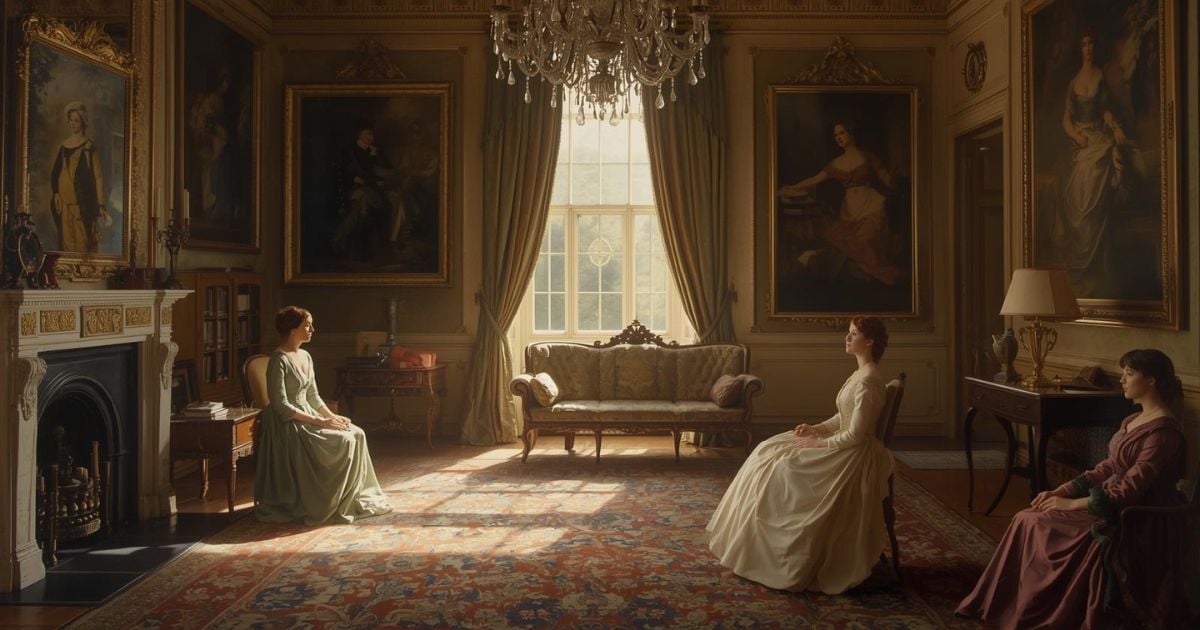
Elinor will not apologise for bringing the confidence forward. If she felt no further curiosity, she would be undeserving of it. Lucy thanks her for breaking the ice. She had been afraid of a coldness that Monday, and her little sharp eyes are full of meaning. Elinor answers, with true sincerity, that nothing was farther from her intention.
He has only two thousand pounds of his own. It would be madness to marry upon that. Lucy could struggle with any poverty for him, but she will not rob him of what his mother might give if he married to please her. They must wait, perhaps for many years, and his constancy, she says, nothing can deprive her of. Elinor answers that if four years had weakened the attachment, as between many people it naturally would, the case would be pitiable. Lucy looks up. Elinor keeps her face clear. Lucy is jealous by nature, and the slightest alteration would have told her the truth in an instant. Elinor thinks that this is very pretty, and that it can impose upon neither of them.
Lucy will not risk Mrs Ferrars's first anger, which would very likely secure everything to Robert. Elinor says the disinterestedness is for Lucy's own sake too, or it goes beyond reason. Lucy has never seen Robert. She fancies he is silly, and a great coxcomb. A pause in the music lets Anne catch the word. Elinor blushes. Lucy bites her lip. Under the concerto again, Lucy has a scheme, and Elinor is a party concerned. Edward should take orders, and Elinor's interest might get him the Norland living, the present holder not likely to live a great while. Elinor says that being brother to Mrs John Dashwood must be recommendation enough, and that if Fanny would not approve, her own interest would do very little. Lucy then sighs that the wisest way may be to dissolve the engagement, and she asks for advice. Elinor will not give it. Her opinion would have no weight unless it were on the side of Lucy's wishes. Lucy answers that if Elinor told her to put an end to it, she would do it immediately. Elinor says the power of dividing two people so tenderly attached is too much for an indifferent person. Lucy stresses the words. It is because Elinor is an indifferent person that the judgment might have weight. If she were biased by her own feelings, her opinion would not be worth having. Elinor makes no answer. She is partly determined never to mention the subject again. Will she be in town this winter? Certainly not. Lucy's eyes brighten. She and Anne go at the latter end of January, only for the sake of seeing Edward in February. Elinor is called to the card table, persuaded that self-interest alone could keep a woman to an engagement she seemed thoroughly aware he was weary of. She never revives the subject. The visit lengthens to nearly two months. Will the advice she left unsaid stay unsaid, each time a letter is brought to her as happiness?
Austen captures something brutal about how women can wound each other while maintaining perfect social acceptability. Lucy Steele doesn't directly attack Elinor, that would be unseemly. Instead, she weaponizes the very tools of female bonding: sharing secrets, seeking advice, expressing vulnerability. This pattern reveals how women, historically denied direct power, developed sophisticated indirect methods of competition and control. The genius lies in the plausible deniability, Lucy can always claim she was just being friendly, just seeking support. This dynamic persists today because it's so effective and so hard to call out. How do you accuse someone of being mean when they're asking for your help? How do you prove malicious intent when the words themselves seem innocent? Modern workplaces, online networks, and family dynamics are full of these interactions. The colleague who shares her success while asking how you're 'handling' your setbacks. The friend who posts about her perfect relationship while offering to 'be there' for your struggles. The family member who discusses their achievements while wondering if you need 'support.' Recognizing this pattern isn't about becoming cynical, it's about protecting your emotional energy and investing it in relationships built on genuine reciprocity rather than disguised competition.
Explore this chapter with AI to uncover deeper meaning and practical takeaways.
AI Discussion