
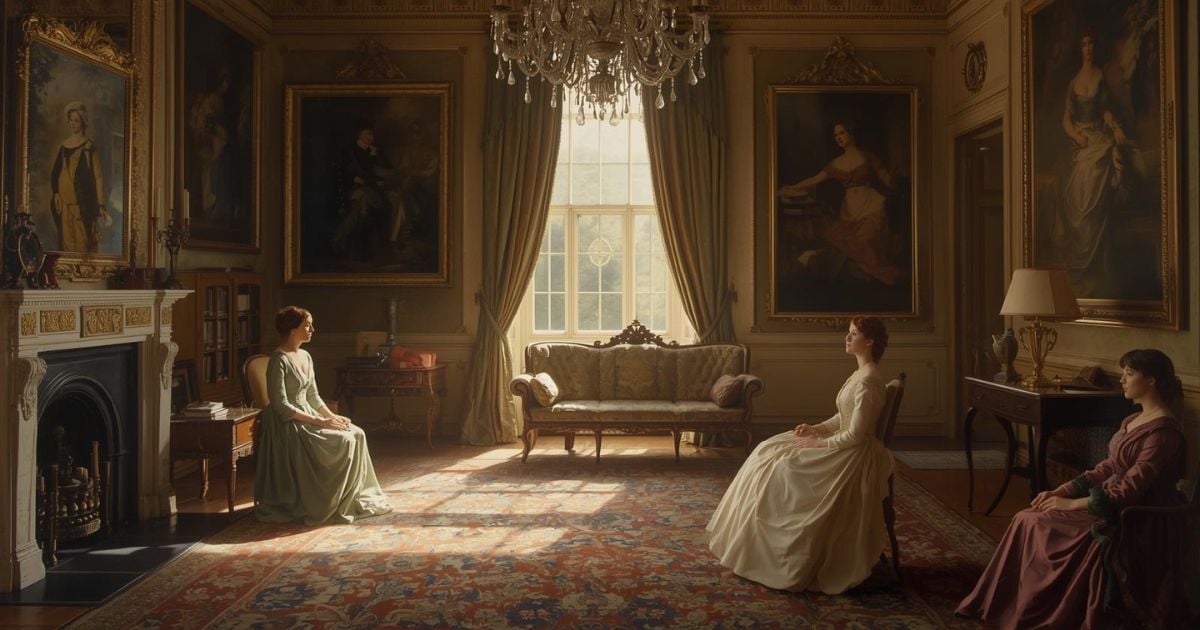
A smaller gift is praised as the generous one. John suggests that the three thousand pounds be cut in half, and says five hundred pounds would be a very large increase to his sisters' fortunes. Fanny tells him it is beyond anything great. What brother on earth would do half so much, even for real sisters, and these are only half-blood. He has such a generous spirit. John says he would not wish to do anything mean. One had rather do too much than too little. No one, he thinks, can say he has not done enough, and even the sisters can hardly expect more.
They are not in the room to expect anything. Fanny is mistress of Norland now, and Mrs. Dashwood and her daughters are visitors. John has already pressed them to treat the house as their home until she finds one in the neighbourhood, and she has accepted. She hears the kindness. She does not hear this talk. Fanny calls three thousand pounds a robbery of their only child, little Harry, and she calls half-blood no relationship at all. The deathbed request, she says, may have come from a light-headed man. John answers that his father named no particular sum. Something must be done when they leave. The something is being priced without them.
Five hundred pounds each comes next, then a hundred a year for their mother, which the sisters would feel as well. Fanny will not bind him to a yearly payment. People always live for ever when an annuity is to be paid, and Mrs. Dashwood is healthy and hardly forty. A sum every year would mean their fortune was not their own. John agrees that fifty pounds now and then will discharge the promise. Fanny is sure his father meant no money at all. Look for a small comfortable house, help them move, and send fish and game when they are in season. Four women, she says, can live very comfortably on five hundred a year with no carriage, no horses, hardly any servants, and no company. They will be more able to give him something. The china, plate, and linen are already theirs, and the breakfast set is twice as handsome as Norland's, too handsome for any place they can afford. That last point decides him. If his father could, he would have left almost everything to them, so John owes him no particular gratitude. He resolves that more than those neighbourly acts would be unnecessary, even indecent. Mrs. Dashwood is still in the house, trusting a kindness she has not heard priced. Will she ever learn that the promise is now fish and game?
Austen shows us something chilling: how quickly good people can be talked out of doing good things. John Dashwood isn't evil, he genuinely wants to help his stepfamily. But Fanny understands something about human psychology that still applies today: most people's moral impulses are surprisingly fragile when challenged systematically. She doesn't attack his generosity head-on. Instead, she makes him question whether help is really needed, whether he can afford it, whether it might even be harmful. Each doubt feels reasonable in isolation. This same architecture appears everywhere in modern life. In workplaces, when employees want to organize for better conditions but get talked out of it through fear campaigns about job security. In healthcare, when nurses want to spend more time with patients but get convinced that 'efficiency' serves the greater good. In families, when someone wants to help a struggling relative but gets persuaded that 'tough love' is better. The pattern always involves taking a generous impulse and gradually reframing it as naive, dangerous, or selfish. What makes this especially insidious is that the person doing the talking often convinces themselves they're being helpful, Fanny probably believes she's protecting John from his own foolish generosity. Understanding this pattern helps us protect our own moral instincts and recognize when someone's 'practical advice' serves their interests more than ours.
Explore this chapter with AI to uncover deeper meaning and practical takeaways.
AI Discussion