
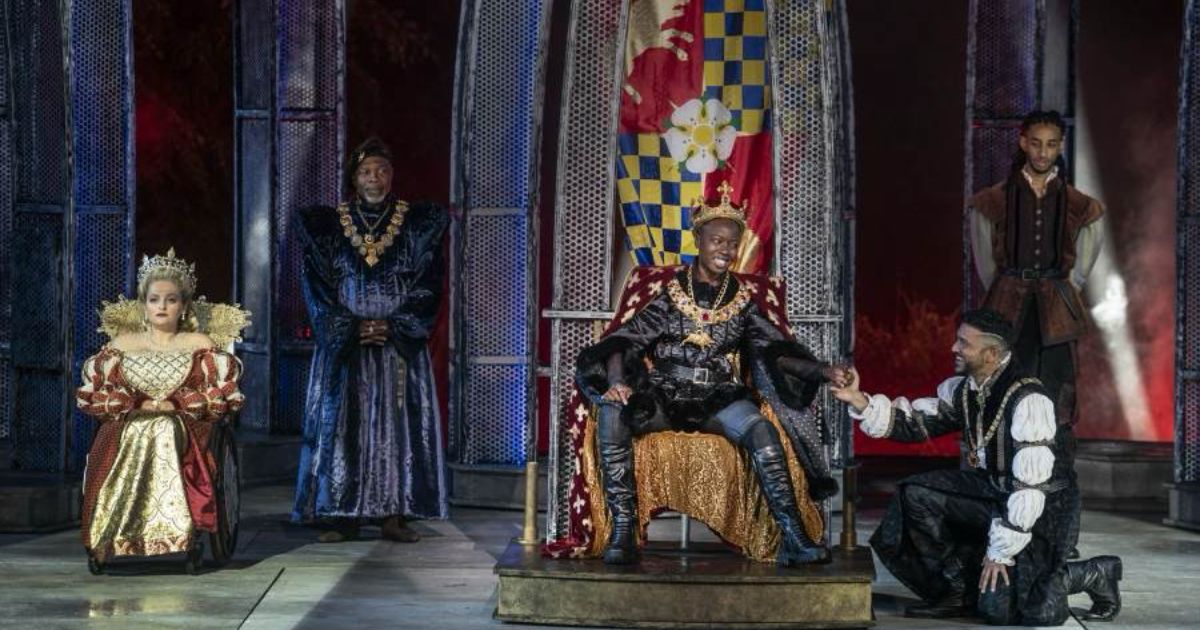
The dying King Edward gathers the court and forces a public peace. He makes Rivers and Hastings swear love, pulls the Queen into the embrace, and takes Buckingham's oath before turning to the reconciliation he wants most: mercy for his brother Clarence.
Richard arrives performing humility, claiming he bears no grudge against anyone alive, not even the infant born that night. The Queen asks Edward to pardon Clarence. Richard answers that the gentle duke is already dead. The room freezes. Edward says he reversed the order, but Richard reports a tardy messenger arrived too late to stop the burial.
Edward breaks down, remembering Clarence's loyalty in battle and cold nights, and asking who among them ever pleaded for his brother's life. No one had. He exits in grief fearing God's justice. Richard immediately whispers that the Queen's faction pushed for Clarence's death and offers to comfort Edward while the court still reels.
The Queen swoons when the burial is named. Edward asks which of these newly friendly lords ever sued for Clarence while the warrant could still be stopped, and no one in the reconciled room has an answer. Richard and Buckingham stay after he leaves and lay the death on her kindred.
Edward wants a deathbed peace. Richard wants the transition. The scene shows how a manipulator uses the moment of reconciliation to reposition, not to join it.
The pattern is **The Deathbed Pivot**. When leadership weakens, perform unity in public, then strike where the room feels safest. Richard arrives after the oaths, thanks God for his humility, and claims he hates no one more than a newborn infant.
Explore this chapter with AI to uncover deeper meaning and practical takeaways.
AI Discussion