
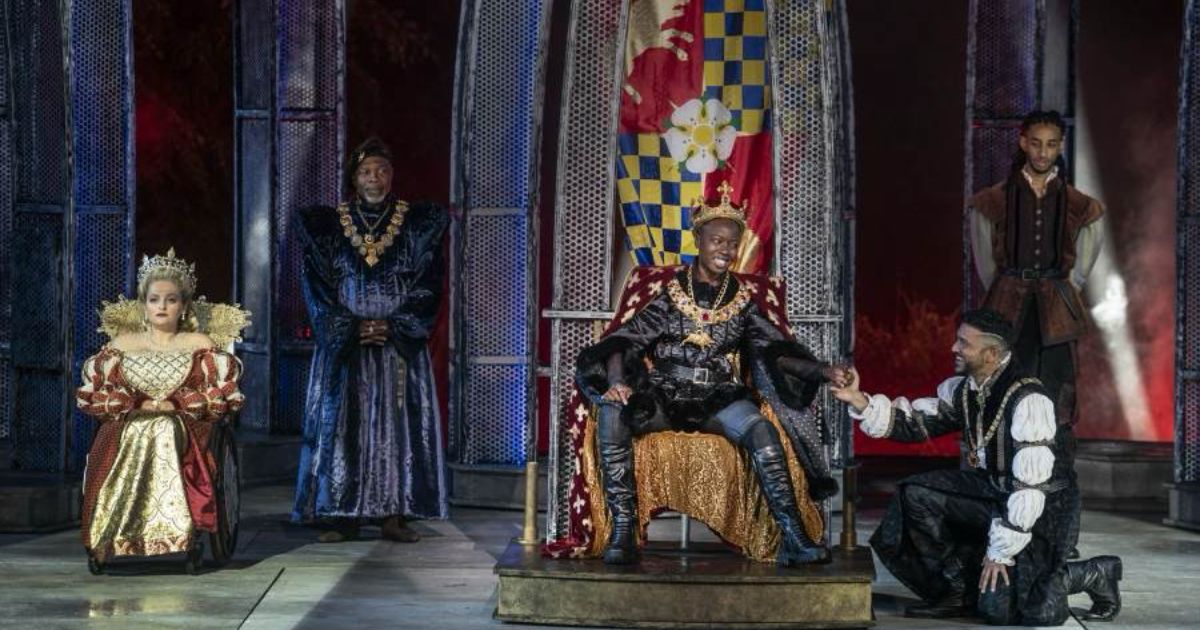
Richard and Buckingham enter in rotten armor and coach each other to tremble like terrified innocents. When the Mayor arrives they play at siege until Lovell and Ratcliffe bring Hastings's head. Richard weeps that he loved the plainest harmless creature, then insists law and England's peace forced the execution. Buckingham laments the mayor came too late to hear Hastings confess.
Richard sends Buckingham to Guildhall with a script: Edward's children are bastards, Edward was lustful and tyrannous, and touch sparingly that Edward himself may not be York's son because Richard's mother lives. A scrivener enters with Hastings's indictment, written in eleven hours from a precedent sent the night before, while Hastings still lived untainted and free. Who is so gross that cannot see this palpable device, yet who so bold but says he sees it not.
Buckingham returns: citizens stood like dumb statues and would not cry God save King Richard until his own plants hurled caps at the hall's lower end. Richard calls them tongueless blocks. Buckingham coaches him to take a prayer book, stand between two churchmen, and play the maid's part, still answer nay. The Mayor finds Richard on his knees between reverend fathers, too holy for worldly suits, as the propaganda machine shifts from blood to piety.
Richard does not need the Mayor to believe he loved Hastings. He needs the Mayor to believe the killing followed form, and that the crown will follow form next.
The pattern is **The Process Mask**. When someone uses legitimate procedure to hide a decision already made, the meeting is not deliberation but costume. Richard and Buckingham rehearse terror in rotten armor, then produce a head and call the rush legal necessity for England's peace. Buckingham adds that they would have let Hastings confess if the Mayor had arrived on schedule, which reframes murder as almost courteous.
Explore this chapter with AI to uncover deeper meaning and practical takeaways.
AI Discussion