
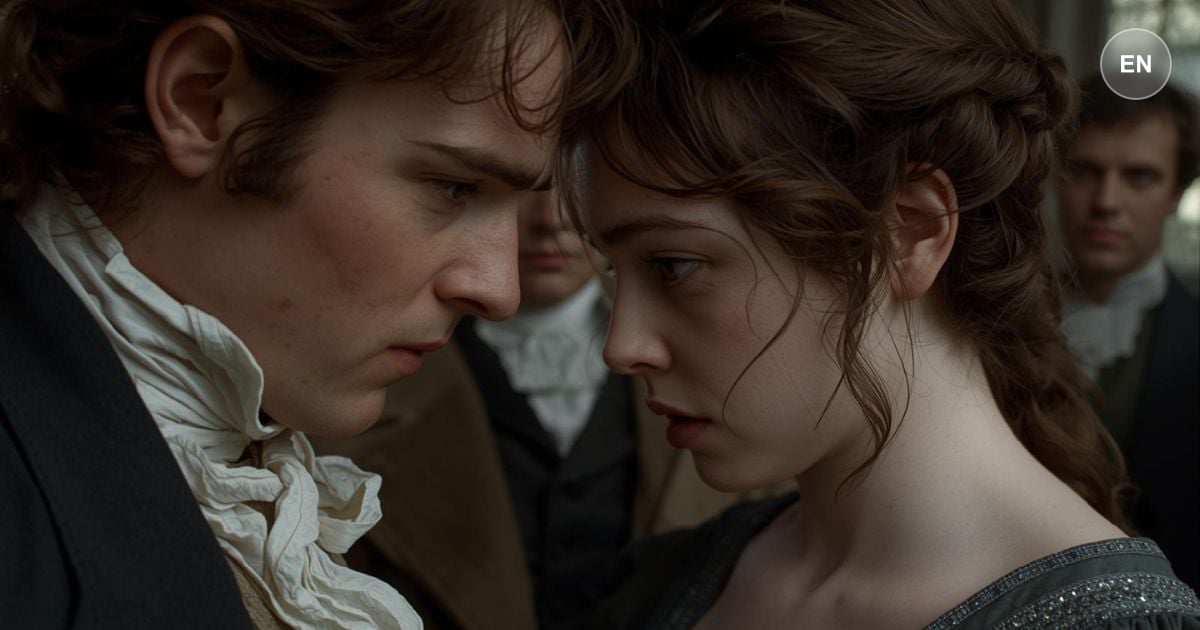
Attention is currency in a drawing room, and some people spend it on performance while others win it by refusing to perform. After dinner Elizabeth brings Jane downstairs. Caroline and Mrs. Hurst are unusually agreeable until the gentlemen enter; then Jane is no longer first object. Bingley piles up the fire, sits by her, and talks scarcely to anyone else, while Elizabeth watches with delight. After tea Caroline blocks cards because Darcy does not want them. He reads; she takes the second volume of his book, cannot win him into talk, and praises libraries. No one answers.
Hearing her brother mention a ball, she asks whether some present would find a dance a punishment. Bingley says it is settled as soon as Nicholls has made white soup. She walks the room at Darcy, fails, then pulls Elizabeth into a turn so he will look up. He declines to join and names two motives: secret affairs, or figures shown to advantage, which he can admire better from the fire.
The talk turns from joke to character. Elizabeth dearly loves a laugh; Darcy says pride, where there is real superiority of mind, will always be under good regulation, then admits a temper too little yielding: his good opinion once lost is lost forever. Elizabeth cannot laugh at implacable resentment. They trade defects: a propensity to hate everybody, and wilfully misunderstanding them. Tired of a conversation in which she has no share, Caroline demands music. After a few moments Darcy is not sorry. He begins to feel the danger of paying Elizabeth too much attention.
Chapter XI keeps Jane and Bingley in the foreground while Elizabeth and Darcy refine their combat. The fire scene is domestic courtship without words: warmth and proximity arranged in plain sight. Caroline's evening is a series of failed openings, library praise, anti-ball pose, parading walk. Her walk invitation to Elizabeth is clever: use the rival to stop the book. Darcy's two motives speech is comedy with an edge. The shift to faults is pivotal. Darcy does not pretend perfection; his temper is unyielding and his pardon slow. Elizabeth takes implacable resentment seriously, that is why she cannot laugh. Their closing defects exchange is the novel naming itself in dialogue. Wilful misunderstanding and held grudges will drive the crises ahead. Music breaks Caroline's exclusion; the last line tells us Darcy knows he is in trouble. Attraction is no longer only the narrator's secret.
Explore this chapter with AI to uncover deeper meaning and practical takeaways.
AI Discussion