
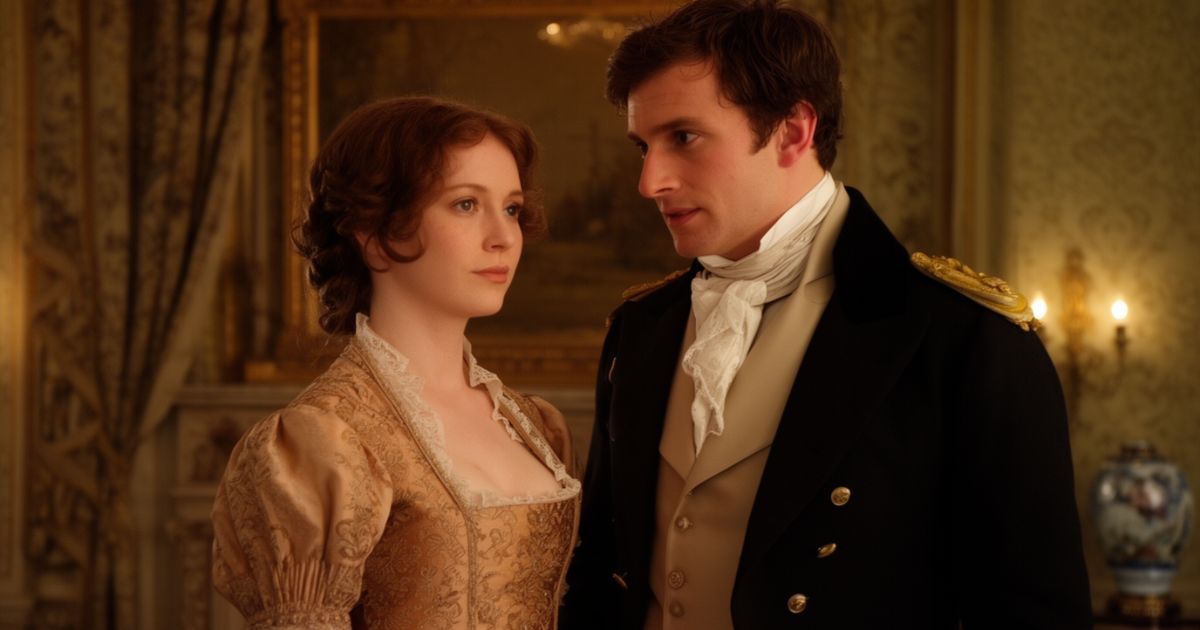
Once Anne and Captain Wentworth are set on marrying, little real opposition appears. Sir Walter does not object, and Elizabeth only looks cold. Twenty-five thousand pounds, and a rank won by merit, make Wentworth somebody at last. Sir Walter has little affection for Anne to warm the match, but the captain's looks may balance her rank, and the name sounds well. He can enter the marriage in the volume of honour with a good grace.
Lady Russell must admit she judged both men by manners, too quick against Wentworth and too quick to trust Mr Elliot. She loves Anne better than her own discernment, and she attaches herself to the man who is making Anne happy. Mary enjoys a sister's marriage, and the fact that Wentworth is richer than Benwick or Charles Hayter. Anne's seniority and a pretty carriage will sting, yet Mary hopes he is never made a baronet, since Anne will have no estate. Elizabeth has no such comfort. Mr Elliot withdraws, and nobody suitable follows.
The engagement also wrecks his plan to keep Sir Walter single. He leaves Bath. Mrs Clay follows and is next heard of in London under his protection. She may yet become Lady Elliot. Sir Walter and Elizabeth feel the loss and the cheat. Anne's lasting pain is not money. She has no family a sensible man would value, only Lady Russell and Mrs Smith, against the welcome of his brothers and sisters. He helps Mrs Smith recover her husband's property in the West Indies, so the marriage gives her two friends instead of one. Anne has the worth of her tenderness in his affection. She glories in being a sailor's wife, and she accepts the quick alarm that belongs to his profession.
Chapter 24 delivers happiness without amnesia. Austen opens by insisting determined couples usually prevail, then shows how little opposition Anne and Wentworth actually face beyond cold manners. Lady Russell's revision is the moral centerpiece: she was wrong about dangerous impetuosity and polished correctness alike, yet her love for Anne survives the verdict. The coda tracks losers without savoring cruelty: Elizabeth's frozen vanity, Mr Elliot's domestic plan ruined, Mrs Clay's schemes relocated. Anne's joy at the party is social and intimate at once, built from brief communications with Wentworth amid a room she can finally endure. The closing note about a sailor's wife is Austen's refusal of fantasy. Alarm travels with tenderness. Wentworth's line about being happier than he deserves names the novel's final wisdom: mature love receives grace, accounts for pride, and keeps the receipts. Finis is not innocence restored. It is life resumed with clearer sight.
Explore this chapter with AI to uncover deeper meaning and practical takeaways.
AI Discussion