
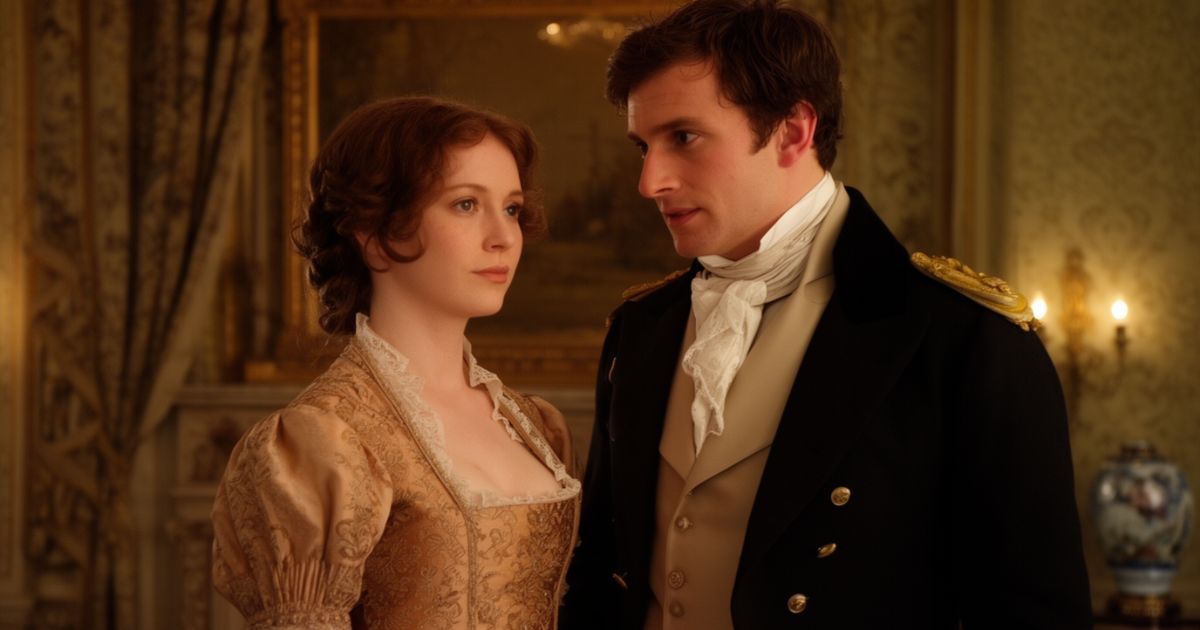
While Sir Walter and Elizabeth push their fortune in Laura Place, Anne renews an older acquaintance. Her governess tells her that Miss Hamilton, now Mrs Smith, is in Bath, the schoolfellow who was kind when Anne went grieving to school after her mother's death. The widow is poor. An extravagant husband left his affairs involved, and rheumatic fever has made her a cripple in humble lodgings near the hot baths, almost excluded from society. Anne says nothing at home, because it would excite no proper interest. Lady Russell drives her toward Westgate Buildings.
Twelve years have made Anne a gentle woman of twenty-seven and Mrs Smith an infirm widow receiving a former protegee as a favour. The awkwardness passes into old partiality, and the cheerfulness is more than the facts allow. She has no child, no relations to help, and almost no movement beyond a noisy parlour and a dark bedroom. Anne decides this is not fortitude or resignation only. It is elasticity of mind, a natural power to turn from evil to good and to find work that carries her out of herself. Nurse Rooke has taught her to knit and to sell small things for poor families, and Mrs Smith treats the nurse's gossip as a way of knowing what people are like. When Anne praises the heroism of a sick chamber, Mrs Smith answers that weakness and selfishness appear there more often than fortitude, and that real friendship is scarce. The shadow of a disappointing husband passes, and she shakes it off, planning to sell her best work to pretty Mrs Wallis.
A sudden invitation to Laura Place finds Anne already engaged in Westgate Buildings, and she is not sorry to decline. Sir Walter is severe. He asks who Miss Anne Elliot is, to visit a mere Mrs Smith among low company, and he tells her to put the old lady off. She will not. Lady Russell approves the visits, so Anne stays silent, though she longs to note that Mrs Smith is not the only poor widow in Bath between thirty and forty. The others report a delightful evening, and through Lady Russell Anne hears that Mr Elliot calls her choice a model of female excellence.
That praise settles Lady Russell. She hints at a happy alliance and at Anne becoming Lady Elliot in her mother's place at Kellynch. For a few moments Anne is bewitched by the home and the name. Then the image of Mr Elliot speaking for himself restores her composure. She never could accept him. Her feelings are adverse to any man save one, and her judgement distrusts a clever, cautious man with no burst of feeling, who pleases every temper in the house, including Mrs Clay. Lady Russell sees nothing to distrust, and she hopes to see him receive Anne's hand in Kellynch church the following autumn.
Chapter XVII divides Bath sharply. In Laura Place, Sir Walter and Elizabeth collect aristocratic names that impress no one with depth. In Westgate Buildings, Anne finds Mrs Smith, whose poverty and illness have not closed her heart or ruined her spirits. Anne studies that resilience and names it elasticity of mind, a gift that turns outward into work, conversation, and small charity rather than collapsing inward. Mrs Smith also offers a harder wisdom about sickrooms and friendship, earned by experience rather than theory. Against that living standard, Lady Russell's approval of Mr Elliot feels like a beautiful trap: Kellynch restored, mother revived in name, yet the man himself remains closed and too generally agreeable. Anne's quiet 'we should not suit' is the chapter's moral spine.
Explore this chapter with AI to uncover deeper meaning and practical takeaways.
AI Discussion