
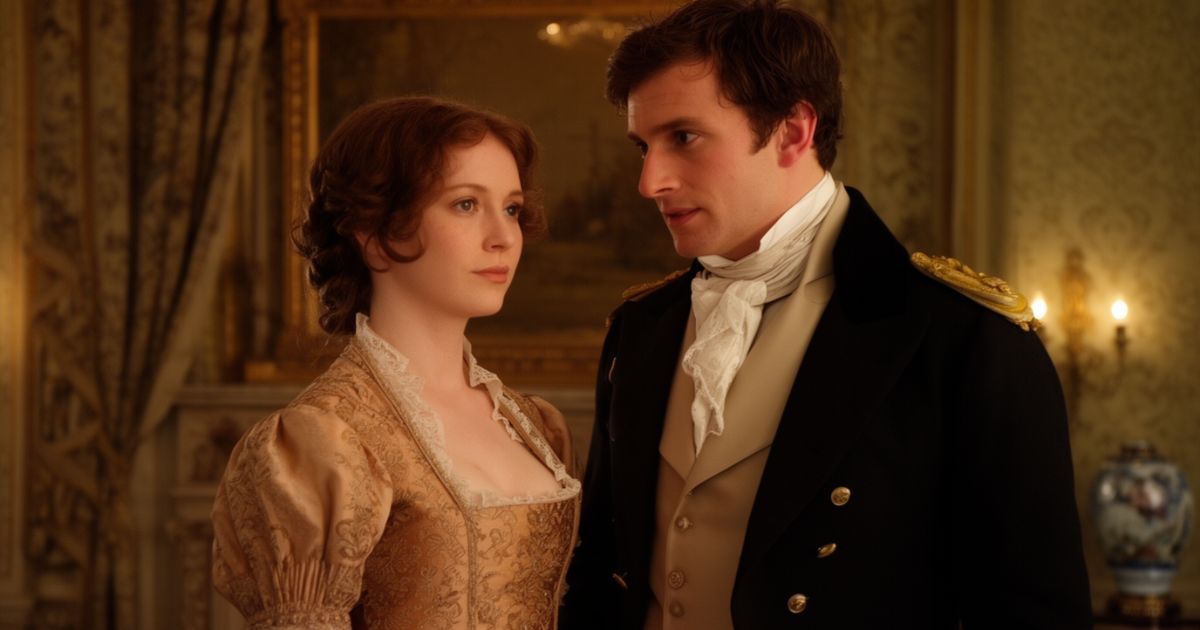
The favourite volume always opens at the same page. Sir Walter Elliot of Kellynch Hall never takes up any book but the Baronetage, and when home turns unwelcome he reads his own history there with an interest that never fails. He has improved the printed entry in his own hand: the day he lost his wife, Mary's marriage to Charles Musgrove, and the name of the heir, William Walter Elliot. Vanity of person and of situation is the beginning and the end of him. At fifty-four he is still a very fine man, and beauty ranks, for him, just under a baronetcy. The wife who for seventeen years humoured those failings, or concealed them, has been dead thirteen years. Lady Elliot left three girls to a conceited, silly father. She had relied on Lady Russell, a steady widow in the village, to help keep the daughters' principles. People had expected that friend and Sir Walter to marry. They did not. He remains single, he lets it be known, for his dear daughters' sake. For Elizabeth, handsome and like himself, he would really have given up anything he had not been very much tempted to do. Mary has a little importance as Mrs Charles Musgrove. Anne, whose mind would have placed her high with anyone of real understanding, is nobody with father or sister. Her word has no weight. Her convenience always gives way. She is only Anne.
Lady Russell can fancy the mother alive again only in Anne. Sir Walter cannot. Anne's bloom went early, her face was never his, and he has no hope of reading her name on any later page of that book. Elizabeth, twenty-nine, is still as handsome as she was when she took her mother's place, and he notices how old everyone else is growing. She does not quite share the peace. The same book is an evil to her, because it shows the date of her birth and no marriage after it except a younger sister's. She has closed it, eyes turned away, and pushed it aside. The man who was meant to fill the blank was the heir her father had written in. Mr Elliot was invited to Kellynch and did not come, then married a rich woman of inferior birth and spoke with contempt of the family whose title he would inherit. In the summer of 1814 Elizabeth wears black ribbons for his wife, and still will not think him worth a second thought.
What fills her days is elegance with nothing to do, until her father grows distressed for money. He takes up the Baronetage now to drive off the tradesmen's bills and the hints of his agent, Mr Shepherd. While Lady Elliot lived, economy had just kept him within his income. Since then he has spent what he believes Sir Walter Elliot is imperiously called on to spend, and the debt will no longer stay hidden. Last spring he asked Elizabeth, "Can we retrench?" She proposed cutting some unnecessary charities, and not furnishing the drawing-room anew. Then came the happy thought of taking no present down to Anne, as they had done every year. It was not enough, and he had to tell her the whole. Neither of them can imagine spending less without giving up dignity or a comfort they will not bear to lose. He has mortgaged what he can. He will not sell. The estate is to be handed on whole, as he received it. Mr Shepherd and Lady Russell are called to advise, and father and daughter expect one of them to end the trouble without the loss of any indulgence of taste or pride.
Chapter 1 looks like exposition, but Austen is running a diagnostic test. Sir Walter does not merely enjoy privilege; he uses it as a substitute for perception. That is why debt can grow under a man who still feels handsome and important. Anne's tragedy begins in the same house: she is perceptive enough to see the family's folly and powerless enough to be dismissed as 'only Anne.' The chapter therefore sets two linked problems: a society that rewards display, and a heroine trained to yield when people she trusts speak with confidence. Readers who recognize this pattern early can watch every later persuasion with sharper eyes.
Explore this chapter with AI to uncover deeper meaning and practical takeaways.
AI Discussion