
This chapter delivers the book's most memorable image: the bull and the mouse. The "direct" man, the man of action, charges at his object like an infuriated bull with its horns down. Nothing stops him except a stone wall, and when he hits one, he finds it genuinely settling: tranquil, morally soothing, final. He accepts it and moves on. The Underground Man envies him with a green-faced intensity. The direct man is stupid, he admits, but maybe stupidity is exactly what the normal man is supposed to be.
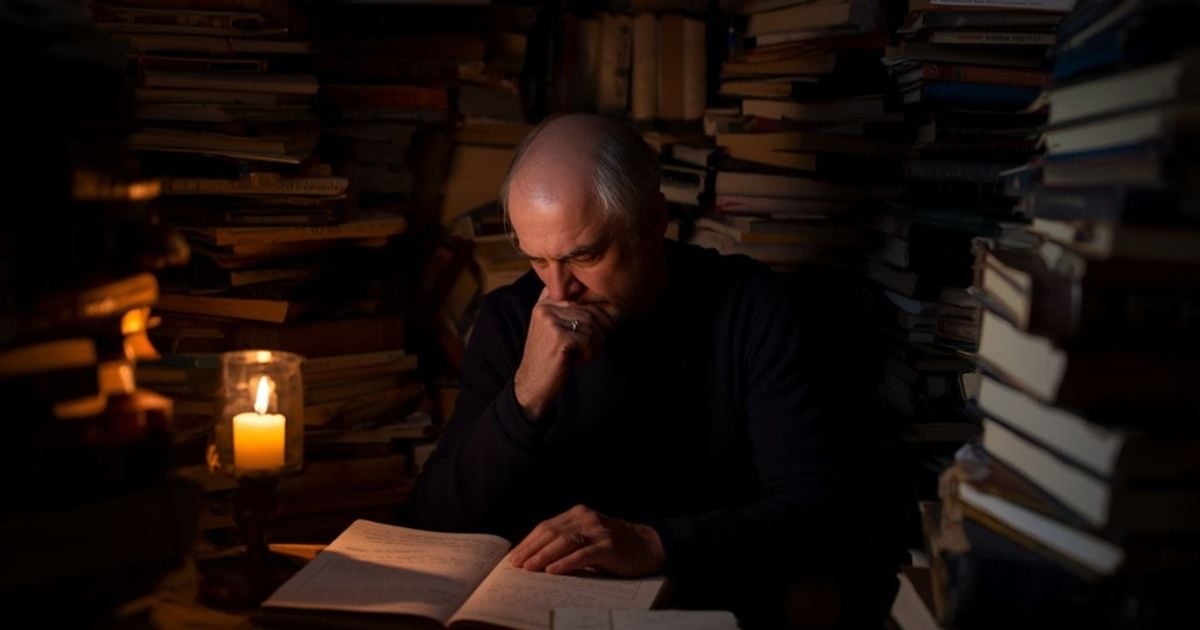
Against this stands the "retort-made man", the man of acute consciousness, who in the presence of the direct man thinks of himself as a mouse. Not because others force this comparison on him, but because he does it himself. And here is the chapter's sharpest point: the mouse may have even MORE spite than the bull. The desire to avenge an insult may rankle even more nastily in the mouse than in the man. But the mouse cannot bring itself to believe in the justice of revenge. The bull acts because it sees revenge as pure justice. The mouse sees too much, the doubts, the questions, the contempt of the watching crowd, and drowns in them.
So the mouse retreats into its underground hole and stews there, in cold malignant spite, for forty years. It replays the injury. It adds details. It invents new humiliations against itself. It may even take piecemeal revenge, small acts, from behind the stove, incognito, but without believing in its right to do so, knowing it will suffer a hundred times more than the person it retaliates against. On its deathbed, it will recall the whole thing again, with interest.
Then comes the twist the chapter has been building toward: even this underground existence has its own strange enjoyment. The savour lies precisely in the half-despair, the oscillations, the hell of unsatisfied desires turned inward. This is too subtle for people of strong nerves to grasp.
The chapter closes on the stone wall. Direct men accept walls, the laws of nature, mathematical facts, "twice two makes four", as final and move on. The Underground Man refuses. He can't break through the wall. But he will not be reconciled to it. He would rather grind his teeth in silent impotence and sink into what he calls "luxurious inertia", knowing there is no one to blame, no object for his spite, just a formless ache that gets worse the less he can identify its cause.
Dostoevsky identified something brutal about human nature: intelligence can become its own prison. The Underground Man represents countless people today who think themselves into paralysis while simpler folks move forward with their lives. This isn't about being anti-intellectual—it's about recognizing when analysis becomes avoidance. In 1864 Russia, social mobility was limited, so the Underground Man's retreat into mental complexity made some sense. Today, we have more opportunities, but the same trap exists. The person who researches the perfect career move for two years while their industry changes. The parent who reads every parenting book but never actually plays with their kids. The patient who googles symptoms endlessly instead of seeing a doctor. There's a seductive quality to this sophisticated suffering—it feels profound, intellectual, morally superior to the 'charging bull' approach. But Dostoevsky shows us the cost: while we're analyzing, life is happening. The bulls aren't necessarily happier, but they're living. They make mistakes, hit walls, adapt, and keep moving. The mice create elaborate mental worlds where they're always right but never effective. The question isn't whether to think or not think—it's knowing when enough analysis is enough and when action, even imperfect action, serves us better than perfect paralysis.
Explore this chapter with AI to uncover deeper meaning and practical takeaways.
AI Discussion