
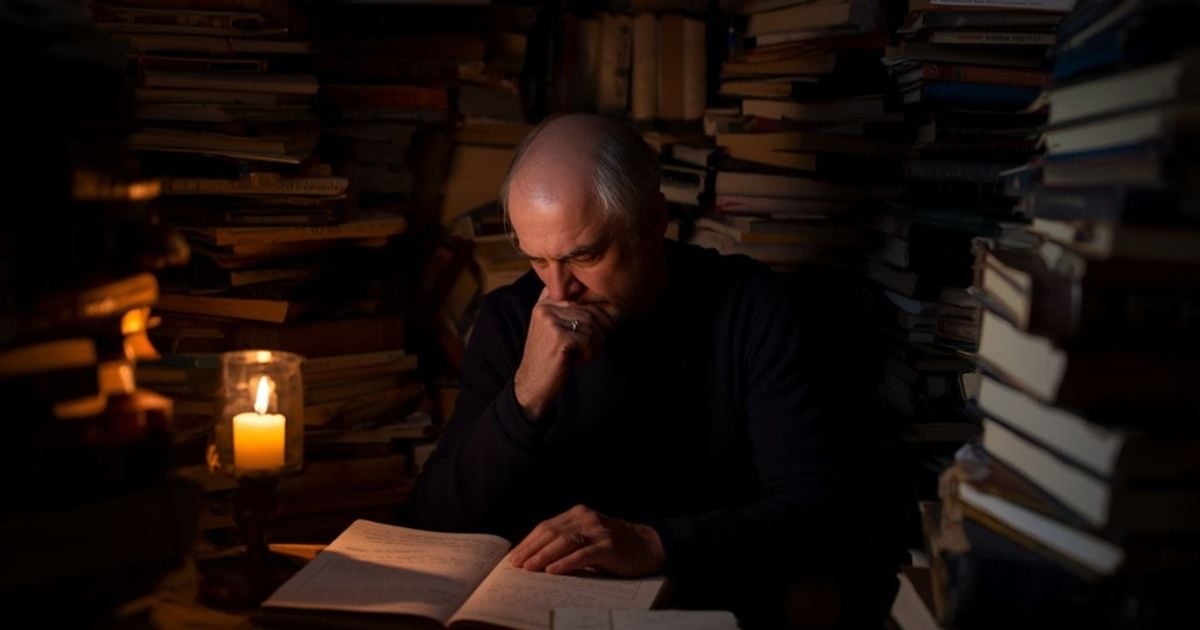
He arrives at Simonov's to find two old schoolfellows already there. They scarcely notice his entrance, "evidently they looked upon me as something on the level of a common fly." He had not been treated quite like that even at school, though they all hated him. They are planning a farewell dinner for Zverkov, an officer about to leave for a distant province.
Zverkov: a portrait. At school, pretty, playful, liked by everyone, always bad at lessons, left with a good certificate through "powerful interests," came in for an estate of two hundred serfs and took up a swaggering tone. Vulgar but good-natured; everyone grovelled before him anyway. The Underground Man hated his self-confident voice, his stupid witticisms he found brilliant, his handsome but stupid face (which he would have gladly exchanged for his own intelligent one). When Zverkov once boasted that he would not leave a single village girl on his estate unnoticed, his droit de seigneur, and the others applauded, the Underground Man attacked him. Not from compassion for the girls: simply because they were applauding such an insect. He got the better of the argument; the laugh ended up on Zverkov's side.
The other two: Ferfitchkin, monkey face, blockhead, bitter enemy, affected personal honour while being a wretched coward at heart, one of those who worshipped Zverkov from interested motives and borrowed money from him. Trudolyubov, tall, army, cold face, only capable of thinking of promotion, a distant relation of Zverkov's; thought the Underground Man of no consequence whatever.
The dinner is being planned at seven roubles each, twenty-one roubles for three. The Underground Man blurts out: if you count me, it will be twenty-eight roubles. Simonov looks at him with no appearance of pleasure. He knew him through and through. The Underground Man is furious that Simonov knows him so thoroughly. Ferfitchkin and Trudolyubov push back, he was never on good terms with Zverkov. He forces himself in anyway, voice shaking, insisting his very estrangement is why he wishes to come now. They put his name down and leave without warmth.
Alone with Simonov, who asks awkwardly about the subscription money, and the Underground Man suddenly flushes crimson, remembering that he has owed Simonov fifteen roubles for ages. He has never forgotten it. He has also never paid it. He leaves with an "astonishingly free-and-easy air" that was the last thing he expected of himself.
On the street, grinding his teeth: what possessed him? He resolves to send a note. But he knows for certain he will go, and that the more tactless and unseemly the going would be, the more certainly he will go.
He has nine roubles. Seven must go to Apollon, his servant, "that plague of mine", for monthly wages. He knows he will not pay Apollon.
That night, hideous dreams of school. He had been sent there by distant relations upon whom he depended, arriving a forlorn, silent boy, already crushed by reproaches, looking at everyone with savage distrust. His schoolfellows met him with spiteful jibes because he was not like them. Their faces degenerated and grew stupider over the years; by sixteen he was struck by the pettiness of their thoughts, the stupidity of their pursuits. He forced his way to the top academically to escape their derision. The mockery ceased; the hostility remained. Once, finally, he had a single friend, but he was already a tyrant at heart. He wanted unbounded sway, instilled contempt for the friend's surroundings, frightened him with passionate affection, reduced him to tears and hysterics. When the friend devoted himself entirely, the Underground Man immediately began to hate and repulse him, as though all he had needed was to win a victory over him and nothing else.
Morning: excitement, as always with any external event, the feeling that a radical change was at hand. He sneaks away from the office two hours early. Agonises over timing the arrival, not first, or they'll think he's overjoyed. Polishes his boots a second time himself, secretly, to avoid Apollon's contempt. The yellow stain on the knee of his trousers: he knows it will deprive him of nine-tenths of his personal dignity. He knows he is monstrously exaggerating. He cannot help it.
He pictures each person's contempt precisely: Zverkov's cold disdain, Trudolyubov's dull-witted contempt, Ferfitchkin's impudent sniggering to curry favour. And worst: how "paltry, unliterary, commonplace it would all be." He passionately longs to dominate them all, crush Zverkov with his elevation of thought and unmistakable wit, perhaps achieve reconciliation and everlasting friendship. But, and this is the worst of it, he knows even then, fully and for certain, that he needs none of this, that he doesn't really want to crush or attract them, that he doesn't care a straw for the result even if he achieves it.
He watches the wet snow from his window. His clock hisses out five. He seizes his hat, slips past Apollon, who has been waiting all day for his wages but, in his stubbornness, unwilling to be first to speak, and, spending his last half rouble on a high-class sledge, drives up in grand style to the Hôtel de Paris.
Dostoevsky understood something brutal about human nature: we often crave recognition most from people whose values contradict our own. The Underground Man forces himself into Zverkov's dinner knowing it will humiliate him, but unable to resist the pull of belonging among the socially successful. This isn't masochism—it's the recognition drive gone haywire. In 1864 Russia's rigid class system, a brilliant but poor man like the Underground Man could see exactly what he was excluded from. Today's version is subtler but equally painful. We see it in the healthcare worker who mocks administration while desperately wanting management recognition, or the brilliant colleague who sabotages meetings while craving team acceptance. The pattern reveals itself when we find ourselves drawn to people we claim to dislike, pursuing validation that requires us to diminish ourselves. Zverkov represents effortless social success—mediocre but charming, casually cruel but universally accepted. The Underground Man's tragedy isn't his intellectual superiority; it's his inability to find compatible sources for his very human need to belong. Modern workplaces, social media, even family dynamics can trap us in similar cycles. We pursue approval from people whose acceptance would require betraying our deepest values, then wonder why we feel empty even when we succeed. The real question isn't whether we need recognition—we all do. It's whether we're seeking it from people who can actually see and value who we really are.
Explore this chapter with AI to uncover deeper meaning and practical takeaways.
AI Discussion