
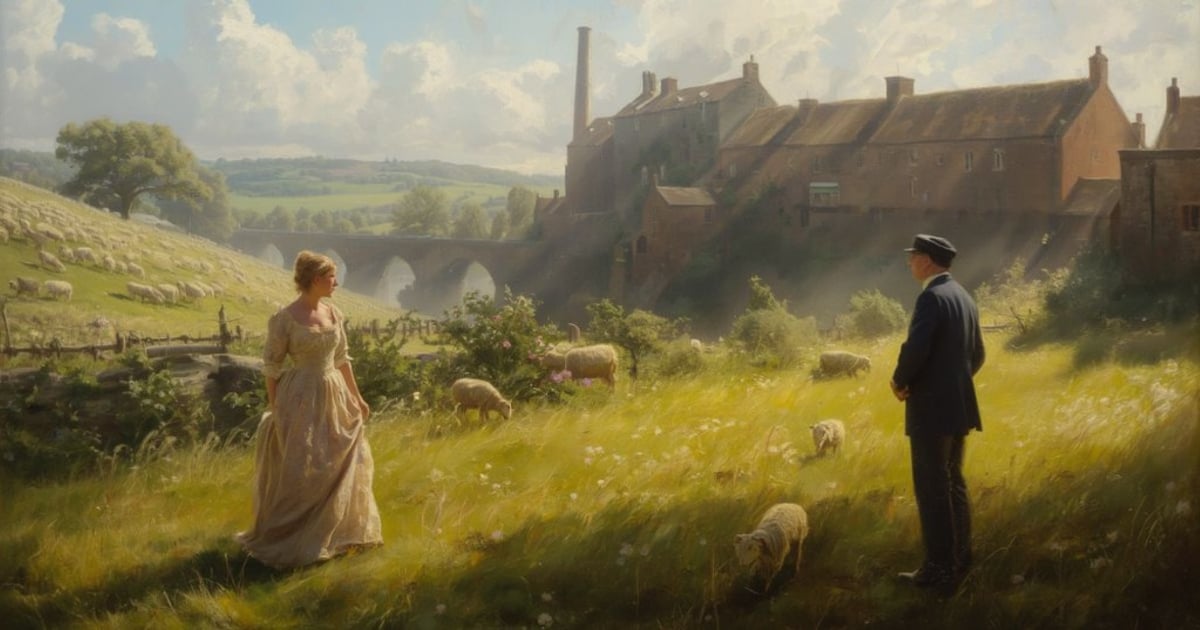
Margaret Hale listens to Mrs. Hale plan winter help for Helstone parishioners, and each kind detail hurts because the family will leave before frost. Old Simon, Mary Domville's crippled boy, and others will lose the visits they rely on. Margaret urges generosity without admitting why every act feels like a last one. That night, after learning her father must resign his living for religious doubt and move to Milton-Northern, she kneels with Mr. Hale at the window and prays, then dreams of Henry Lennox's proposal mixed with falling, failure, and a sense that her world has split open.
In the morning Mrs. Hale speaks cheerfully of village charity, unaware of the deadline. Mr. Hale announces he will be out until seven, when Margaret must tell her mother. She takes Mrs. Hale into the garden, waits for a bee to leave a flower as her signal, and blurts the truth: Mr. Hale is leaving the Church and they are going to Milton in a fortnight. Mrs. Hale sits on a bench and weeps, angry that her husband confided in Margaret first and terrified of smoky factories, lost status, and exile from the genteel circles she once knew at Beresford Court.
Margaret spends the day comforting her, planning what can be planned, and dreading her father's return. When Mr. Hale comes home grey and timid, Mrs. Hale runs to him and forgives the silence. Margaret flees upstairs in hysterics. Dixon, the maid, insults Mr. Hale's decision and invokes old family pride; Margaret, suddenly steely, orders her out and wins Dixon's respect. Mrs. Hale takes to her bed, leaving Margaret in charge of a move she barely understands while the successor to Helstone living is already appointed. Margaret faces the impossible task of telling her mother that they must leave their beloved home forever.
Margaret opens an atlas and proposes sending Mrs. Hale and Dixon to seaside Heston while she and her father find lodgings in Milton. Mr. Hale, overwhelmed, agrees. Four months earlier Margaret chose dresses for dinner parties; now she must pack a lifetime, face reduced income, and leave Helstone forever. The sheltered daughter has become the person who decides where her family sleeps next. Her father has resigned from the Church due to religious doubts, forcing the family to relocate to the industrial town of Milton-Northern. The weight of this secret has been crushing Margaret, and she can no longer bear watching her mother make plans for a future that will never happen.
Margaret's transformation reveals a pattern that plays out in families across centuries: when crisis hits, one person often becomes the emotional and practical anchor for everyone else. In Gaskell's time, this burden frequently fell to unmarried daughters who had fewer external obligations. Today, it's often whoever seems most capable, regardless of age, gender, or whether they volunteered for the role. Margaret doesn't choose to become her family's crisis manager; she's conscripted by circumstance and necessity. Her father retreats into guilt and religious doubt. Her mother escapes into illness and denial. Margaret steps forward because someone must, and she's the only one still functional. This dynamic appears everywhere: the sibling who manages aging parents while others live their lives, the employee who keeps the department running when management fails, the friend who becomes everyone's therapist during group trauma. The pattern is seductive because it works, temporarily. The strong person gets things done, others feel supported, crisis gets managed. But the cost is enormous: the anchor person often sacrifices their own processing time, their own needs, their own right to fall apart. They become indispensable, which can feel powerful but is actually a trap. Margaret's story suggests that recognizing this pattern early, naming it, setting boundaries around it, demanding support even while providing it, might be the difference between temporary leadership and permanent martyrdom. When you find yourself becoming everyone's rock, the question isn't whether you can handle it, but whether you should have to handle it alone.
Explore this chapter with AI to uncover deeper meaning and practical takeaways.
AI Discussion