
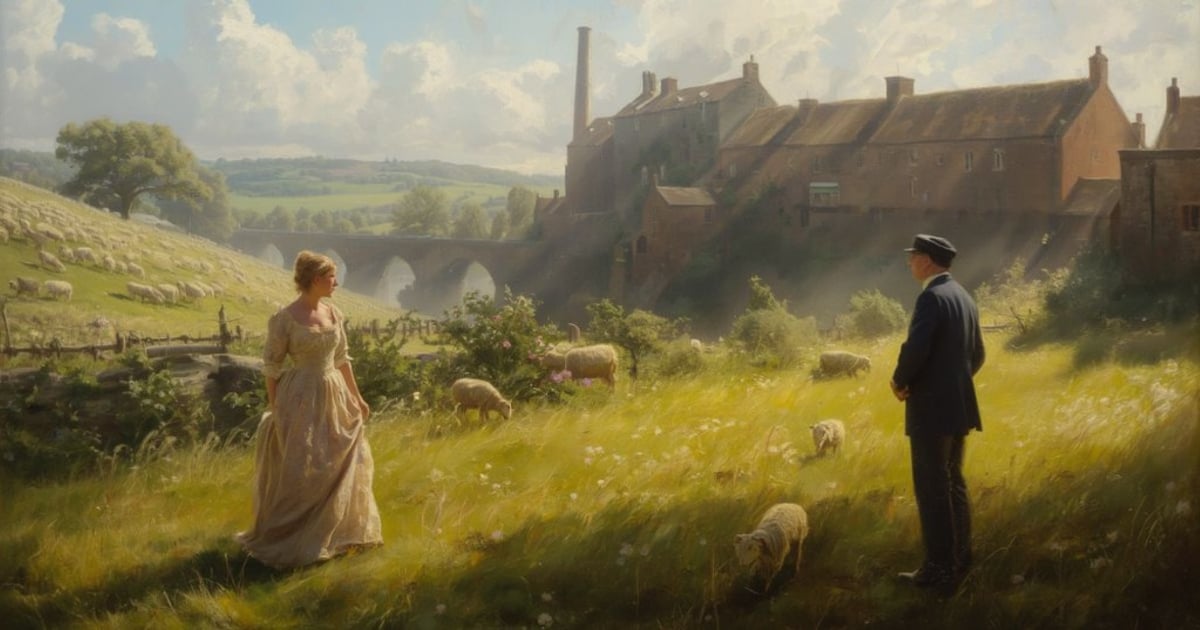
Margaret returns to Helstone with Mr. Bell hoping to recover the peace of childhood memory. Instead she finds change: new faces in familiar cottages, altered paths, a busy new vicar and his wife who have made the parsonage bright, loud, and unlike the home she mourned. Even the landscape feels smaller and less magical than the place she carried in mind, as if memory had enlarged every field and lane while the living village moved on without her.
Bell listens as she names the gap between remembered Helstone and present reality. A neighbour's casual cruelty to a cat, born of superstition, shocks her into seeing how hardship breeds meanness as well as tenderness. The pilgrimage does not restore innocence; it confirms she cannot go back. The new vicar and his wife have transformed the parsonage with their bustling energy and modern improvements, erasing the quiet contemplation that once defined Margaret's home. Even more disturbing, she encounters the casual cruelty of superstition when she learns a neighbour tortured a cat in a desperate ritual.
On the journey Margaret confesses to Bell the full truth of the railway station lie: she denied being there when Frederick struggled with Leonards, not knowing Thornton had seen her. She protected her brother; Thornton read deception and lost faith in her word. She describes the inquest she feared, the police questions she evaded, and the way Thornton's face changed when he understood she had lied to his face. Bell listens without preaching, and Margaret realizes how long she has carried the story alone.
The visit closes her southern arc with honesty rather than comfort. Helstone is gone as she knew it, and the lie still stands between her and Thornton until someone speaks. Margaret asks Mr. Bell to explain the railway station truth if he reaches Milton before she does. Bell promises he will try, though the carriage is already turning south while Thornton still believes the worst. She rides on with grief for a lost home and shame for a deception that outlived its purpose, yet naming both aloud to Bell has lifted a fraction of the weight. Until Thornton hears her side, Milton will remain a city of mistaken conclusions, and Margaret will remain the woman who denied what he saw with his own eyes. Bell watches her face as the lanes thin out, understanding at last how much the railway lie has cost her, and how little Helstone could do to heal it. He does not promise a quick reconciliation; he only promises to speak plainly if Thornton will listen. That is enough for Margaret to breathe, though the old village has already slipped behind them like a chapter closed mid-sentence, unfinished still.
Margaret's devastating return to Helstone reveals something profound about human psychology: the places we idealize in memory often can't bear the weight of our adult understanding. She returns seeking the peace of childhood, but finds casual cruelty, strangers in familiar spaces, and the uncomfortable truth that her memories were selective. This isn't just about nostalgia, it's about how we use idealized pasts to avoid dealing with present pain. When Margaret encounters the neighbour who tortured a cat in superstitious desperation, she's forced to confront the reality that her childhood paradise always contained darkness she was too young to see. The same pattern plays out today when adults return to childhood neighborhoods, reconnect with old friends, or revisit former workplaces, expecting comfort but finding only the sharp edges of reality. The real insight isn't that 'you can't go home again', it's that the home you remember never existed the way you remember it. Your adult eyes see complexity your child eyes missed. The question becomes: how do you honour what was genuinely good about the past without using it to escape the work of building something better in the present? Sometimes the most loving thing we can do for our memories is to stop asking them to solve our current problems.
Explore this chapter with AI to uncover deeper meaning and practical takeaways.
AI Discussion