
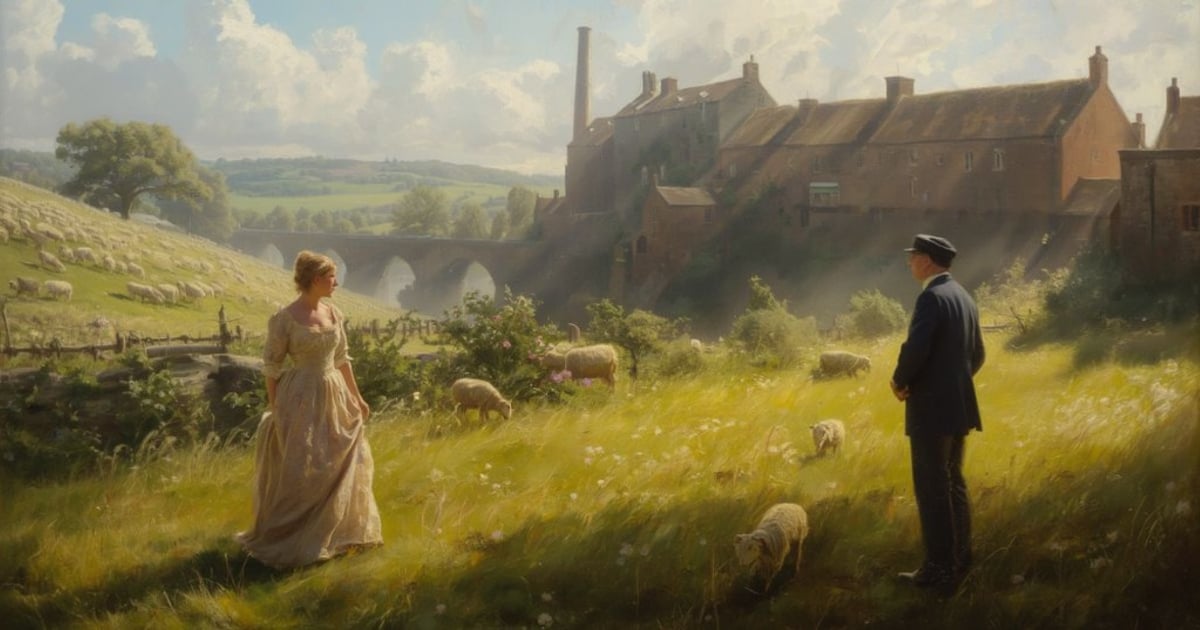
Margaret calls at the Thornton house to ask for a water-bed for Mrs. Hale and waits in the shuttered drawing room while distant noise swells. Fanny Thornton explains that John imported Irish workers during the strike, angered Milton hands, and now keeps the newcomers locked upstairs for safety. Before Mrs. Thornton appears, the crowd reaches the gates and begins to batter them. A violent mob of unemployed workers storms the Thornton mill, furious that Irish workers have been brought in to replace them at lower wages. Margaret finds herself trapped in the house as the crowd batters down the gates, their rage focused on mill owner John Thornton.
Mrs. Thornton sends for John as the siege intensifies. He locks the mill, enters the house, and faces his mother and Margaret while workers shake the walls. Margaret asks where the Irish hands are hidden and urges John not to wait passively for soldiers but to speak to the men as human beings. He goes out; she bars the door and climbs back to the window, seeing Boucher among the gaunt, enraged faces who believe imported labor steals bread from their children. When Margaret challenges Thornton to face the mob like a man rather than wait for soldiers, he goes out to confront them alone.
When the mob prepares to hurl clogs at John, Margaret runs downstairs, stands between them, and pleads for peace. A stone meant for him grazes her forehead; blood on her face shames the crowd into retreat. John catches her, then steps into their midst unprotected, daring them to kill him without a woman shield. He carries Margaret inside, murmurs that she is the only woman he ever loved, and hides his feeling from Mrs. Thornton. But as the crowd prepares to attack him with wooden clogs, Margaret makes a split-second decision that changes everything, she rushes outside and shields Thornton with her own body.
Mrs. Thornton and a surgeon bind Margaret's wound while servants gossip that she had her arms around John's neck. Margaret insists on a cab home before her parents hear of the riot. Mr. Lowe escorts her. The strike's violence has peaked in one public act that binds her to John emotionally even as she flees the scene and hides the injury from her mother. A stone meant for him strikes her in the head instead, and the sight of her blood shames the mob into retreating. This moment of physical courage reveals Margaret's deeper feelings and forces both her and Thornton to confront emotions they've been avoiding.
Gaskell understood something modern psychology confirms: authentic character emerges when cognitive load overwhelms our ability to perform social roles. Margaret's split-second decision to shield Thornton reveals her true values, she's someone who will sacrifice herself to protect others, even those she claims to dislike. This pattern operates everywhere in contemporary life. During the 2008 financial crisis, some neighbours organized food banks while others hoarded resources. The COVID pandemic revealed which coworkers genuinely cared about collective safety versus individual convenience. Workplace layoffs show who your real allies are when the pressure hits. Family emergencies expose which relatives actually show up versus who just talks supportively. The key insight is that crisis doesn't change people, it reveals who they already were underneath the social performance. Margaret thought she might be a coward but discovered extraordinary courage. Thornton finally saw past her rejections to understand her sacrifice. This recognition has practical applications: judge potential partners by how they handle stress, not how they act on good days. Evaluate friendships based on crisis behavior, not casual interactions. Most importantly, use your own crisis responses to understand your authentic values. What do your instinctive actions reveal about who you really are?
Explore this chapter with AI to uncover deeper meaning and practical takeaways.
AI Discussion