
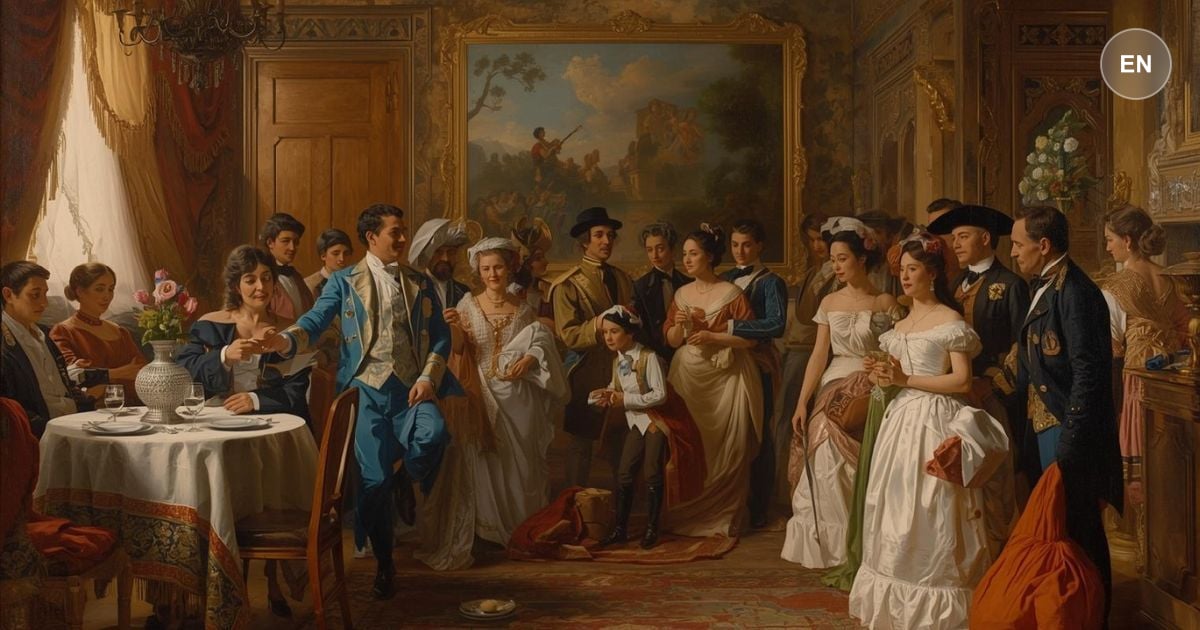
Ibarra's carriage crosses Manila by daylight, and the city that depressed him at night now floods him with childhood memory. He recalls unpaved streets, chain gangs repairing roads under a convict whip, and a dead laborer ignored by passers-by while he alone, aged eleven, suffered nightmares. The bustle of carromatas, cigar factories, and varied costumes awakens a sleeping world of sensation, yet every cheerful detail rests on forced labor he cannot unsee.
Landmarks shift around that scar: the Puente de Barcas is gone, the Bridge of Spain rises, almond trees in San Gabriel stay stunted, and the Botanical Garden looks thin beside Europe's. Capitan Tinong waves from his carriage; Ibarra may glimpse Padre Damaso frowning in another victoria. Beyond the walls he muses on nations across the sea who weave dreams by morning and shed them at dusk.
At Bagumbayan he hears again his old teacher's charge that knowledge is humanity's heritage but only the courageous inherit it, and that all that glitters is not gold. The priest died on that mound. Ibarra murmurs aloud that despite everything the fatherland comes first. Ermita, Malate, and the grazing herds roll past without holding his attention while Rizal returns our gaze to Manila's intrigues.
When you gain knowledge or experience that others lack, you develop what might be called 'educated sight', the ability to see patterns and problems that others miss or have learned to ignore. This creates a complex emotional situation. On one hand, you feel responsible for change because you can envision alternatives. On the other hand, you feel isolated because others don't share your perspective, and may even resist your attempts to help. This dynamic plays out constantly in working-class communities. The nurse who takes continuing education classes and returns to see outdated procedures at her hospital. The factory worker who visits a well-run facility and recognizes safety violations at his own plant. The parent who learns about healthy communication and suddenly notices dysfunction in extended family gatherings. Each person gains clarity but also carries the weight of knowing better. The challenge isn't just seeing the problems, it's navigating the social and political realities of trying to address them. Sometimes the most effective change happens gradually, through modeling better ways rather than direct confrontation. Your expanded vision is valuable, but it must be paired with patience and strategic wisdom. How do you balance the responsibility that comes with awareness against the need to maintain relationships and avoid becoming isolated or bitter?
Explore this chapter with AI to uncover deeper meaning and practical takeaways.
AI Discussion