
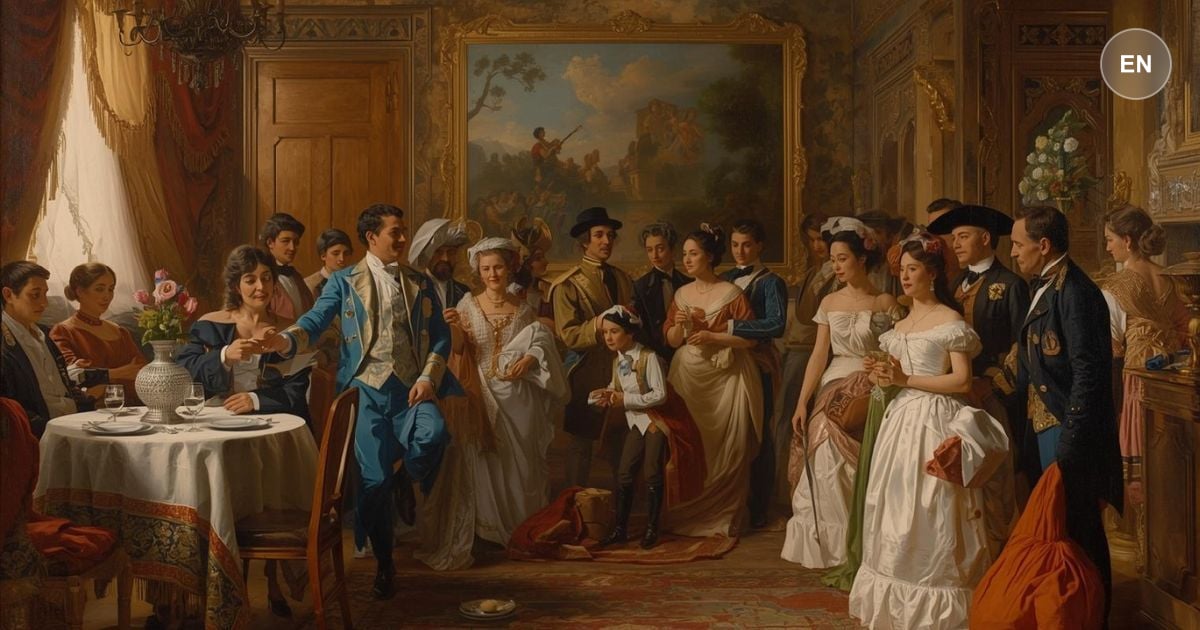
Maria Clara sits among wedding diamonds and piña embroideries, staring at a newspaper declaring Ibarra drowned in the lake while rich presents heap untouched on the table. Padre Damaso arrives playfully from the provinces, blind to her terror, asking who am I as if grief were a child's game and the engagement feast still belonged to him. She springs back pale, cold-handed, unable to feign joy for Linares or the jewels meant to buy a future she no longer wants.
On her knees she begs her godfather to protect Capitan Tiago and break the marriage, choosing nunnery or tomb now that Crisostomo is dead. While he lived she could have endured a legal union for her father's sake, but with him gone no other man shall call her wife; the convent or death is her only language left. Damaso, who dreamed of commanding sons and punishing enemies, stares at a firmness he never taught her.
He confesses every cruelty was twisted love: he blocked a native husband to spare her colonial humiliation, garrote sons, and wretched motherhood, adoring her as the daughter he could not claim. Tears break his brusque voice, yet she repeats nunnery or death until he consents, praying God chastise him but spare her. Rizal's protective destruction exposes how colonial love becomes control that ruins the person it claims to save, leaving a wedding house full of silk and a girl walking toward the cloister.
Padre Damaso genuinely loves Maria Clara, yet his love systematically destroys everything that gives her life meaning. This isn't the love of a villain, it's the love of someone so terrified of losing control that protection becomes imprisonment. He eliminates her choices to spare her pain, but in doing so, he becomes the primary source of her suffering. This pattern appears everywhere in modern relationships: parents who sabotage their children's 'unrealistic' dreams, partners who isolate loved ones from 'bad influences,' managers who micromanage to prevent failure. The protector always has good intentions and genuine care, which makes the dynamic particularly insidious. The person being 'protected' often feels guilty for resisting, because how do you fight someone who claims to love you? Rizal shows us that real love requires risk, the risk of letting someone make their own mistakes, face their own consequences, choose their own path even when we're certain they're wrong. Protective control feels like safety but creates resentment. Authentic love feels scary but builds trust. The difference isn't in the emotion, it's in whether the 'protection' expands or contracts the other person's agency.
Explore this chapter with AI to uncover deeper meaning and practical takeaways.
AI Discussion