
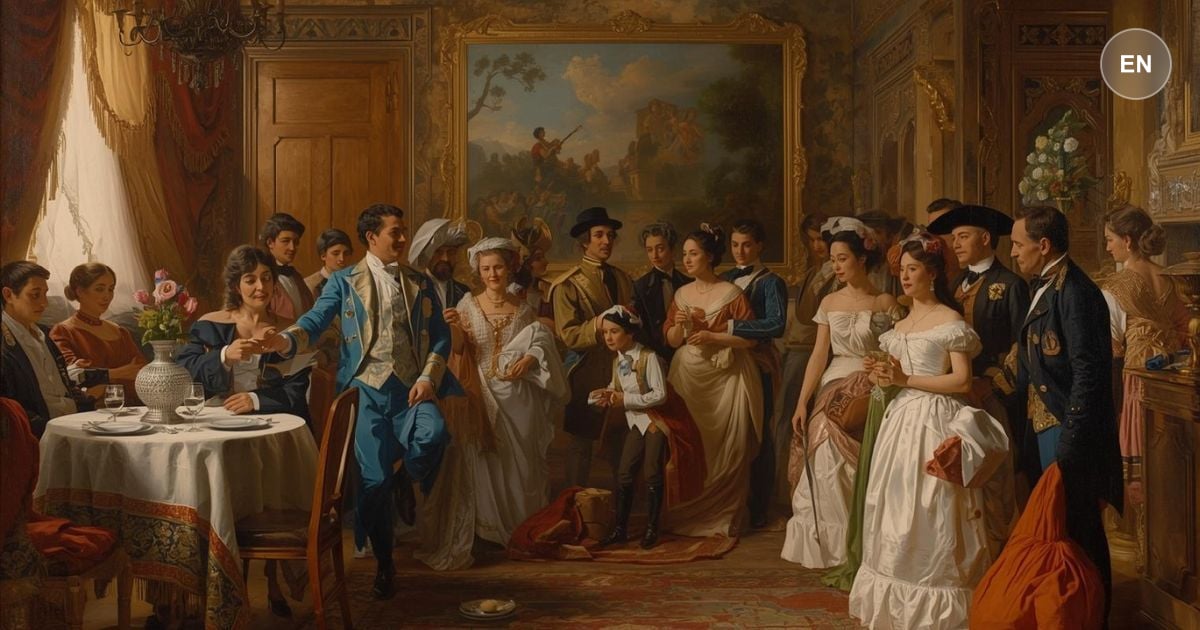
Dawn after the uprising, San Diego trades fear for gossip. Windows open, versions multiply: Chinamen rebelled, cuadrilleros fought guards, Ibarra tried to kidnap Maria Clara and kill Spaniards, each story tailored to the teller's prejudice while smoke still stains the sky above his ruined laboratory, and no witness agrees on who struck the first match.
Sister Puté pities no excommunicate while smoke still rises from his burned house. Lucas hangs in a garden; townsfolk call suicide damned, and the town prefers a dead scapegoat to a living inquiry that might reach the convento or the barracks, because a hanged servant closes the case neatly.
Elias, disguised as a rustic, notes burr seeds on the corpse and on the senior sacristan's cuffs, orders a mass for one about to die, then removes his bandage. Rizal's comfortable lie loop shows trauma processed as morality tales that protect prejudice instead of evidence while the real plotters walk in vestments and the reformer's name becomes shorthand for every fire, and gossip replaces investigation before the embers cool, while Elias already plans the next move in shadow, reading burr seeds like a sentence the town refuses to parse, and the mass he orders sounds like a countdown.
Rizal understood something profound about human nature: we don't just accidentally believe false stories, we actively choose them when they serve our emotional needs. In San Diego, accepting that their trusted priest and civil guard were corrupt would have forced painful questions about judgment, complicity, and social order. Much easier to blame the outsider who challenged the system. This psychological mechanism operates everywhere today. When a popular teacher gets fired for inappropriate conduct, parents often blame 'troublemaking' students rather than examine how they missed warning signs. When a family business fails, relatives create elaborate stories about external sabotage rather than acknowledge internal dysfunction. In healthcare, staff might blame 'difficult' patients for poor outcomes instead of examining systemic care failures. The pattern is always the same: the story that preserves our self-image and existing relationships wins, regardless of evidence. Social media amplifies this tendency exponentially. We share articles that confirm our worldview without checking sources because the emotional satisfaction of being right matters more than accuracy. The algorithm rewards this behaviour, creating echo chambers where comfortable lies flourish while inconvenient truths get buried. Recognizing this pattern is the first step toward intellectual freedom. When you catch yourself embracing a story because it makes you feel righteous or confirmed in existing beliefs, pause. Ask what evidence you might be ignoring. Truth-seeking is lonely work, but it's the foundation of real wisdom.
Explore this chapter with AI to uncover deeper meaning and practical takeaways.
AI Discussion