
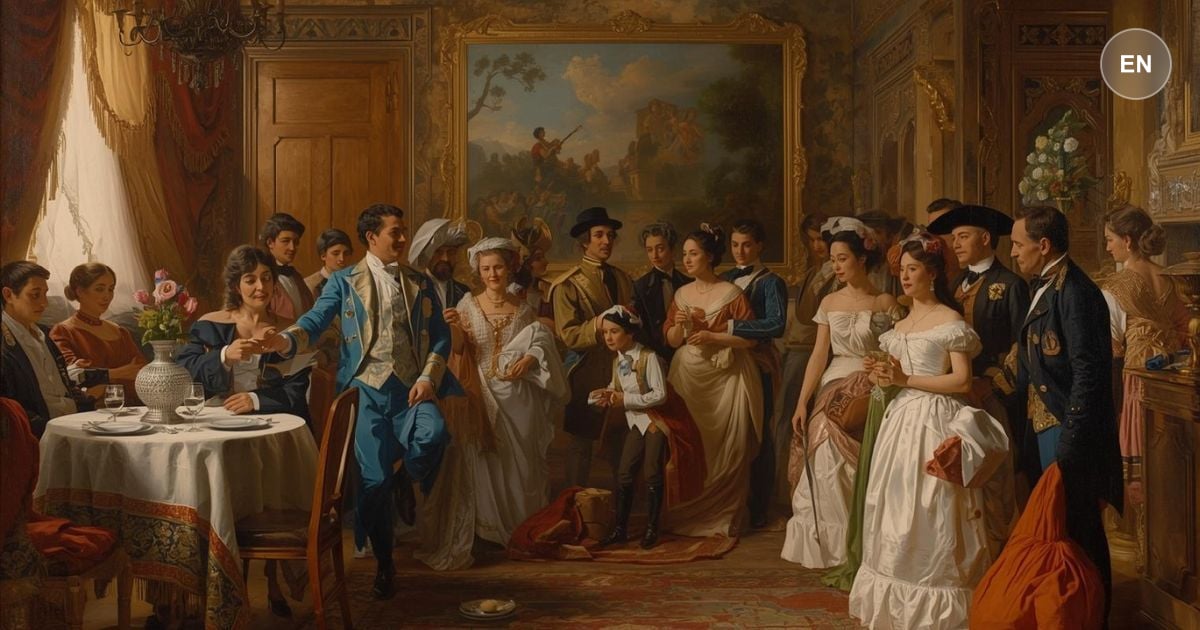
Doña Victorina parades in silk through San Diego insulting native houses and demanding hats be knocked off heads, performing Europe for an audience that knows her teeth are false. At the alferez's window Doña Consolacion spits contempt; the two señoras trade washerwoman slurs and class mockery until Consolacion descends with a whip, turning status envy into street violence.
Tiburcio is shoved, teeth smashed in the dust, and Victorina vows Manila revenge while forcing Linares to challenge the alferez. Back at Tiago's she announces Maria Clara must marry Linares and never wed a man without trousers, as if trousers were holiness and Spain were a surname you could buy with insults.
Maria Clara, pale, asks friends to carry her away. The Espadañas bill thousands of pesos and flee to Manila, leaving Linares as avenger. Rizal shows status insecurity exploding into public shame that crushes the innocent engagement while the town applauds the spectacle and Ibarra's name is pushed further from the window where flowers now stand in his place, while Damaso's candidate smiles for a girl who cannot stand, and the Espadañas flee leaving debts and a duel like borrowed theater tickets while Linares is sent to bleed for honour that was never his.
Both Doña Victorina and Doña Consolación are performing identities they can't quite sustain, one pretending to Manila sophistication, the other to local authority. Their collision reveals a brutal truth: when two people's self-worth depends on being seen as superior to others, they become each other's greatest threat. This isn't about actual competence or legitimate authority. It's about two drowning people trying to use each other as life rafts. We see this pattern everywhere today. Watch two coworkers competing for the same promotion, suddenly every project becomes a battlefield for credit. Notice how family members at reunions perform success while subtly undermining each other's achievements. Social media amplifies this constantly: people curating perfect lives while attacking others' authenticity. The mechanism is always the same: when your identity is built on a performance you must constantly defend, anyone who threatens that performance becomes an enemy. The tragedy is that both women have real struggles, Doña Victorina's desperate social climbing, Doña Consolación's fight for respect despite her origins. But instead of recognizing their shared humanity, they weaponize each other's vulnerabilities. The collateral damage spreads to everyone around them: their husbands, Maria Clara, the entire community. Understanding this pattern is crucial for modern navigation. When you recognize a status war brewing, you can choose not to participate. When you see two people locked in mutual destruction, you can address the real issues underneath instead of picking sides.
Explore this chapter with AI to uncover deeper meaning and practical takeaways.
AI Discussion