
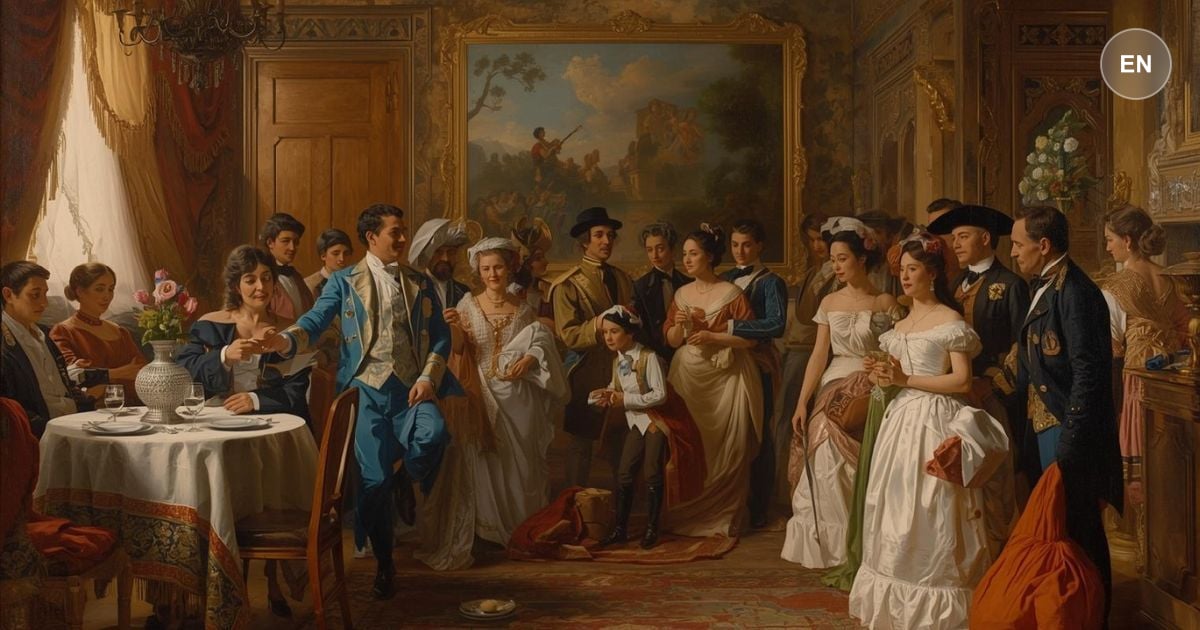
In the town hall youths and elders feud over the fiesta budget. Don Filipo, distrusting the gobernadorcillo's delay, follows Tasio's advice to propose the conservatives' extravagant plan himself so they will reject it, then let a young cabeza present the real program of local plays, prizes, fireworks without bombs, and a future schoolhouse the town could actually afford. Workers want a fiesta that feeds the plaza, not only the pulpit.
The hall erupts in debate until Capitan Valentin defeats Filipo's parody and the youth's sensible plan wins applause from workers tired of imported comedies and empty processions that drain wages each year while the curate's comedies arrive from Manila by courier. Then the gobernadorcillo admits the curate already ordered six processions, three sermons, and a Tondo comedy; contributions are collected and obedience required before anyone leaves the hall.
Youths withdraw; Filipo laments a slave chief. Ibarra leaves for the provincial capital with mysterious business. Rizal exposes local democracy as theater when friar will overrides town vote and every debate was only rehearsal for a decision already made in the convento before the first gavel fell. The fiesta will celebrate obedience, not the town that thought it chose how to spend its own wages, pride, and hope.
Rizal shows us something devastating about how power really works. Don Filipo executes a brilliant political maneuver - reverse psychology at its finest. He manipulates the conservatives perfectly, gets them to embrace his progressive agenda, and should win. But it doesn't matter because the real decision-maker was never in the room. The curate operates through the weak gobernadorcillo like a puppet master behind a curtain. This isn't just historical - it's the blueprint for how authority operates today. Your manager who 'can't approve' your raise, the customer service rep who 'doesn't have access' to fix your problem, the school board member who 'has to follow district policy' - they're all delivering decisions made by people you'll never meet. The genius of this system is that it exhausts reformers. You waste your energy perfecting strategies to influence people who have no actual power. You argue with the enforcer while the real authority stays invisible and untouchable. Recognizing this pattern changes everything. Before you invest time in persuasion, map the actual power structure. Who really benefits if nothing changes? Who would lose money or control if your idea succeeded? Sometimes the person saying no is just the messenger. Find the real source of decisions, or at least understand that your brilliant strategy might be completely irrelevant if you're targeting the wrong level of authority.
Explore this chapter with AI to uncover deeper meaning and practical takeaways.
AI Discussion