
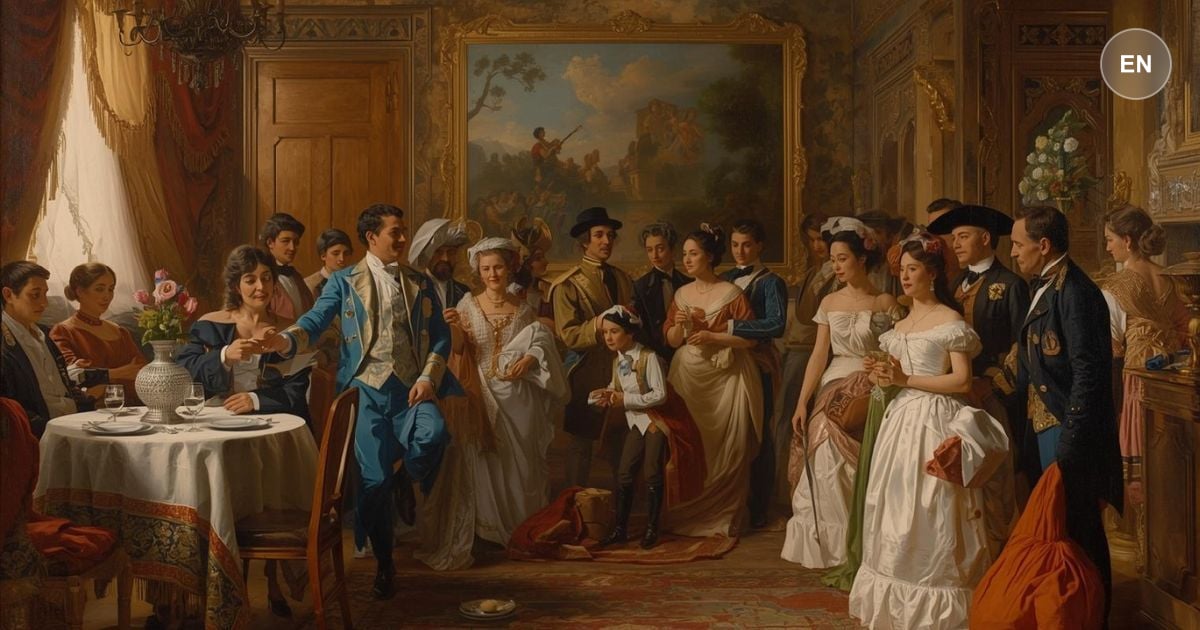
On All Souls' Night Rizal contrasts sleeping rich and poor. Wealthy families buy masses, bulls of indulgence, and wax tapers, for divine justice is less exacting than human. The poor pray without novenas, in the language of misery, choosing between a peso for their children's food and indulgences for dead parents who cannot eat.
The chapter turns to Sisa, wife of a gambler who strips her home, mother of Basilio and Crispin. She cooks a feast for their return from church service, but her husband eats the rice, meat, and fish, then leaves demanding a peso for the cockpit. She recooks three small fishes, refuses to eat herself, and waits in the dark, hearing only wind and a black dog that seems to mock her hope.
A vision of Crispin at the hearth shatters when Basilio's real voice cries outside. Rizal binds economic theology to domestic cruelty: the church sells heaven by the candle while fathers devour their sons' supper and mothers starve between altar fees and empty plates. All Souls becomes a ledger of who can afford to mourn and who must choose between the living and the dead each November night. The night ends with one son at the door and another still missing.
Rizal understood something devastating about power: corrupt systems don't survive by forcing compliance, they survive by convincing good people their suffering serves a noble purpose. Sisa doesn't rebel because she believes her sacrifice protects her children, even as the system destroys her family. This same mechanism operates everywhere today. Healthcare workers are told their burnout serves patients while hospital executives get bonuses. Teachers are told buying supplies with personal money shows dedication while administrators cut education budgets. Parents are told working multiple jobs demonstrates good values while wages stay stagnant and childcare costs soar. The pattern is always identical: those with power create impossible situations, then convince those without power that their struggle is virtuous. The most insidious part? These systems specifically target people with strong moral compasses, because good people will sacrifice themselves longer before recognizing they're being exploited. Breaking free requires a painful realization: sometimes the most moral choice is refusing to enable an immoral system. When you find yourself constantly sacrificing while others consistently profit from your dedication, you're not serving a higher purpose - you're feeding a machine designed to consume you.
Explore this chapter with AI to uncover deeper meaning and practical takeaways.
AI Discussion