
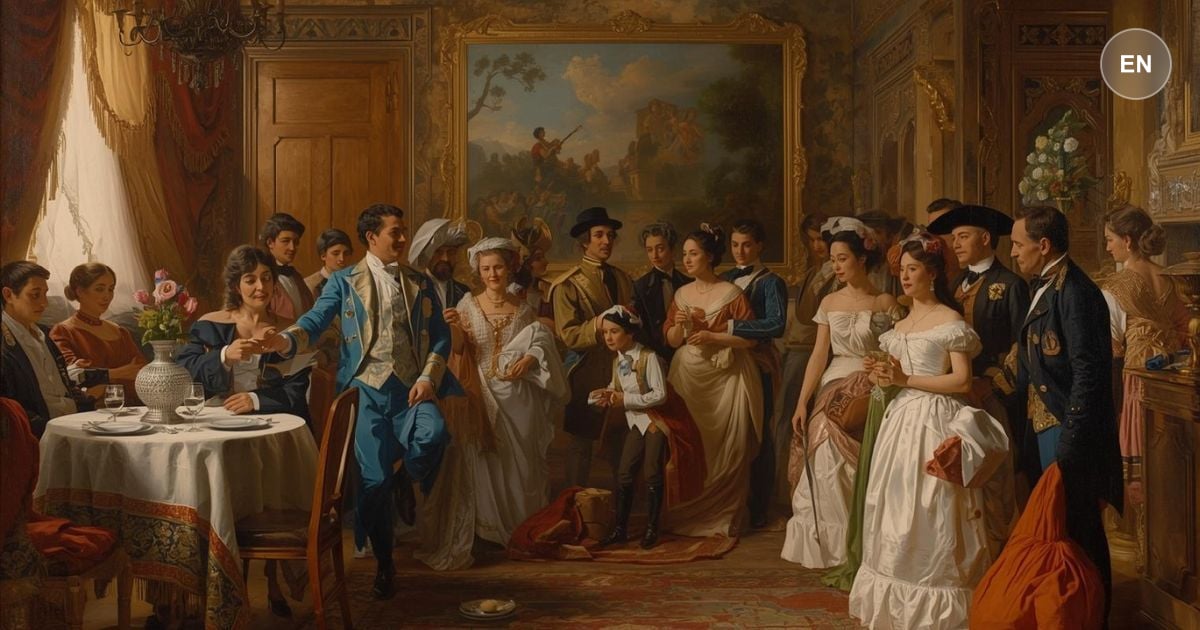
Ibarra reaches San Diego's cemetery to honour his father and finds the cross burned, the grave disturbed, and the body gone. His old servant planted flowers and carved a marker, but Capitan Tiago's promised niche never appeared and no neighbour dared protest when the friar's will became law. The grave-digger confesses Damaso ordered exhumation and claims he threw Rafael into the lake rather than bury him among Chinese dead, because a poor man's obedience is cheaper than his conscience.
Ibarra calls him a miserable slave and storms out, stepping on graves in anguish without caring whose ancestors he offends or who watches. Walking home bareheaded as a storm gathers, he meets Fray Salvi and demands what was done to his father. The new curate crumbles, blames Damaso, and escapes when Ibarra releases him rather than strike a man on his knees in the rain.
The chapter turns grief into confrontation: desecration becomes proof that church power outranks family mourning, and Salvi inherits guilt he tries to outsource to his predecessor. Ibarra leaves with facts sharper than rage, knowing the outrage began in Manila and finished in mud beside a lake that may still hold his father's bones and his own childhood trust.
Rizal understood something that modern workplace bullies, corrupt officials, and abusive systems still use today: the most effective way to break someone isn't through direct confrontation. It's by violating what they hold sacred and cannot actively defend. When Padre Damaso ordered Ibarra's father's body exhumed and thrown away, he wasn't just being cruel - he was demonstrating total power. The message was clear: 'We can reach anything you care about, even your dead.' This pattern operates everywhere today. The hospital that suddenly 'loses' your medical records when you file a complaint. The school that suspends your child for a minor infraction right after you questioned their budget. The landlord who reports your emotional support animal as a 'dangerous pet' when you organize tenants. These aren't coincidences - they're calculated strikes at what you cannot defend in real time. The Sacred Violation works because it creates a double wound: the immediate damage plus the message that nowhere is safe. It's designed to make you feel powerless and alone. But here's what Ibarra's story teaches us: the violation only works if you accept the isolation. The moment you name the pattern, document it, and refuse to suffer in silence, you've broken their primary weapon. Recognition is the first step toward resistance.
Explore this chapter with AI to uncover deeper meaning and practical takeaways.
AI Discussion