
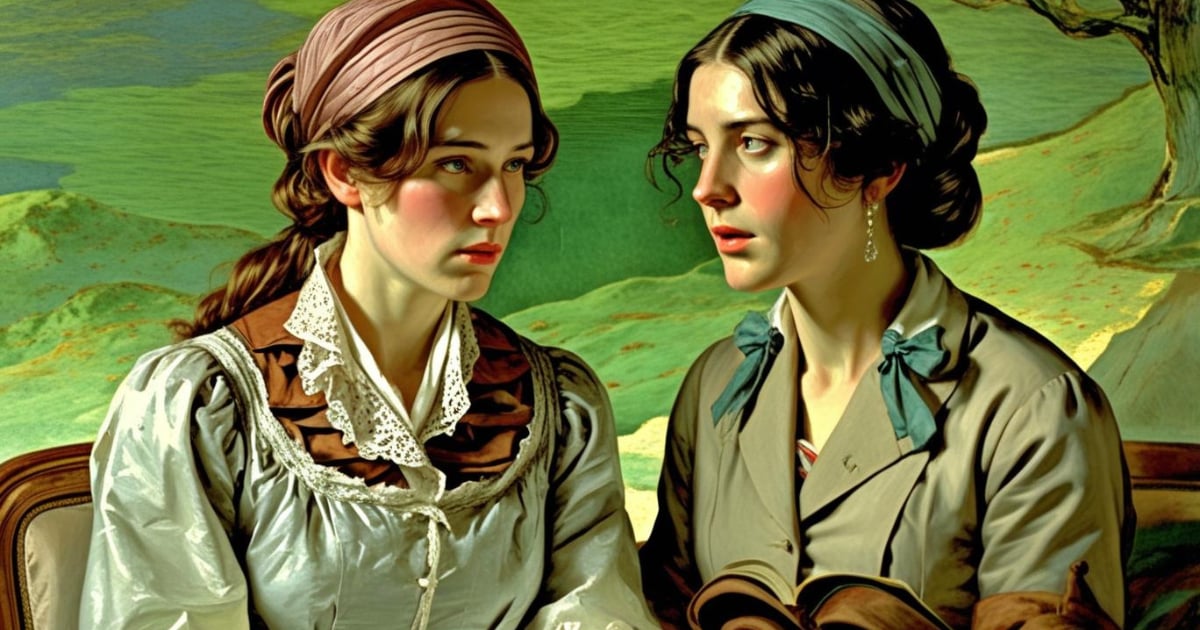
Settlements satisfy Brooke, and marriage preliminaries roll smoothly. On a gray November morning Dorothea, Celia, and their uncle drive to Lowick Manor. Celia privately prefers Freshitt and Sir James's flowers; Dorothea finds the house hallowed. Dark bookshelves, faded carpets, and old maps feel more alive to her than the classical nudes at the Grange, which have never fit her Puritan habit of mind.
Casaubon offers her a boudoir; she asks to keep everything as he has used it. In the bow-windowed room she studies miniatures, learns of aunt Julia's unfortunate marriage to a Pole, and admires the avenue of limes. Tucker the curate praises orderly villagers and fat fowls; Dorothea bristles at Brooke's joke about skinny French kings. Celia has already glimpsed a young man sketching. At the yew tree they meet Will Ladislaw, who shares the aunt's irregular nose and wears pouting discontent. Dorothea admits she does not understand pictures; Will misreads her, then notices her voice.
Casaubon describes Will's refusal of profession, Heidelberg, and Pegasus contempt for harness; Dorothea defends hidden vocations and patience with growth. She confesses sadness that Lowick seems to need so little done for it. Celia, alone afterward, says engagement has made Dorothea preach patience while remaining impatient with everyone else. The future home is chosen, but Will has already disturbed the pure projection.
The chapter's comedy is gentle and lethal. Celia wants Freshitt, flowers, and sensible talk; Dorothea wants a mission in stone. Will arrives as disturbance in advance: the same face in the miniature, the same nose, a different mouth. Eliot plants the future in a single garden walk while Dorothea is still filling blanks with music only she can hear. The tragedy is not that she is foolish; it is that she is intelligent and still editing reality to match her vow.
Explore this chapter with AI to uncover deeper meaning and practical takeaways.
AI Discussion