
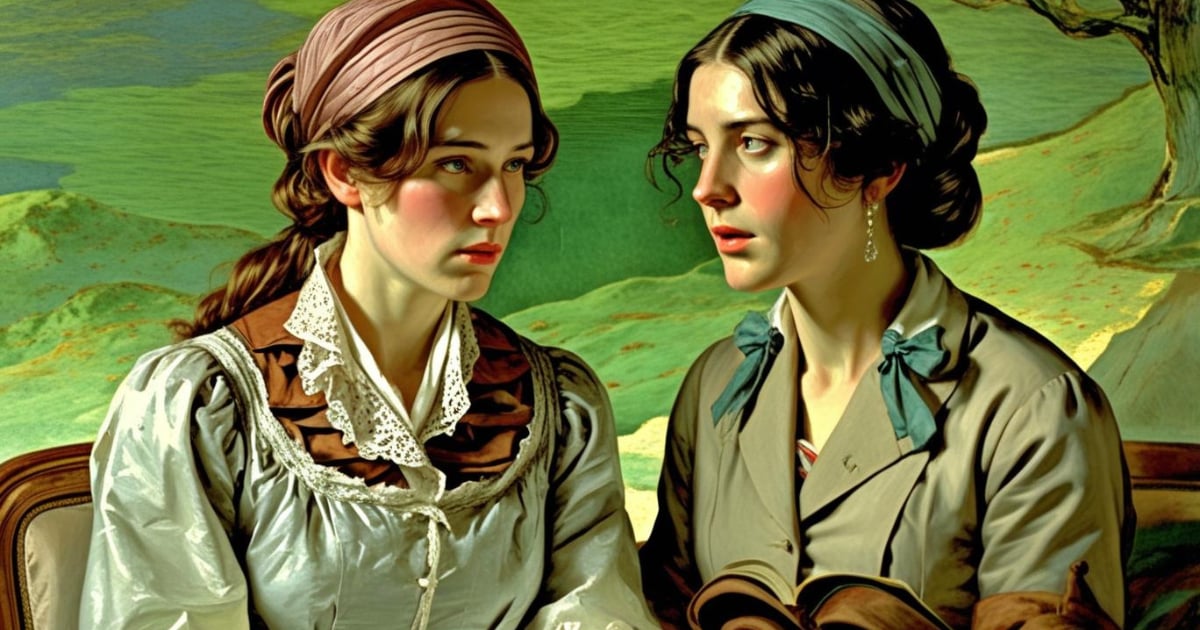
After the Lords throw out the Reform Bill, Freshitt Hall gathers Cadwalladers, Lady Chettam, Celia, and Sir James while politics mingles with baby Arthur's chariot and failed legislation in London.
Mr. Brooke arrives dejected and, after rambling about poachers and entailed property, announces Dorothea will marry Ladislaw in three weeks. Sir James erupts in white indignation, calling the match scandalous, wrong, and a degradation; Mrs. Cadwallader claims foresight while Mr. Cadwallader defends a woman's right to choose poverty with Will, and Brooke's mention of cutting the entail touches Sir James's embarrassed hope of merging estates at Freshitt.
Celia drives to Lowick despite her husband's refusal to see Dorothea; she pleads convention, Arthur, and London poverty, but Dorothea says she never carried out any plan until now, promises to marry Ladislaw, and will not explain what Celia must feel to understand. Sister love meets sister limit at the Lowick door.
Eliot stages public outrage against private resolve: politics fails in London while marriage choice succeeds at Lowick. Dorothy should read LXXXIV as the town's verdict on Will and Dorothea before the Finale rewards Fred and Mary with Stone Court and credits Dorothea's diffusive good the parish misreads as folly in marriage.
Chapter LXXXIV quotes The Not-Browne Mayde on blame. Reform Bill backdrop, Brooke's diluted medicine of news, Ladislaw as scandal, Sir James's shooting fantasy, Cadwallader on choosing poverty, entail embarrassment, three weeks, Celia's carriage, never carried out any plan, promised to marry, feel with me else you would never know. Dorothy should read LXXXIV as social court after private storm: town morality meets unmovable Dorothea.
Explore this chapter with AI to uncover deeper meaning and practical takeaways.
AI Discussion