
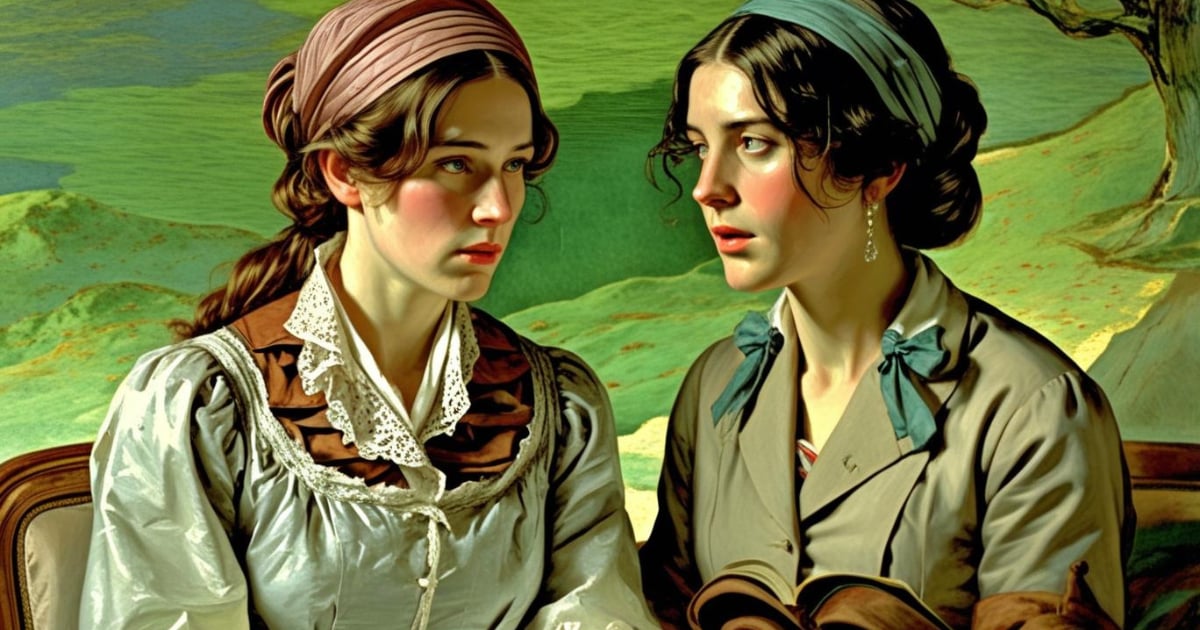
Lydgate leaves for Brassing; Rosamond, fixed on Will Ladislaw's coming as cause for leaving Middlemarch, posts a discreet letter to hasten him while Lydgate shrinks from her silent reproach. Dorothea, secure in Will's honour and intent to comfort Rosamond, drives to town after Farebrother accepts Lydgate's account, carrying good news and a check.
Martha shows her into the drawing room unannounced; Dorothea advances, hears low voices, and sees Will clasping Rosamond's hands while she flushed and tearful. Shock freezes them; Dorothea delivers the letter excuse, bows, and flees with elastic step, scorn stimulating her past usual grief.
She orders the coach to Freshitt, champions Lydgate to Sir James and her uncle without swerving, tells Celia many troubles have happened, and feels a new triumphant indignation unlike her marriage's quick subduing pangs. The scene she misread becomes fuel: she will not collapse as she once did for Casaubon.
Will's clasp and Rosamond's tears destroy Dorothea's hope of quiet alliance while Lydgate still trusts his wife's drawing room and Rosamond has posted a letter to hasten Will's visit. Dorothy should read LXXVII as the cost of unannounced mercy: good intent walks into the wrong tableau and leaves with pride wounded worse than gossip.
Chapter LXXVII quotes Henry V on suspicion's blot. Rosamond's sequence-making, Will letter, Dorothea's consecrating belief, Martha's silent swing door, clasped hands, letter excuse, scorn draught, triumphant indignation, Freshitt championing, Dodo's bright eyes. Eliot neither confirms affair nor clears it; perception does the damage. Dorothy should read LXXVII as plot hinge and moral physics: private fantasy broken in public daylight, public mission for Lydgate intensified by the same blow.
Explore this chapter with AI to uncover deeper meaning and practical takeaways.
AI Discussion