
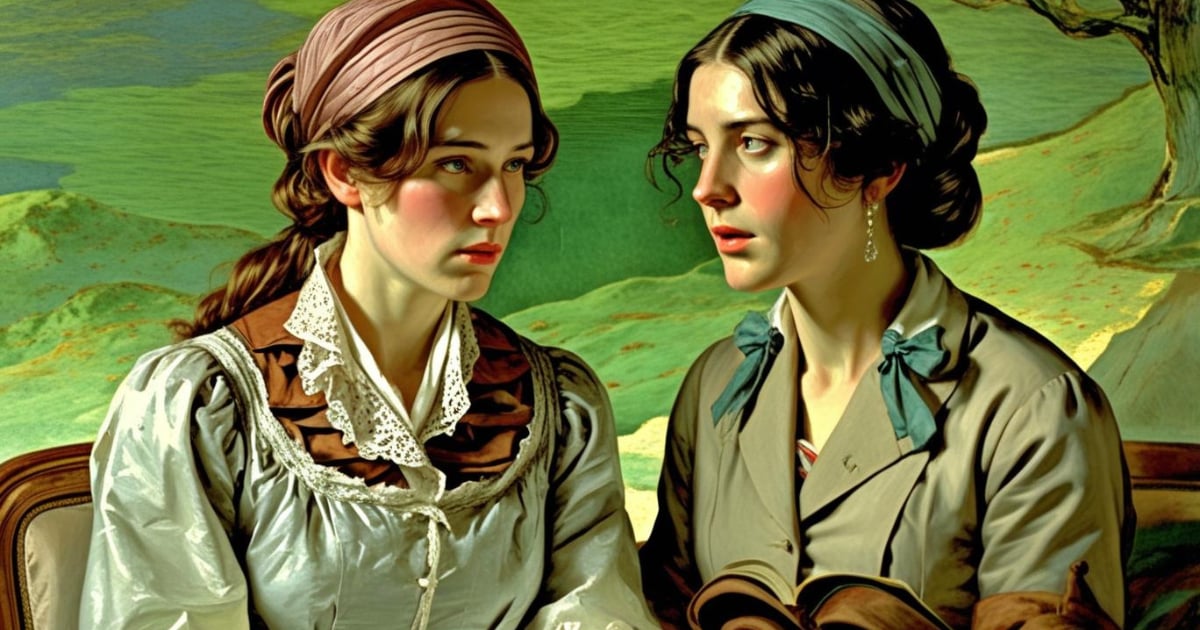
By the morning when Stone Court hayricks scent the air as if Raffles had been a worthy guest, Dorothea returns to Lowick Manor. Freshitt with Celia's baby has become oppressive; she needs her own home, wishes to know the Farebrothers, and admits to herself that she longs to see Will Ladislaw though she knows no good can come of it. Mrs. Cadwallader warns she will go mad alone; Sir James offers Cheltenham; everyone disapproves while Dorothea quietly persists.
At Lowick she ranges Casaubon's notebooks, seals away the Synoptical Tabulation with a note that she could not submit her soul to work she does not believe in, and walks the rooms talking to his memory with pity that still restrains and compels. On the first Sunday she sees Will in the curate's pew before service; when she enters he is gone. A week of vain listening at the Rectory ends when Will calls to say goodbye before leaving for London and the bar.
Their drawing-room meeting is stiff with feeling in the neutral room below the boudoir: she encourages his public ambitions for the bar and Parliamentary work; he fears he looks like a fortune hunter; she offers his grandmother's miniature and he refuses bitterly, saying poverty may be as bad as leprosy if it divides them from what they most care for. Sir James arrives and ends the visit; Will leaves with changed lights within and without while Dorothea keeps dignity and grief.
Dante's epigraph frames love in the eyes; Eliot shows Dorothea's soul thirsting to see Will though Casaubon's codicil and her own helpless hands forbid remedy. Sir James's entrance becomes a repellent force on Will's pride, and the farewell that should have been simple becomes a marble turning of two creatures who dare not name what they feel. Pratt and the servants gossip of fortune hunters; Dorothea offers the miniature she should not keep while Will refuses to look like one, and both part knowing poverty and codicil divide what their eyes confess. She will mistake the parting for forever and turn grief into land-drainage plans at Freshitt.
Chapter LIV opens with Dante and closes with Sir James. Dorothea's widow cap frames a face young again; Will's pride refuses the miniature. Eliot pairs spiritual longing with social geometry: pew, drawing-room, shrubbery exit. The long while tremor is the chapter's pulse; Good God is its crack. Dorothy should read Lowick as a house where grief arranges notebooks by day and hunger listens for footsteps at the Rectory gate.
Explore this chapter with AI to uncover deeper meaning and practical takeaways.
AI Discussion