
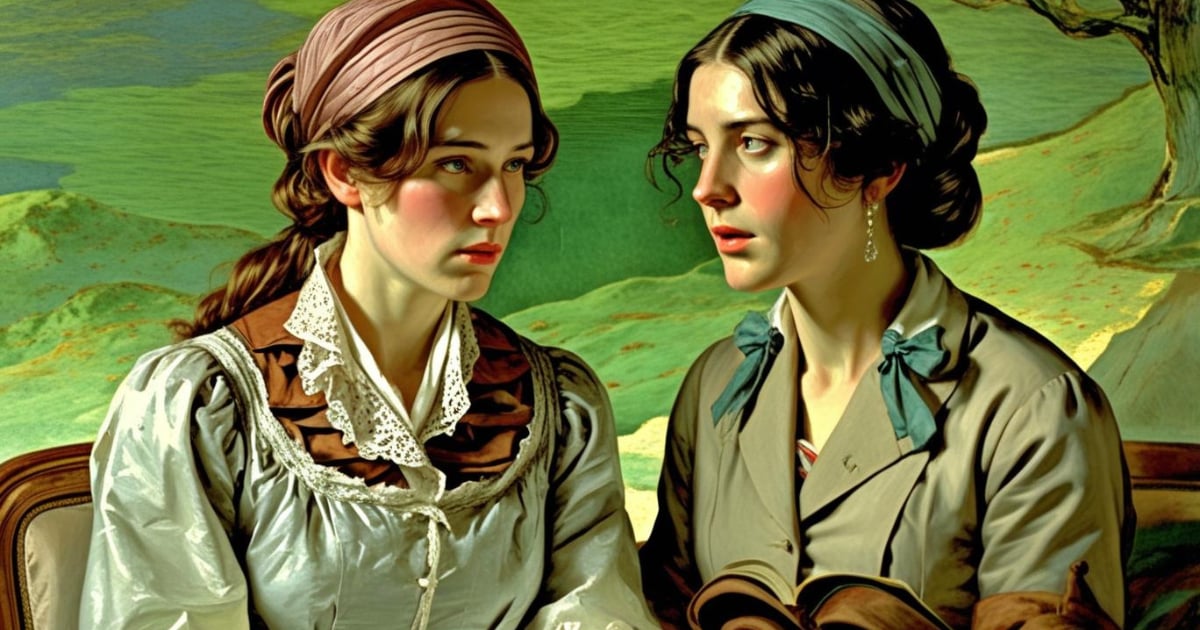
After midnight Mary Garth takes the watch alone in Featherstone's room. She enjoys the still fire and her own thoughts, having long since decided life is a comedy in which she will not play the mean or treacherous part. She is not sentimental about the old man on the bed: he snaps, uses her, and cares nothing for his soul. She does worry privately that Fred Vincy may be left as poor as ever when the will is read.
At three o'clock Featherstone wakes sharp, counts relations in the house, and boasts that he has made two wills and will burn one. He orders Mary to open his iron chest and bring out the topmost Last Will and Testament. She refuses firmly: she will not touch chest, will, or money, and will not let the close of his life soil the beginning of hers. He offers notes and gold on the quilt, cries childishly when she retreats, then demands Fred alone at night with no witnesses. Mary will call Fred only with Jonah and others present; he refuses lawyer, daylight, and every compromise. He throws his stick like an aged hyena; she waits by the fire, hoping fatigue will tame him.
Mary never forgot that vision of a man wanting to do as he liked at the last. When flame lights the room she finds him strangely still, opens the curtain to morning sky, rings the bell, and Peter Featherstone is dead with keys in his right hand and money under his left. Book Four, Three Love Problems, begins on that threshold.
Chapter XXXIII is Eliot's midnight ethics scene. Mary is not saintly about Featherstone's soul; she is practical about her name. The comedy of relations counting and casting up downstairs makes the bedroom drama sharper: everyone wants the will, only Mary is asked to help write it in secret. Her line about not letting his close soil her beginning is the chapter's hinge. Dorothy should read it as career advice for any caretaker offered money without witnesses: the bell, not the chest, is the moral exit.
Explore this chapter with AI to uncover deeper meaning and practical takeaways.
AI Discussion