
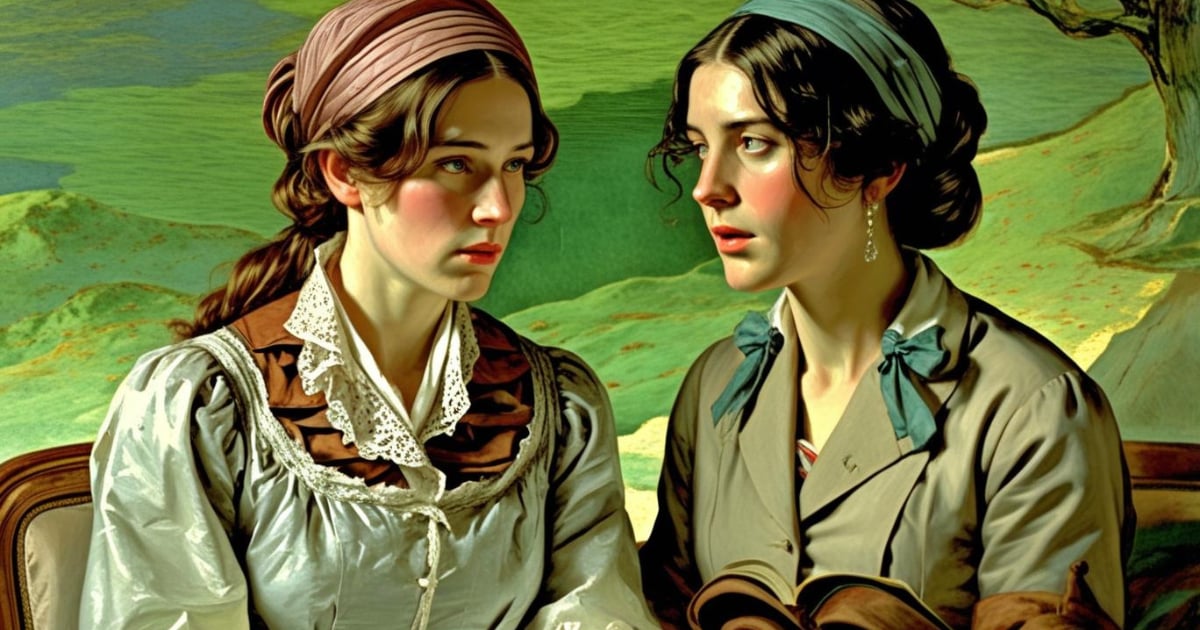
Fred comes to Stone Court quietly, leaving his horse in the yard so Mary will not expect him. She is laughing over Mrs. Piozzi's Johnson until she sees him standing by the mantelpiece, ill and silent. He calls himself a good-for-nothing blackguard; she asks for the painful truth, not imagination.
He tells her the bill, Caleb's signature, the lame horse, the fifty pounds, her parents' emptied savings. Her first cry is for her mother and father, not for him. She refuses to hear unluckiness as excuse, rejects comparison to Caleb, and says spenders who do not know how they will pay are selfish. When he threatens to leave forever, she looks up, sees how ill he is, and pity overtakes anger. She mocks his future as a fat idler with a flute; laughter eases him; she sends him to his uncle.
After dusk Caleb comes to Stone Court. Mary already has her savings in her bag; she gives them to her father with kisses. Caleb warns gently that Fred may not be trusted with anyone's happiness. Mary says she will never engage herself to a man without manly independence who loiters on others' provision. Featherstone grunts that she should not chatter with Fred tomorrow. Fred rides home feeling illness more than melancholy.
Chapter XXV is the moral conversation Fred avoided at home. Mary's lines are famous because they are usable: painful truth, forgiveness irrelevant to ledgers, independence as marriage condition. Eliot lets maternal pity enter without reversing the verdict. Fred's blackguard speech is boyish; Mary's answer is adult, then comic with the flute future. Caleb's night visit doubles the standard with savings in a bag. Dorothy seeing both scenes learns that love in this novel is not permission; it is witness plus terms.
Explore this chapter with AI to uncover deeper meaning and practical takeaways.
AI Discussion