
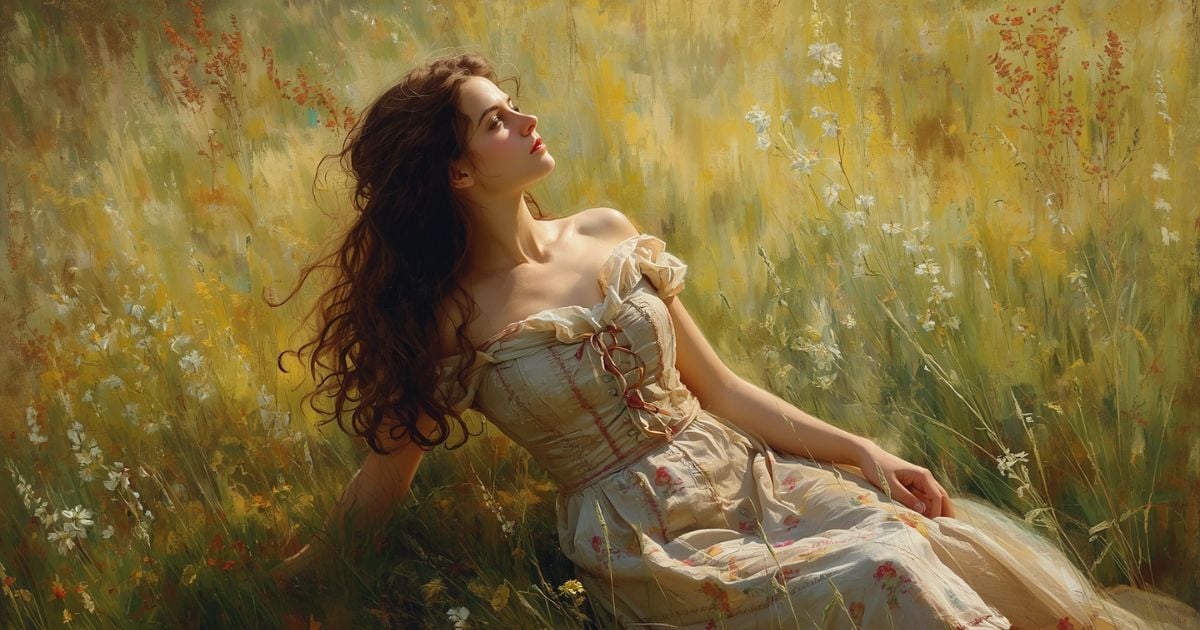
When Charles is out, Emma takes the green silk cigar case from the linen cupboard, opens it, and smells verbena and tobacco. She decides it belonged to the Viscount, perhaps a gift from a mistress, and she builds a Paris life around the stitches. She says the word Paris until it rings like a church bell. She buys a map of the city and follows the streets with her finger. At dinner she reads fashion papers and novels while Charles talks about patients, and she keeps the case hidden as if the smell were a door he must not see.
Charles still thinks he has a perfect wife. Emma hates the way he eats, the medical journal he falls asleep over, and the weight he is putting on. She gives up the piano and drawing. She heats the tongs in the fire and stares at the rain. Nastasie leaves in tears. Emma hires Félicité, an orphan of fourteen, and trains her like a lady's maid: no cotton caps, a knock before entering, a glass of water on a plate. Félicité steals sugar from the sideboard and eats it in bed after her prayers. Emma tells her sadness to the greyhound. She would have said the same things to the logs in the fireplace or to the pendulum of the clock, because Charles is only an ear that always approves. Under that talk she is still waiting. Each morning she wakes sure that something will arrive. By night the day has brought nothing, and she wants tomorrow instead.
Spring brings an organ-grinder whose tunes are songs from other drawing rooms. The airs keep running after he shoulders the box and walks off. Meals in the low room become unbearable. She snaps at her mother-in-law, tells visitors she is perfectly happy, and is glad when her father leaves after bringing a turkey. She grows pale and plays at being ill until Charles agrees they must move. Tidying a drawer, she pricks her finger on the wire of her wedding bouquet, then burns the flowers in the stove and watches the pasteboard berries burst. In March they leave Tostes. Madame Bovary is pregnant.
The cigar case smells of Paris; magazines teach Emma that love requires liveries; Charles's kindness reads as mediocrity. Sundays, organs, and beef meals become unbearable while she waits each dawn for a rescue that never names itself. Burning the wedding bouquet and leaving Tostes pregnant does not end the loop: it relocates it. Flaubert shows boredom becoming caprice, then geography, before Yonville supplies new mirrors.
Explore this chapter with AI to uncover deeper meaning and practical takeaways.
AI Discussion