
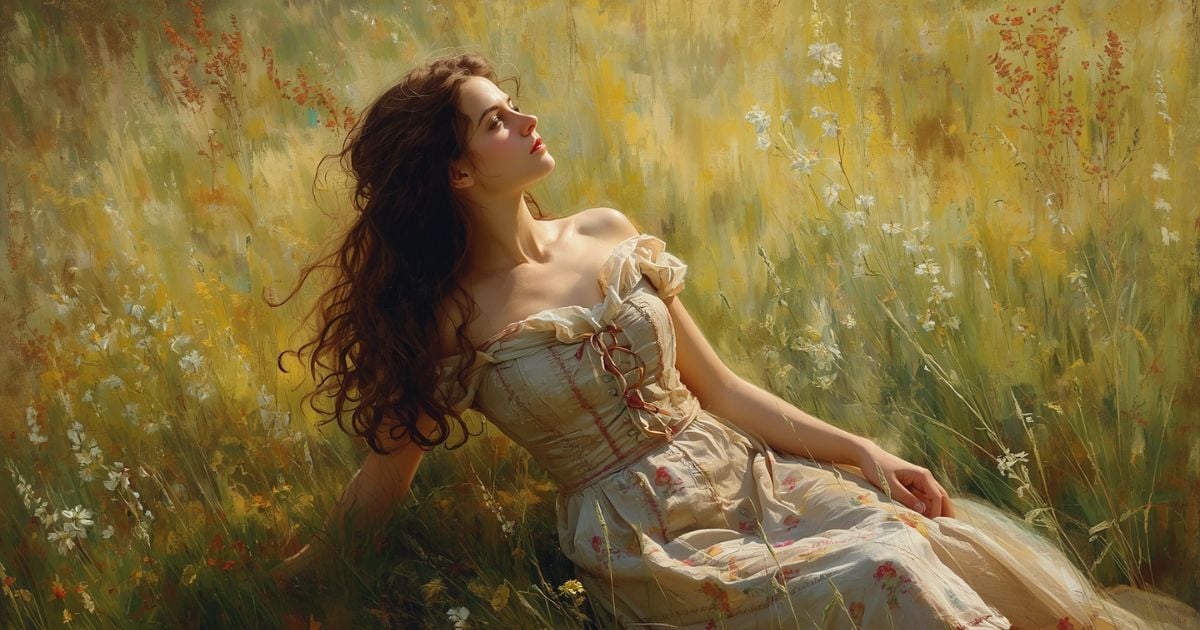
Emma sometimes thinks her marriage should be the happiest time of her life. But she imagines real romance only in far-off places with beautiful names: lemon trees, Swiss chalets, husbands in velvet coats. She cannot explain her restless sadness to Charles. If he had guessed, she thinks, she might have poured out her heart.
Instead the gap between them grows. Charles talks in boring everyday phrases. He cannot swim, fence, or explain things from her novels. He is proud when she plays piano or draws, while she serves his late dinners and resents how easily happy he is. She tries moonlight poems to stir love in herself, but she stays calm. At the old pavilion with her greyhound she asks, Why did I marry? She compares her dull life to convent friends she imagines dancing in bright ballrooms.
Charles's mother visits and criticises everything Emma does. Emma endures the lectures while resentment builds on both sides. In late September the Marquis invites them to his estate after Charles cures his abscess. They drive off at dusk with trunks and boxes, as lamps light the park road ahead and Emma hopes the visit will finally change her life. She cannot name what she wants, only that it is not this.
Emma imagines honeymoons in lands with sonorous names while Charles snores after boiled beef. She cannot name her unease; he thinks her happy. Moonlight rhymes fail; the greyhound walk produces only Why did I marry? The Marquis invitation ends the chapter because spectacle is the next substitute for speech. Flaubert shows resentment growing in silence long before the ball at Vaubyessard.
Explore this chapter with AI to uncover deeper meaning and practical takeaways.
AI Discussion