
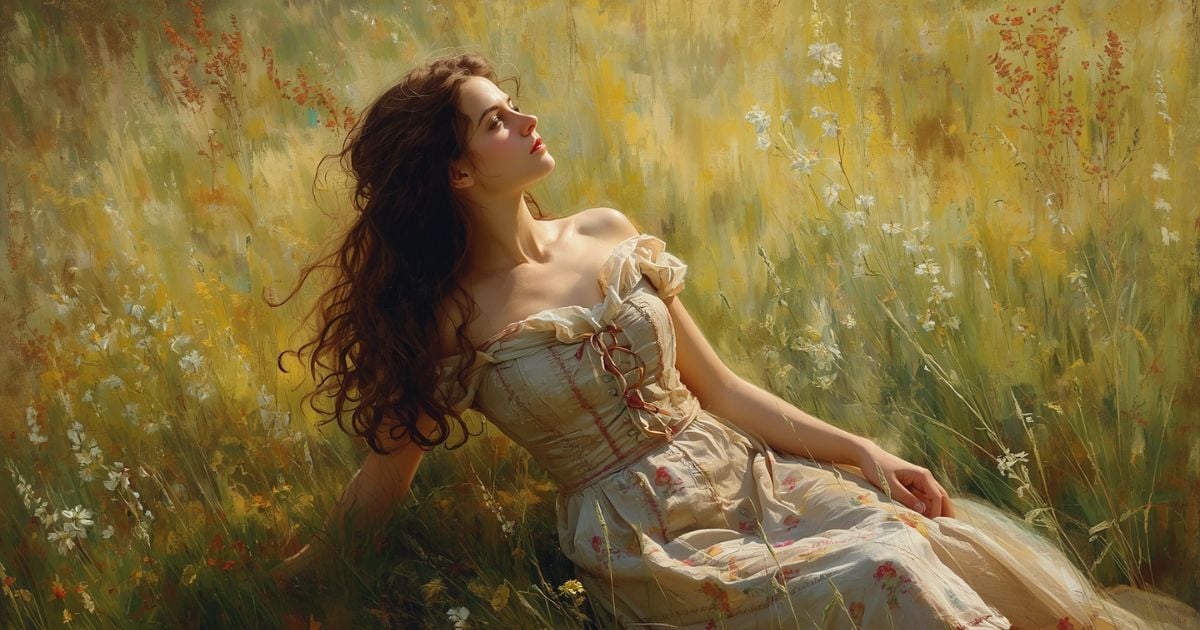
Emma walks through the new house room by room. The walls are yellow. Patients cough in the next room while butter smells drift through the walls. In the bedroom she sees orange blossoms in a bottle. They were a bride's bouquet from before. Charles quietly carries them to the attic. Emma thinks about her own packed flowers and wonders what would happen to them if she died.
She starts changing everything: new wallpaper, painted stairs, garden seats, even plans for a fish fountain. Charles buys her a used cart so she can ride out. He is deeply happy. Small things thrill him: meals together, her hat on the window, morning light on her face. He runs back up the stairs just to kiss her again. He rides off down dusty roads feeling lucky and proud.
Emma smiles but pushes him away when he acts like a child. Before the wedding she thought she was in love. Now the big feelings she expected never came. She wonders if she got love wrong. She tries to figure out what passion and happiness mean, words that sounded beautiful in books but feel empty in her quiet married days. She keeps waiting for a feeling that never arrives.
Flaubert makes the Tostes house a character: yellow paper, Hippocrates on the mantel, butter smell through the consulting wall, the first wife's bouquet carried to the attic. Charles is sincerely happy; Emma is sincerely doubtful. The chapter ends not with an affair but with a dictionary problem: what do felicity, passion, and rapture mean in real rooms this small? That question drives everything that follows.
Explore this chapter with AI to uncover deeper meaning and practical takeaways.
AI Discussion