
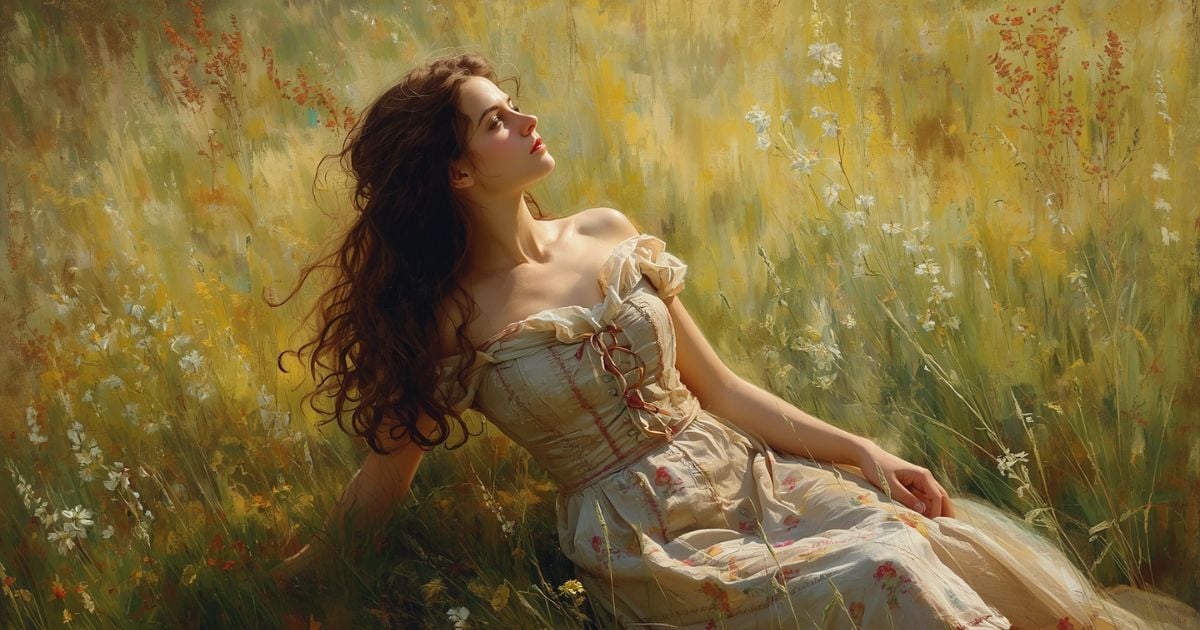
Emma stays three days with Léon at the Hotel-de-Boulogne in Rouen. They close the blinds and live like newlyweds with flowers on the floor and cold syrups brought in the morning. They hardly leave the room together. Charles knows nothing back in Yonville.
Each evening they take a covered boat to an island and eat fried fish, cream, and cherries at a tavern. They kiss in the grass behind the poplar trees and pretend they could live there forever, like two people shipwrecked on a paradise island. Trees, sky, and water seem brand new because desire makes everything shine. At night they ride back in the boat under the moonlight and Emma sings while the oars beat time like a metronome.
A boatman talks about a wild party he once carried with champagne, cakes, and a tall handsome man with a small moustache. People kept begging him to tell stories. Emma shivers when she hears the name Adolphe, thinking of Rodolphe. She blames the cool night air. When they say goodbye she gives Léon careful instructions about sending letters through Mère Rollet in double envelopes. Léon walks home alone and wonders why she wants the power of attorney so badly.
Flaubert compresses the affair's summit into one harbour chapter: hotel seclusion, island food, nature born yesterday, moonlit song, then the boatman's casual inventory of champagne parties and Adolphe, which is Rodolphe without a name. Emma's shiver and night-air excuse show how fragile uniqueness is; Léon's closing question about power of attorney shows he feels the mismatch between lyric bliss and Guillaumin's draft. The double envelope to Mère Rollet already builds the infrastructure chapter twenty-eight will widen into weekly Rouen and Lheureux's credit.
Explore this chapter with AI to uncover deeper meaning and practical takeaways.
AI Discussion