
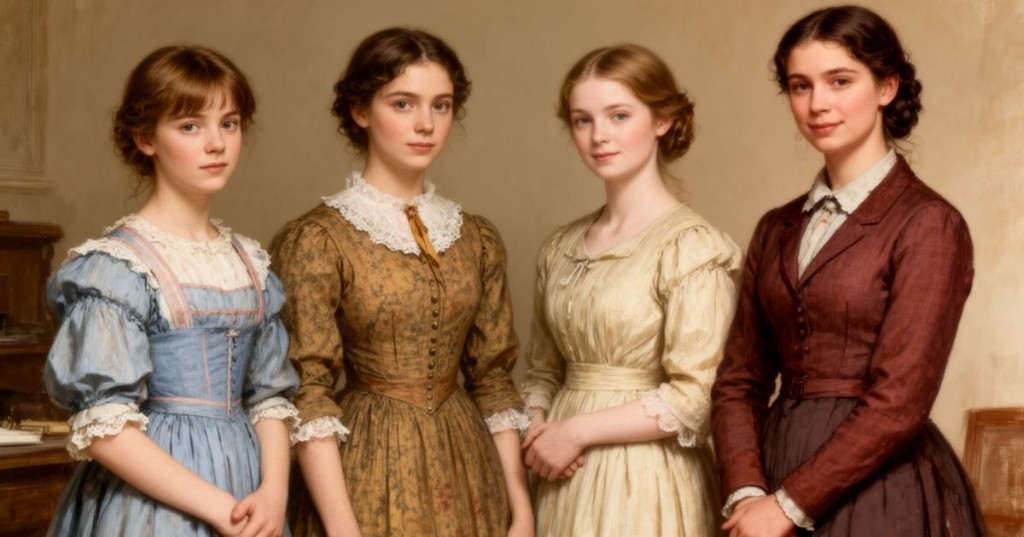
Jo and the Professor work, wait, and write voluminous letters until Aunt March dies and leaves Plumfield. Laurie urges selling the fine old place; Jo refuses, petting Aunt's poodle out of respect, and announces she will raise boys there, a happy homelike school with Fritz teaching and she mothering a wilderness of lads. She revives a long cherished plan to mother forlorn boys who lack help at the right minute, and the family, surprised, mostly blesses the Joian scheme.
Laurie teases about ragamuffin profits, then helps with plans and money; Mr. Laurence smuggles in destitute cases; Fritz steers Jo through queer mistakes until the Bhaer-garten flourishes with Toms, Dicks, and Harrys overrunning prim Plumfield. Years compress into joyful chaos: Mother Bhaer at the head of the table, Rob and Teddy added to her flock, apple-picking festivals where Marches, Laurences, Brookes, and Bhaers climb trees and spill milk with equal delight.
At one such October feast the sisters compare castles in the air to lives lived. Meg calls herself happiest with John and her tall boy; Amy keeps artistic hopes while modelling her frail Beth; Jo admits gray hair, thin cheeks, smoky Tommy Bangs, and never being rich, yet says she has never been so jolly. They kneel beside Beth's empty bed in memory, then gather under the festival tree while Marmee, surrounded by daughters and grandchildren, says she cannot wish them greater happiness than this.
Tommy Bangs still smokes under the bedclothes; Jo still hopes for a good book someday; yet Mother Bhaer would not trade her noisy boys and honest Fritz for any salon fame she once imagined. At the apple-picking feast five years on, boys sing Jo's hymn from the trees while Grandma receives handmade gifts and admits she cannot wish her girls greater happiness. Laurie points to Jo as model for his lads; Fritz's Socratic teaching and Jo's faith in ragamuffin hearts turn inheritance into vocation. Rob and Teddy join the flock; Mr. Laurence smuggles in destitute boys; and Jo tells stories only to pupils who believe every word. The finale gathers every branch under autumn apples while Marmee blesses a harvest richer than money.
Jo March wanted literary fame but found fulfillment running a school for boys who needed guidance. Her story reveals something crucial about how life actually works versus how we think it should work. We're taught to set goals, make plans, and execute them—but real life rarely cooperates. The job you thought you wanted disappears. The relationship you planned falls apart. The career path you mapped out gets blocked by budget cuts or industry changes. What Alcott understood in 1868 is that our backup plans, our sideways moves, our 'settling' often leads us to work that matters more than our original dreams ever could. The nurse who wanted to be a doctor but discovers she loves mentoring new CNAs. The laid-off factory supervisor who starts driving for a food bank and realizes he's never felt more useful. The single mom who turns her survival skills into helping other women navigate divorce court. These aren't consolation prizes—they're often upgrades we couldn't see coming. The pattern repeats because serving others' real needs creates deeper satisfaction than achieving personal recognition. When your Plan A crumbles, pay attention to what problems keep showing up in your path. Your struggle has taught you something someone else desperately needs to learn.
Explore this chapter with AI to uncover deeper meaning and practical takeaways.
AI Discussion