
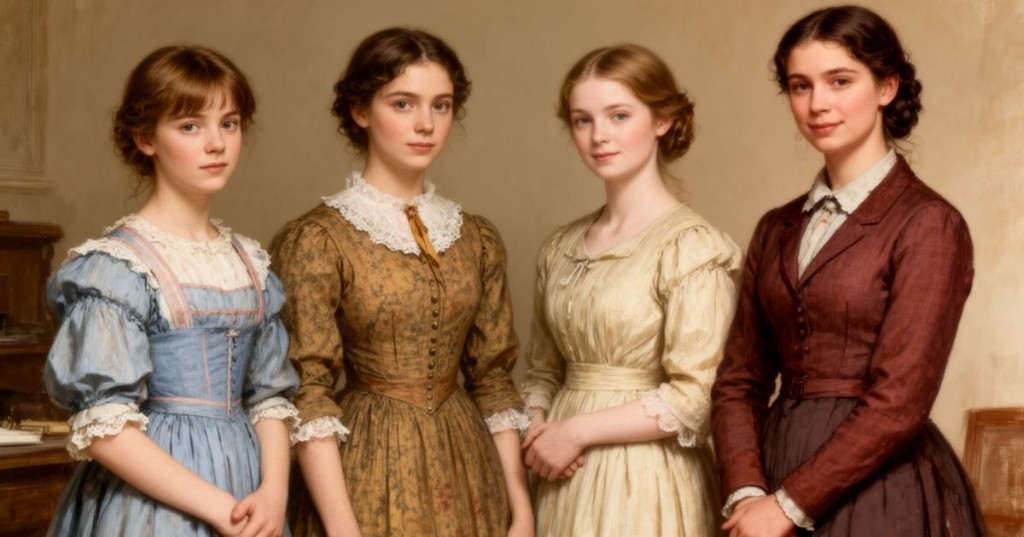
Daisy and Demi Brooke finally get their chapter as the humble historian pays the twins their due. Adored, precocious, and comic, they charm the extended family with philosophical questions, stolen treats, and tyrannical cuteness while Jo neglects her old playfellows whenever the Professor appears. Meg revels in motherhood; Amy sends gifts; Laurie wrestles Demi like a gentleman demanding satisfaction for an old slap.
Demi asks whether great boys like great girls, and the nursery blurts what adults dodge. Mr. Bhaer's ease with children contrasts with performative grown-ups; he answers seriously, tells stories, and lets them climb his knees while Jo watches with a tenderness she barely hides. Grandfather March teaches Demi letters using his own bent body; Jo blushes at the truth everyone sees but no one quite announces.
The chapter breathes between grand surprises and the rainy proposal to come. Children mirror authenticity: they flock to real kindness and name romance with unfiltered accuracy while Jo pretends she is not hoping for Fritz to stay. Even little Daisy attaches herself to pretty Aunt Amy, but it is the Professor who wins the trust Demi usually grants only family. The twins supply comic relief and sharp mirrors while adults negotiate a courtship too shy for grand gestures and too visible for secrecy.
Alcott understood something modern psychology confirms: children are natural lie detectors because they haven't learned to ignore their instincts yet. In 1868, when social performance was even more rigid than today, children's honest reactions provided the only reliable window into authentic character. The twins in this chapter respond to energy and genuine emotion, not social status or carefully crafted charm. This pattern persists because children lack the social conditioning that teaches adults to override their gut reactions for politeness or social advantage. They can't be bought with expensive gifts or impressed by job titles—they respond purely to how someone makes them feel. In our current era of curated social media personas and professional networking, this skill becomes even more valuable. We're surrounded by performed authenticity, from dating profiles to workplace personalities. Yet children, elderly people with dementia, and even pets still respond to the same genuine qualities they always have: patience, kindness, and real interest in their wellbeing rather than what they can provide. The working-class reader especially benefits from this insight—when you can't rely on shared educational backgrounds or social connections to judge character, learning to read these unguarded moments becomes crucial for protecting yourself and your family from those who would exploit or manipulate you.
Explore this chapter with AI to uncover deeper meaning and practical takeaways.
AI Discussion