
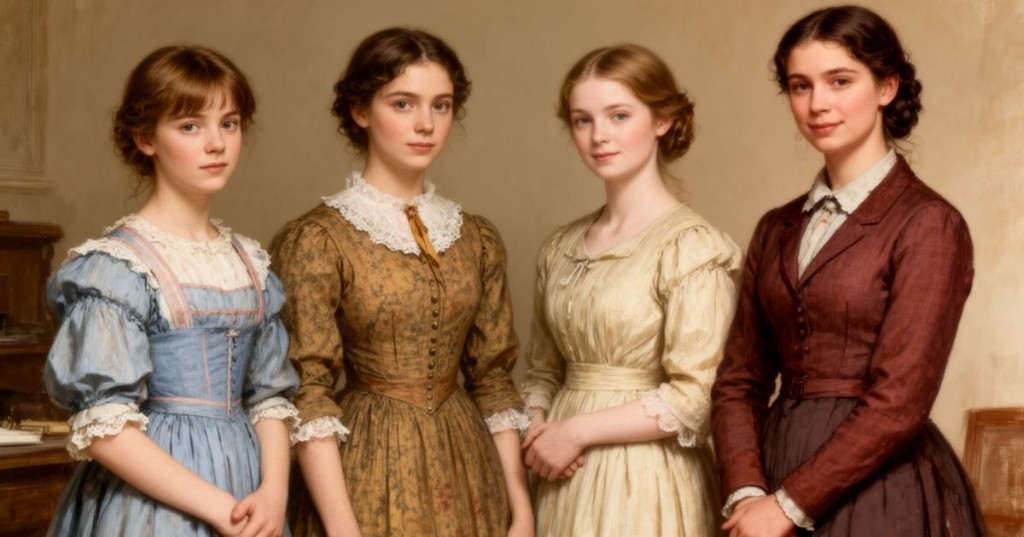
Laurie finds Amy on the Promenade des Anglais at Nice and discovers a polished young woman where the child used to be. Oh, Laurie, is it really you, she cries, and they slip back into old banter, but he is handsome, improved, and spiritless while she reads Beth's failing health in a letter and feels the pull of home. Aunt Carrol watches; Amy prinks for the Christmas ball hoping to please him, yet Laurie sits through dances like a bored guest and looks relieved when other partners claim her.
Amy's anger becomes strategy. She withholds easy admiration, dances brilliantly, flirts just enough to sting, and lets him decide that little Amy is going to make a very charming woman. He keeps a sketch of Jo in his vest; Jo's absence weighs on both of them more than peacocks on Castle Hill or roses at Valrosa. Laurie lounges; Amy sharpens. Each reads the other's loneliness without naming it yet.
Letters cross the ocean; Fred Vaughn hovers in the background; Amy sketches knights and sleeping boys while Aunt Carrol suspects regret Amy will not discuss. Europe teaches Amy poise and social nerve while Laurie's heart still points homeward toward a sister who refused him. The chapter ends with new impressions passing between them, unconscious gifts of attention and revised judgment that will matter when affection begins to shift course and when Amy's next honest scolding will reach a boy still pretending he is only heart-sick for Jo. For now they walk, sketch, and write across a continent while Beth weakens at home and Jo keeps a refusal Laurie cannot yet forget. Aunt Carrol's chaperon rules, Fred Vaughn's money, and Laurie's piano moods all press against the slow shift of two people who knew each other as children and must learn each other again as adults abroad.
Castle Hill peacocks, home letters, and the Christmas ball at the hotel give Amy a stage to prink, flirt, and punish Laurie's indifference until he fills her dance card and decides she will make a charming woman. She wants him to think she looks well and tell them so at home, even while Jo's sketch in his vest keeps another sister between them.
Amy's strategic behavior at the Christmas party reveals a crucial truth about human psychology: people lock us into mental snapshots from when they knew us best. This 'frozen image' effect happens because our brains use shortcuts—it's easier to maintain existing impressions than constantly update them. In 1868, Amy had to overcome Laurie seeing her as 'little Amy March.' Today, we face the same challenge in different contexts. The former addict whose family still treats them as unreliable. The student who returns home after college but parents still see them as a child. The worker who's gained skills but colleagues remember their mistakes. The pattern is universal: genuine growth often goes unrecognized by those closest to us. Amy's solution—strategic demonstration rather than verbal insistence—works because actions bypass the brain's resistance to updating impressions. She doesn't argue about her transformation; she embodies it consistently until Laurie's perception shifts. This requires emotional intelligence and patience. You must resist the urge to defend yourself verbally and instead let your changed behavior speak. The key insight is that other people's outdated perceptions aren't necessarily malicious—they're human nature. Once you understand this pattern, you can navigate it strategically rather than taking it personally.
Explore this chapter with AI to uncover deeper meaning and practical takeaways.
AI Discussion