
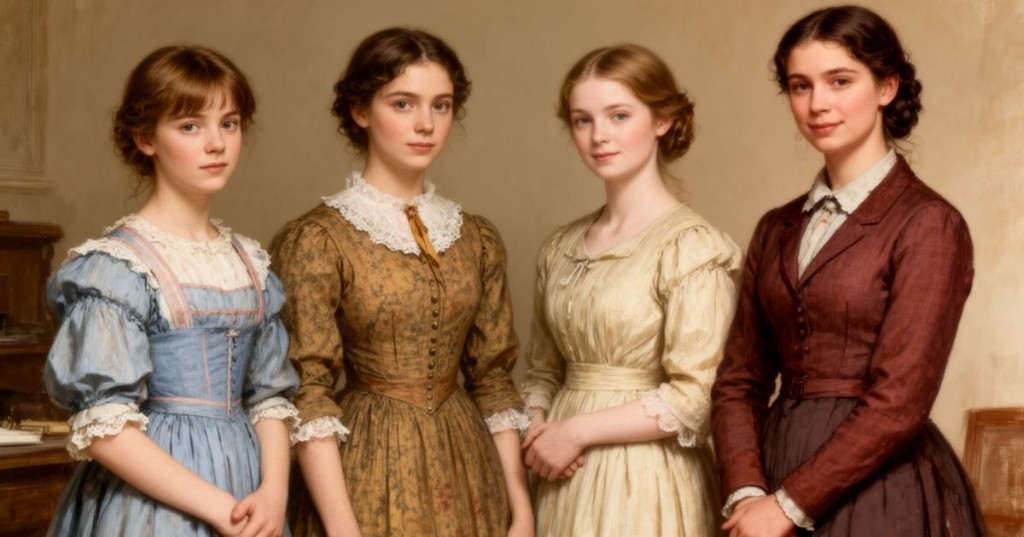
June frees Meg from the King children at the Kings and and the sisters treat three months off like a festival. Marmee proposes an experiment: one week of play without work so they can test whether endless leisure is as sweet as it sounds. Each girl sketches a paradise. Meg wants lazy mornings in pretty dress, Jo wants boating and novels, Beth wants hours at the piano, and Amy wants to glide through life like a fine lady with invisible servants. Within days the paradise cracks. Meg eats breakfast alone and feels abandoned. Jo sunburns on the river and gets headaches from too much reading. Beth cannot enjoy music while dust gathers, and Amy turns peevish without lessons to push against.
They cheat with little stitches and tidying and rename disobedience luxury. By midweek they are bored, snappish, and oddly exhausted from doing nothing on purpose. Even their attempts at elegant idleness look silly beside Hannah's steady competence. Marmee then announces her own holiday with Aunt Carrol and leaves the house in their hands, trusting them to learn by managing themselves. Jo, determined to prove idleness can look grand, invites Laurie to a formal dinner with aspic, chicken, blanc mange, and strawberries. She assigns roles, sets the table with ceremony, and expects praise for a ladylike feast.
The kitchen rebellion defeats her. Potatoes wait too long, the chicken shrinks into lettuce camouflage, blanc mange turns lumpy, salt ruins the berries, and in the uproar Jo forgets Pip the canary until he lies dead in his cage. Laurie eats bravely, but Jo's remorse is instant and childlike. Hannah and a returned Marmee restore order without scolding the lesson away. The girls tumble back into shared tasks with visible relief, even Beth smiling as she returns to her keys. Marmee's proverb lands with lived proof: all play and no work is as miserable as all work and no play. Rest only satisfies when it punctuates a life that already means something. Amy declares she never wants another holiday from duty, and even Jo admits she is glad to pick up her pen again.
The March sisters' failed experiment with pure leisure reveals something profound about human psychology: we consistently misunderstand what will make us happy. They thought freedom meant absence—no chores, no schedules, no obligations. Instead, they discovered that meaning comes from presence—being needed, contributing something, connecting with others through shared purpose. This pattern shows up everywhere in modern life. The person who finally gets the 'easy' job often becomes depressed. The retiree with no plans frequently feels lost. The parent whose kids leave home suddenly feels purposeless. We've been sold a lie about freedom that equates it with having no responsibilities, but psychological research confirms what Alcott intuited: humans need structure, purpose, and ways to contribute to something beyond themselves. The key insight isn't that we should never rest or pursue our own interests, but that sustainable happiness requires a balance between personal fulfillment and meaningful contribution. The sisters learned that the sweetest leisure comes after purposeful work, and the most satisfying freedom includes chosen responsibilities. When we understand this pattern, we can design lives that honor both our need for autonomy and our deeper need to matter to others.
Explore this chapter with AI to uncover deeper meaning and practical takeaways.
AI Discussion