
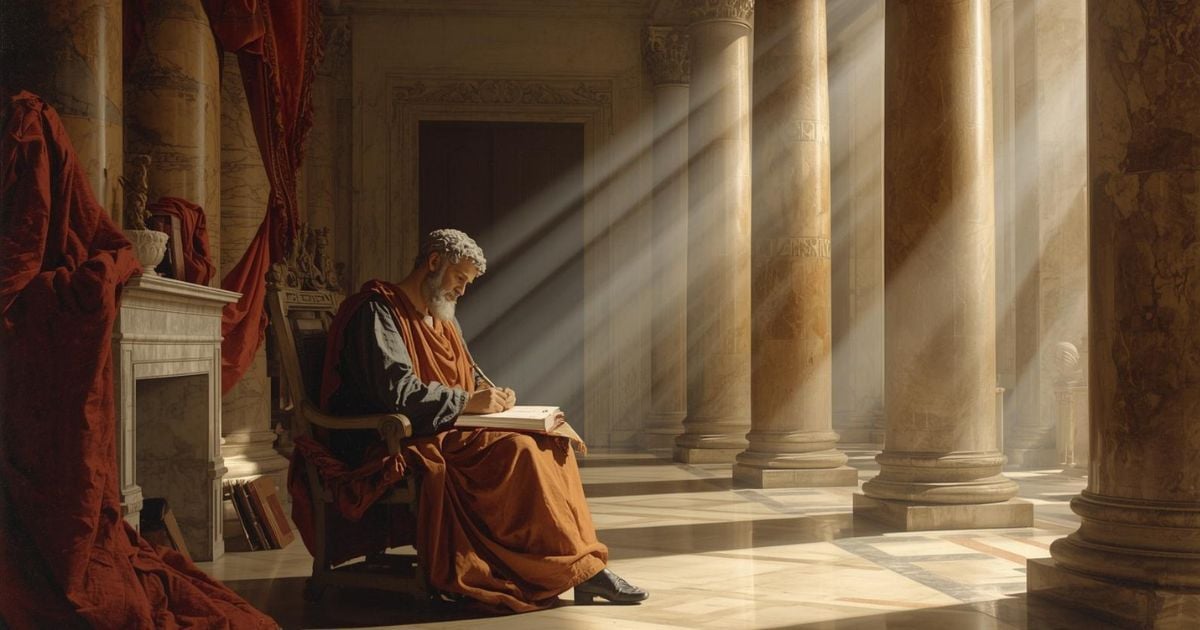
A philosopher named Metronax has died, and Lucilius is grieving him as if he died too soon. Letter 93 begins with Seneca's gentle challenge: we deal fairly with our fellow men, but rarely with the gods or with time. We accept that others must leave; we just always think it should be later. His argument is clean: we should strive not to live long but to live rightly.
For long life you need only Fate. For right living you need your soul. A life is truly long only if it is full, and fullness is reached when the soul has taken hold of itself and rendered to itself its proper good. The man who lives to eighty in idleness hasn't lived; he has been a long time dying.
The man who lives forty years with his faculties intact and his soul directed toward wisdom has had more life. Seneca presses the point with an image from the gladiatorial games: is the fighter slain on the last day more fortunate than the one who dies in the middle of the festival? By the interval that separates them, what difference is there? Death is coming.
The only real question is what you did while it waited. It is an insignificant trifle, after all, that people discuss with so much concern.
Seneca challenges our obsession with longevity over substance, but this pattern runs deeper in working-class life than we realise. We celebrate the guy who worked the same factory job for thirty years, even if he hated every day and contributed nothing beyond showing up. We mourn the 'waste' when someone dies young, even if they packed more living into twenty-five years than most do in seventy. This isn't about dismissing the value of experience or the tragedy of early death. It's about recognising how our measurement system creates perverse incentives. We stay in dead-end jobs because 'loyalty' feels virtuous. We remain in toxic relationships because duration seems meaningful. We avoid risks that could help others because failure might shorten our 'streak.' Meanwhile, the person who changes careers to become a teacher, starts a small business that employs neighbours, or leaves a comfortable situation to care for family gets judged for 'instability.' Seneca lived in a society where your legacy mattered more than your lifespan. We live in one where we've confused endurance with excellence. The question isn't whether you agree with Seneca's harsh assessment—it's whether you can recognise when you're choosing mere survival over actual living.
Explore this chapter with AI to uncover deeper meaning and practical takeaways.
AI Discussion