
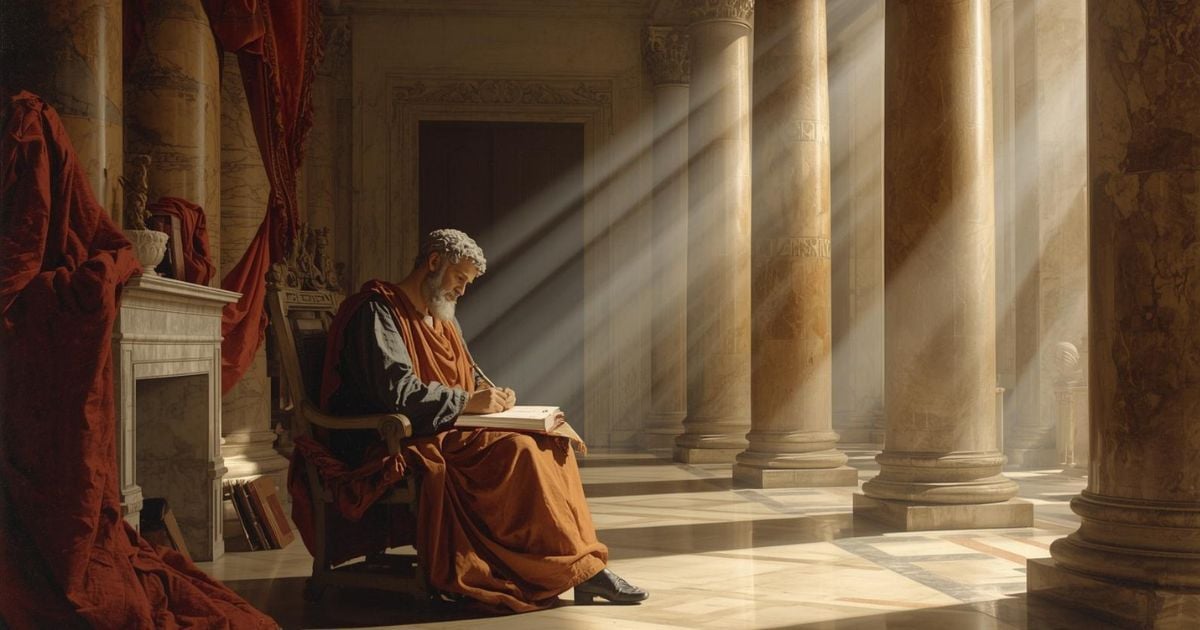
Before you can love wisdom as a whole, it helps to see its parts. Letter 89 offers a map: philosophy divides into natural, moral, and rational inquiry, what the world is, how to live in it, and how to think clearly about both. Seneca draws the diagram as a courtesy, not because he thinks outlines matter more than living, but because the newcomer can be overwhelmed by the whole and needs a way in. Each part supports the others: you cannot reason clearly about ethics without understanding what kind of thing a human being is; you cannot understand the cosmos without the tools to think straight about it.
The letter closes with a passage that drives the whole point home, all the shell-fish imported from across the sea, all the extravagance of the feast, and how little of it actually satisfies the insatiable gullet. His instruction to Lucilius is the same as his instruction to himself: talk in this way to others, provided you listen while you talk. Write in this way, provided you read while you write.
Moral philosophy keeps the soul in order, natural philosophy investigates the universe, and rational philosophy keeps falsehood from displacing truth.
Everything you absorb is to be applied to conduct, to the taming of passion. Study not to add, but to improve.
Seneca lived in an empire obsessed with elaborate philosophical systems, much like we live in an information age obsessed with optimization and endless research. He watched brilliant minds get so caught up in subdividing wisdom that they forgot to actually live wisely. Sound familiar? We have access to more information than any generation in history, yet many of us feel more paralyzed than empowered. We research the perfect workout routine instead of exercising, analyse relationship advice instead of having honest conversations, and study career strategies instead of taking concrete steps forward. The pattern Seneca identified—grinding wisdom so fine it becomes dust—shows up everywhere in modern working-class life. How many times have you spent hours researching the 'best' way to handle a workplace conflict instead of just addressing it directly? Or postponed applying for a better job because you haven't finished optimizing your resume? Seneca's insight cuts through this: there's a critical point where more information becomes less power. The goal isn't to eliminate thoughtful preparation—it's to recognise when preparation becomes a sophisticated form of avoidance. Sometimes the most intelligent thing you can do is act on good enough information rather than wait for perfect understanding.
Explore this chapter with AI to uncover deeper meaning and practical takeaways.
AI Discussion