
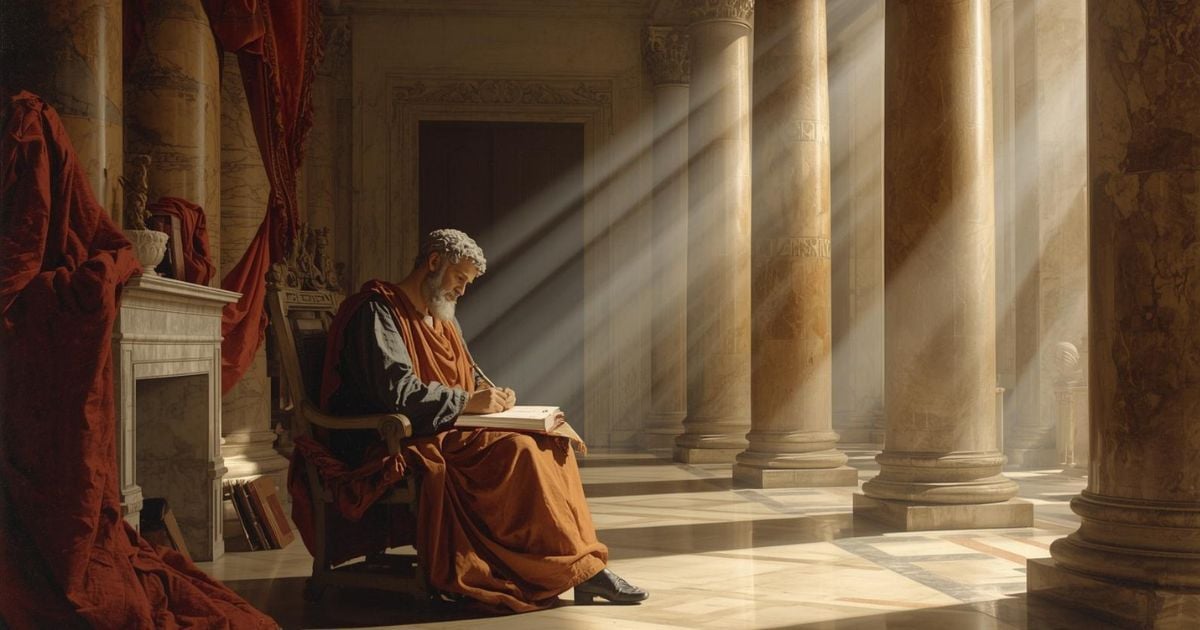
Seneca is no longer anxious about Lucilius, because the better part of him is safe. Letter 82 opens with that reassurance, then turns to what it means to be truly safe. Not luxury. Not idleness. Both extremes, he argues, are forms of death.
The man on his perfumed couch is no less dead than the man dragged by the executioner's hook. The soul weakened by ease is weakened just as surely as one crushed by adversity. What Seneca wants for Lucilius is a life that is calm, not soft. The letter then takes on the Stoics' logical arguments against the fear of death, and Seneca, unexpectedly, turns against them.
He is embarrassed by the idea of fighting death with syllogisms. What does it help to prove by logic that death is not an evil, if the man who holds the argument still flinches when the moment comes? Philosophy is not an exercise in cleverness. It is preparation for the moment when cleverness will be useless.
He would rather be in trouble, in the popular sense of a hard life, than be softened by luxury. We do not praise poverty or exile or pain; we praise the person they cannot humble. Subtle arguments can be as useless as a stalk of grain is sharp.
His image is telling: can you stop a lion's charge with an awl? Against real threats, petty weapons are worse than nothing, they give the illusion of readiness while leaving you exposed.
Seneca wrote this letter because he noticed something universal: people often suffer more from their reaction to events than from the events themselves. He watched friends destroy themselves not because of what happened to them, but because of how they chose to respond. This pattern shows up constantly in working-class life. You don't get the job you wanted, so you tell everyone the interview was rigged—now you're known as someone who makes excuses. Your hours get cut, so you complain loudly to coworkers—now management sees you as negative. Your relationship ends, so you badmouth your ex to mutual friends—now people avoid getting involved in your drama. The original problem was real and painful. But the secondary damage comes from our response. Seneca's insight cuts through centuries: external events are neutral. A job rejection isn't inherently good or bad—it's information. What makes it destructive is when we treat it like a personal attack and respond accordingly. The most successful people in any workplace aren't those who never face setbacks—they're the ones who handle setbacks without making them worse. They absorb the disappointment, learn what they can, and keep building relationships instead of burning them. This isn't about being passive or accepting unfairness. It's about strategic thinking: will this response help or hurt my long-term position?
Explore this chapter with AI to uncover deeper meaning and practical takeaways.
AI Discussion